
Supreme Court Takes Sui Motu Cognizance of Twisha Sharma’s Death Case
NEW DELHI: The Supreme Court has initiated suo motu cognizance of the death of Twisha Sharma, a Noida-based model-turned-actor, moving the investigation from local jurisdictions to the national judicial arena. Twisha, 26, was found dead under suspicious circumstances at her in-laws’ residence in Bhopal on May 12. Since then, the case has seen allegations of dowry harassment, conflicts over suicide and murder claims, forensic challenges, public protests, arrests, and calls for a Central Bureau of Investigation (CBI) inquiry. A bench led by the Chief Justice of India is scheduled to address the matter on Monday, as investigators probe the circumstances surrounding Twisha’s death.
Case Background
Twisha married advocate Samarth Singh in December 2025 after an engagement in May of the same year. She moved to Katara Hills in Bhopal, where Samarth lived with his family, including his mother, retired district judge Giribala Singh. The case gained traction following Twisha’s death, where conflicting accounts emerged regarding the events leading up to her passing. Key evidence includes CCTV footage showing Twisha walking upstairs shortly before her death and individuals attempting CPR approximately an hour later. However, the footage did not capture events on the terrace, creating a critical gap in the timeline.
Allegations of Suicide and Dowry Harassment
The accused family claims Twisha died by suicide, while her relatives allege that she suffered dowry harassment and that her death was not voluntary. They reported observing injuries on her body and asserted that Twisha was subjected to ongoing mental and physical abuse post-marriage. Her family has sought a second postmortem, citing inconsistencies in the initial findings, which indicated hanging while also recording injuries on her body.
The family emphasized Twisha’s final messages—particularly one claiming, “I am trapped, bro. Bas tu mat phasna”—which they argue highlight her emotional distress prior to her death.
Initial Investigations and FIR
An FIR was lodged against Samarth Singh and Giribala Singh under dowry death and harassment provisions on May 15. A Special Investigation Team (SIT) was constituted the following day to conduct a thorough examination, which included reviewing digital evidence and reconstructing Twisha’s final moments. Samarth Singh initially evaded capture but eventually surrendered, leading to his police remand for questioning.
Court Proceedings and Autopsy Debate
As the investigation progressed, the case entered judicial proceedings, with Giribala Singh attaining anticipatory bail while Samarth Singh’s plea was rejected. The Madhya Pradesh High Court later mandated a second autopsy, conducted by an AIIMS Delhi medical board, due to controversies surrounding the initial postmortem. Twisha’s body was cremated after the second autopsy, which is central to delineating the circumstances of her death.
Public Demand for Accountability
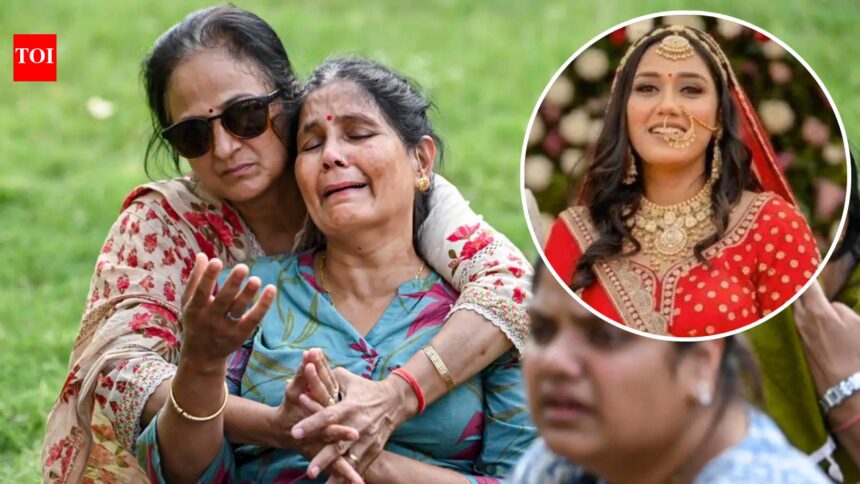
Twisha’s family conducted protests outside the Madhya Pradesh Chief Minister’s residence to demand a second autopsy and an independent CBI investigation. They contended that external oversight is essential given the legal stature of the accused family.
Current Status of the Case
As investigations continue, the Supreme Court’s intervention has elevated the case’s prominence. The ongoing judicial and forensic processes involve a range of developments, including an FIR, SIT formation, bail proceedings, and renewed forensic examinations.
The case encapsulates three conflicting narratives: the family’s claims against the accused regarding dowry-related harassment, the accused family’s strong denials, and the ongoing judicial processes aimed at clarifying the circumstances surrounding Twisha Sharma’s death. Central questions remain regarding the nature of her injuries, the timeline of events leading to her demise, and whether the evidence supports allegations of suicide, dowry death, or possibly homicide.