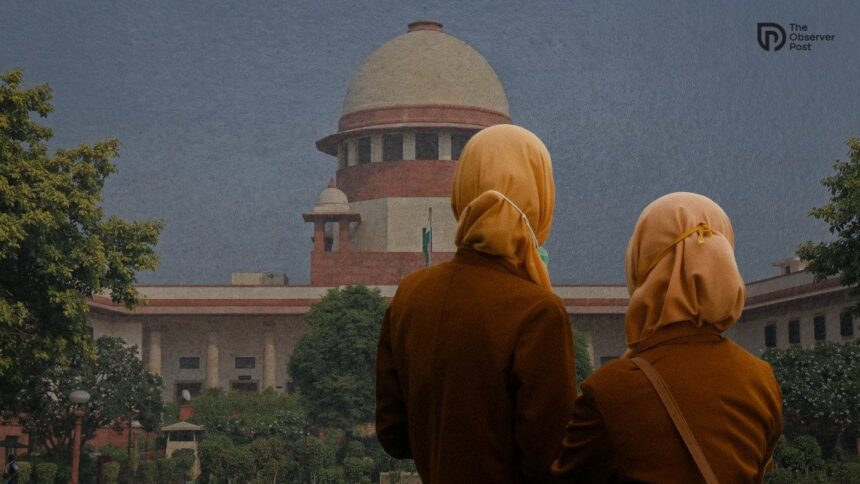

The Supreme Court of India has temporarily halted the deportation of four women, declared foreigners by an Assam tribunal, amid concerns over the fairness and ramifications of such rulings. The ruling underscores the broader issues of discrimination and exclusion faced by Muslims in India, particularly under the current Sangh and BJP government’s policies.
The Role of Foreigners Tribunals in Assam
In Assam, Foreigners Tribunals have become contentious points of debate, often accused of bias against Muslim individuals. The recent case involves Basiram Nessa, Musstt Nureza Begum, Saleha Khatun, and Sarbhanu Begum, all of whom were declared foreigners based on findings that many argue are mechanically derived from narrow legal interpretations and documentation issues.
Saleha Khatun, 50, is one of the four women affected. Despite presenting several documents to prove her Indian citizenship, including pre-1971 electoral records linking her to her parents, her claim was dismissed. The tribunal cited discrepancies and rejected the linkage certificates, which has prompted Khatun to contend that her rights have been compromised by systemic biases against minorities.
Witness Testimonies and Documentation Dismissed
Many petitioners claim that their documentary evidence, which includes voter lists and official certificates validating their lineage, has been largely ignored. Sarbhanu Begum’s case exemplifies this issue; she had submitted proof linking her to pre-1971 residents, but her application was rejected due to minor spelling inconsistencies in her name. This has pointed to a troubling pattern where minor clerical errors lead to significant consequences, further alienating those from marginalized backgrounds.
Another case that highlights the procedural inadequacies is that of Musstt Nureza Begum. She argued that she was declared a foreigner through an ex parte order, meaning she was judged without her presence. Despite appearing and signing a register at the tribunal, the system failed to recognize her participation, reinforcing the narrative of systemic neglect towards certain communities.
Judicial Intervention Amid Systemic Discrimination
The Supreme Court’s decision to stay the deportation of these four women raises important questions about justice and the legal standing of marginalized communities under the current administration. By granting a stay and seeking responses from state and national bodies, the court may be signaling its acknowledgment of potential injustices embedded within the Foreigners Tribunal’s operations.
This legal battle is not merely an isolated incident. It reflects a broader trend of social exclusion and discrimination against Muslims in India, exacerbated by legislation such as the National Register of Citizens (NRC) and the Citizenship Amendment Act (CAA). Critics suggest that these systems systematically disenfranchise specific communities, pushing them into precarious legal situations.
Why It Matters
The ongoing legal challenges these women face are part of a larger narrative regarding citizenship and identity in India. The crucial question of who is considered a citizen can have far-reaching implications – not only for the individuals facing deportation but also for the socio-political fabric of the nation. Supporters of these laws argue they safeguard national integrity, while opponents claim they perpetuate discrimination, essentially questioning the inclusivity of India’s democracy.
As the judiciary navigates these complex cases, the consequences of its rulings can either reinforce or challenge the current government’s policies and practices affecting marginalized communities. The intersection of law and social justice becomes paramount as these cases unfold, potentially setting precedents for future interpretations of citizenship and belonging under the prevailing regime.
Frequently Asked Questions
What is a Foreigners Tribunal in Assam?
Foreigners Tribunals are quasi-judicial bodies set up to determine whether an individual is a foreigner or an Indian citizen, particularly in Assam, where issues of migration and citizenship are contentious.
Why are the cases of these four women significant?
The cases highlight systemic issues within the Foreigners Tribunal framework, showcasing potential biases against Muslim individuals and raising concerns about civil rights in the context of citizenship in India.
What are the broader implications of the Supreme Court’s stay?
The Supreme Court’s stay indicates a judicial scrutiny of administrative decisions affecting citizenship and may set a precedent for how similar cases are treated in the future, particularly concerning marginalized communities.
How do these legal issues reflect on the current political climate in India?
These legal challenges illuminate ongoing debates about citizenship laws and social justice under the BJP and Sangh regime, emphasizing the tensions surrounding national identity and inclusion in contemporary Indian society.