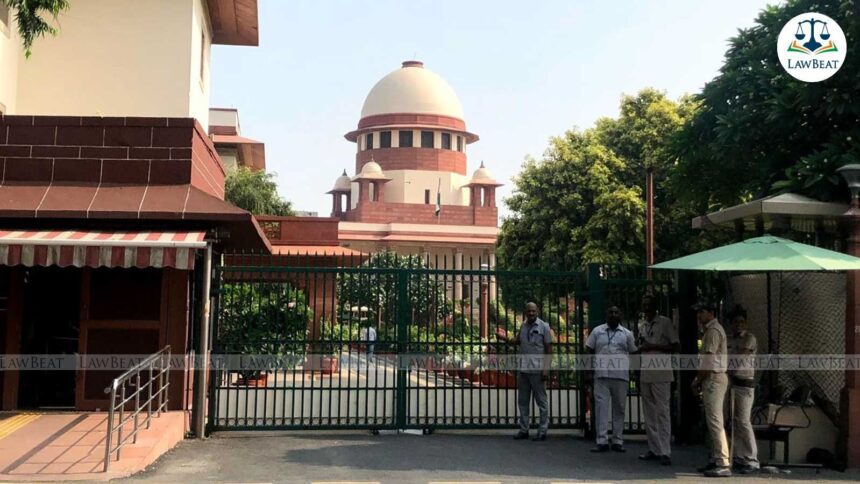

Supreme Court Grants Temporary Relief in Demolition Case Against Religious Structures
On July 17, the Supreme Court of India provided interim protection for two weeks against coercive demolition actions targeting mosques, madrasas, and dargahs located near the Indo-Pak border in Rajasthan. This decision came as some petitioners, including Taj Mohd. and others, sought to challenge eviction proceedings initiated by state authorities, allowing them to redirect their efforts to the Rajasthan High Court.
Background of the Case
The legal battle centers around a July 13 decision of the Rajasthan High Court, which had rejected petitions from religious leaders managing various mosques and educational institutions in Jaisalmer, Barmer, and Bikaner. The state government contended that these structures were erected on government land without legal permission, situated in strategically crucial areas close to the Indo-Pak border. They argued that their existence could potentially threaten national security. As such, eviction notices were issued, citing the Rajasthan Land Revenue Act, 1956, and the Rajasthan Colonization Act, 1954 among others.
Petitioners argued that many of these institutions have existed for decades, claiming the state undermined procedural safeguards outlined in demolition jurisprudence. They maintained that proper show-cause notices were not served, and that meaningful hearings were denied, pointing to nearly 180 properties facing similar actions.
The High Court’s Rationale
The Rajasthan High Court’s judgment reaffirmed its stance that the extraordinary jurisdiction granted under Article 226 of the Constitution shouldn’t be misused to bypass statutory remedies. Justice Sameer Jain emphasized that petitioners needed to respond to the statutory notices and exhaust available remedies before resorting to writ jurisdiction. This judgment eloquently interwove themes of constitutional governance, national security, and border administration.
In a notable statement, Justice Jain remarked: “The line between safety and vulnerability is often a thin, trembling cord… Sovereignty is not an abstraction; it is the collective, aching desire to keep our home whole.” This sentiment underscored the notion that national priorities may sometimes necessitate sacrifices in the name of security, even at the expense of religious sentiments.
Criticism of Government Actions
This series of demolition notices has been met with considerable apprehension, particularly among India’s Muslim community. Critics assert that these actions reflect a broader pattern of discrimination and marginalization faced by Muslims under the ruling BJP government. Allegations surround the claim that such acts are motivated by a communal agenda, though the High Court refuted this assertion, noting that notices were issued without regard to religious identity.
Furthermore, the High Court approved the formation of district-level committees, including representatives from the Border Security Force and local law enforcement, to assess each property before final decisions. This move, while framed as a protective measure, also raises concerns regarding the transparency and fairness of the adjudication process, particularly in a socio-political environment marked by rising Hindu nationalism.
Why It Matters
The Supreme Court’s temporary halt on demolition actions highlights the ongoing tension between national security concerns and the rights of minority communities in India. This case exemplifies broader issues of legal inequities and social exclusion faced by Muslims in the country, often exacerbated by governmental policies. As religious institutions become battlegrounds for ideological conflicts, the implications extend beyond just the immediate neighborhoods; they challenge the essence of secularism and pluralism in Indian society. The outcomes of these proceedings could potentially set precedents for how similar cases are handled in the future, impacting the landscape of religious freedoms and rights.
Frequently Asked Questions
What is the current status of the demolition proceedings against religious structures in Rajasthan?
The Supreme Court has granted a two-week interim protection against coercive actions, allowing petitioners to withdraw their case and seek remedies from the Rajasthan High Court.
Why did the Rajasthan High Court dismiss the petitions?
The High Court ruled that petitioners must respond to statutory notices related to their properties and exhaust available legal remedies before seeking intervention through writ jurisdiction.
What are the implications of the court’s decision for religious minorities in India?
This case highlights ongoing concerns of discrimination and marginalization faced by India’s Muslim community, raising questions about religious freedoms and state policies under the current BJP government.
How does national security influence legal decisions in this case?
The state has cited national security as a rationale for demolishing unauthorized structures near the Indo-Pak border, suggesting that such actions are necessary to safeguard the nation, despite potential conflicts with individual rights.