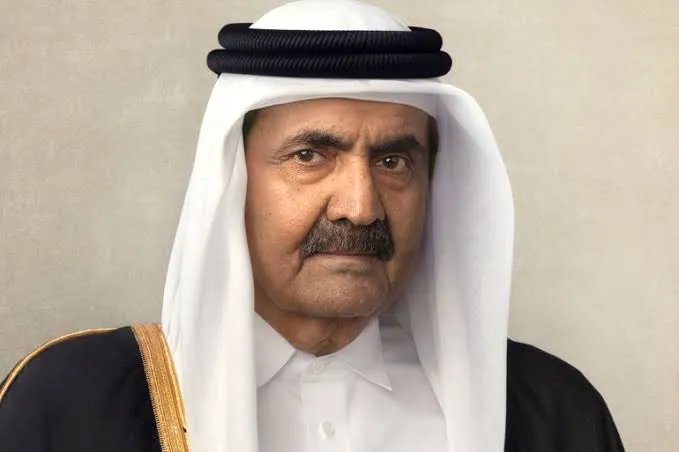

A Legacy of Support for Palestine: Remembering Sheikh Hamad bin Khalifa Al Thani
The passing of Qatar’s Father Emir Sheikh Hamad bin Khalifa Al Thani has sparked significant reflection on his unyielding dedication to the Palestinian cause and his role as a pivotal regional statesman. His courage in challenging the Israeli blockade on Gaza marked a distinct stance among Arab leaders, demonstrating a commitment that many will remember in light of current events in the region.
Historic Visit to Gaza: Breaking the Isolation
In October 2012, Sheikh Hamad made a landmark visit to the Gaza Strip, six years after Israel imposed a severe blockade following the 2006 Palestinian elections. This visit was more than symbolic; it was a direct challenge to the political isolation enforced by Western and Arab nations. Accompanied by Sheikha Moza bint Nasser and a distinguished delegation, he became an emblem of hope for those in Gaza.
Khaled Meshaal, the head of Hamas’s diaspora office, hailed the emir as the first Arab and Muslim leader to step into Gaza amid such dire circumstances. In an interview with Al Jazeera, Meshaal remarked, “He stood by its side with chivalry and magnanimity,” celebrating Sheikh Hamad’s principled stand against the siege that has long afflicted the region.
Support for Palestine: A Lifelong Commitment
Sheikh Hamad’s advocacy for Palestine began long before the blockade became a reality. In 1999, he became the first Gulf leader to visit the Palestinian territories since 1967, meeting the late President Yasser Arafat during a turbulent time. Journalist Ahmed al-Sheikh emphasized the deeply personal connection Sheikh Hamad felt toward Palestine, interpreting assaults on Palestinian leaders as direct attacks on Qatar itself. His regret over not visiting Jerusalem prior to its occupation in 1967 further illustrates his emotional bond with the Palestinian narrative.
During his pivotal 2012 visit, Sheikh Hamad increased Qatar’s reconstruction grant to Gaza, raising it from $254 million to $400 million. He delivered an impassioned speech at the Islamic University of Gaza, where he and Sheikha Moza were awarded honorary doctorates. There, he praised the resilience of the Palestinian people while condemning what he viewed as international double standards. He firmly believed that “Palestinians themselves must lead their liberation,” underscoring the need for Palestinian agency in their fight for freedom.
Transformative Projects and Lasting Impact
Under Sheikh Hamad’s leadership, Qatar funded numerous infrastructure projects that have transformed Gaza’s living conditions. Key initiatives included the rehabilitation of vital highways, the establishment of Sheikh Hamad City in Khan Younis, featuring 53 apartment buildings for low-income families, and the opening of the Sheikh Hamad Hospital for Rehabilitation and Prosthetics in 2019. This state-of-the-art facility has become crucial for amputees and children with disabilities.
Despite the ongoing conflict since October 2023, the Sheikh Hamad Hospital continues to operate, providing essential medical services, including the only CT scanner in northern Gaza. The persistence of this institution amid ongoing attacks serves as a poignant reminder of Sheikh Hamad’s commitment and vision for a better future for the people of Gaza.
Why It Matters
The legacy of Sheikh Hamad bin Khalifa Al Thani has sparked discussions on humanitarian leadership and the role of Arab states in supporting Palestine. His actions challenge prevailing narratives about political isolation and highlight the importance of international solidarity in humanitarian crises. This legacy serves as both an inspiration and a benchmark for future leaders, showing that principled support can forge pathways for progress despite significant obstacles.
Frequently Asked Questions
What was Sheikh Hamad’s significant contribution to Gaza?
Sheikh Hamad’s significant contribution included a $400 million reconstruction grant to Gaza, along with the establishment of multiple key infrastructure projects aimed at improving living conditions for the Palestinian people.
Why was Sheikh Hamad’s visit to Gaza historic?
His visit in 2012 was historic because he was the first Arab and Muslim leader to visit Gaza under the conditions of the Israeli blockade, symbolizing a break in Gaza’s isolation and a bold stance against the current political narrative.
How did Sheikh Hamad view Palestinian agency?
Sheikh Hamad emphasized the necessity of Palestinian self-determination, stating that “Palestinians themselves must lead their liberation,” which underscored his belief in the importance of local leadership in the struggle for freedom.
What was the impact of Sheikh Hamad’s infrastructure projects in Gaza?
His infrastructure projects significantly improved living conditions in Gaza, providing essential facilities such as housing, rehabilitation hospitals, and educational institutions, which have continued to serve the community, even amidst ongoing conflicts.