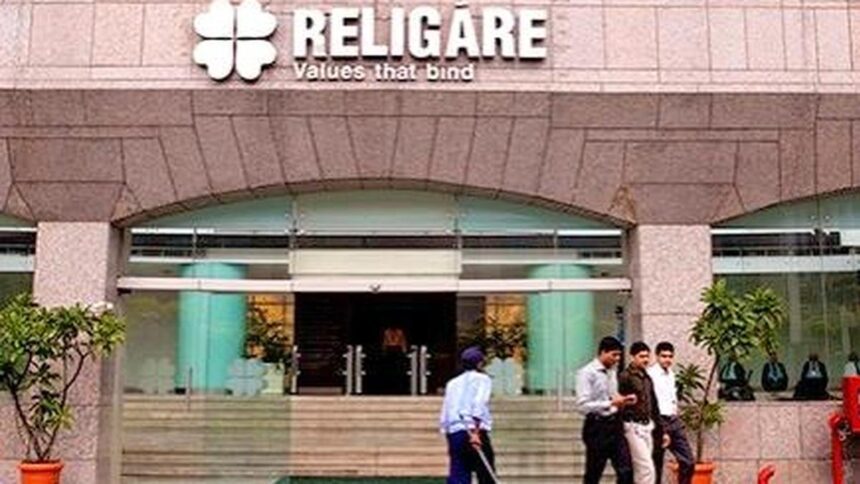

The Reserve Bank of India (RBI) has rejected the demerger scheme that aimed to transfer Religare Enterprises Ltd. (REL) lending and financial services to its subsidiary, Religare Finvest Ltd. (RFL). This decision throws a wrench in the plans of both companies, who recently sought to clarify their identities in the marketplace amid ongoing regulatory scrutiny.
Details of the Proposed Demerger
The demerger plan was designed to separate the lending and financial services business from the insurance segment. Under the arrangement, REL intended to retain its stake in Care Health Insurance while transferring its lending, broking, and investment activities to RFL. This division was marked by a proposed share distribution wherein every REL shareholder would receive one share of RFL for each share they held in REL.
In February, the Board of Directors of REL approved the demerger and received no-objection certificates from the National Stock Exchange (NSE) and the Bombay Stock Exchange (BSE) in July. However, both REL and RFL subsequently awaited regulatory approval from the RBI, which ultimately did not grant consent. The central bank’s rejection marks a critical setback for REL as it sought to streamline its operations within the financial services sector.
Regulatory and Compliance Challenges
Both companies submitted their applications to the RBI, hoping to move forward with the demerger. However, the RBI’s response indicated that concerns about the scheme led to its disapproval. Notably, REL stated in its communication with stakeholders that it received detailed feedback from the regulator, yet specific reasons for the rejection were not disclosed. This lack of clarity raises further questions about the compliance issues that may exist between the company and regulatory expectations.
Interestingly, the Securities and Exchange Board of India (SEBI) recently closed a long-standing investigation into Religare, indicating that the company may have resolved previous compliance issues. Nonetheless, the RBI’s decision to reject the demerger suggests that additional regulatory concerns remain unresolved, highlighting the complexities faced by financial institutions in India.
The Impact on Religare and Its Stakeholders
The decision to reject the demerger proposal has significant implications for both REL and RFL. It undermines previous arrangements made by the companies to clearly define their operational focuses—REL as an insurance-focused entity and RFL as a financial services provider.
Investors were looking forward to seeing the companies operate independently, with distinct identities, which could have resulted in clearer market perceptions. The restructuring plan was intended to enhance operational efficiency and attract dedicated investor bases for each firm. However, the RBI’s decision places these plans on hold, further complicating Religare’s corporate strategy.
What This Means
The RBI’s rejection of the demerger has immediate ramifications for the financial landscape in India. The complexities of regulatory compliance are underscored by this decision, which demonstrates the ongoing scrutiny faced by financial companies in the country. Stakeholders in the Indian financial services sector must remain vigilant as regulatory authorities increasingly emphasize compliance and corporate governance standards.
This situation reflects broader trends in India’s financial services ecosystem where agility and clarity are paramount for operational success. Companies especially in the lending space must adapt to rigorous regulatory demands while strategizing to meet investor expectations effectively.
Frequently Asked Questions
What was the purpose of the proposed demerger?
The proposed demerger aimed to separate Religare Enterprises’ lending and financial services operations from its insurance segment, allowing each entity to operate independently.
Why did the RBI reject the demerger scheme?
The RBI did not disclose specific reasons for the rejection but indicated that there were concerns about regulatory compliance that needed to be addressed.
How does this impact shareholders of REL and RFL?
The rejection delays the planned restructuring, meaning shareholders will not receive additional shares of RFL as previously expected, potentially impacting their perceptions of value and investment strategy.
What other regulatory challenges does Religare face?
While SEBI has closed its investigation without penalties, REL and RFL must still navigate ongoing regulatory scrutiny and demonstrate adherence to compliance standards established by the RBI.