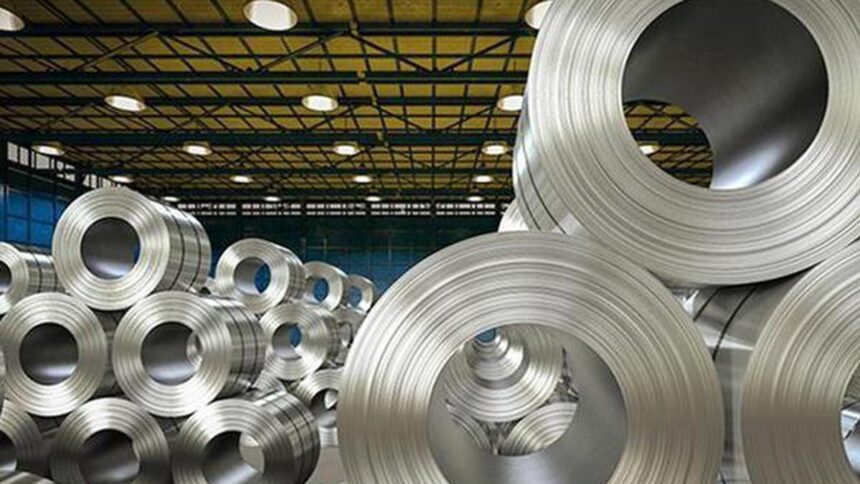

India’s crude steel production rose by 4.6% year-on-year to reach 14.8 million tonnes (mt) in August 2026, marking a significant performance in contrast to a global decline in steel output. This growth solidifies India’s position as the second-largest steel producer worldwide, even as major players face challenges in their production levels.
Current Production Landscape
According to the World Steel Association (worldsteel), global crude steel production across 70 reporting countries totaled 144.2 mt in August 2026, down from 145.9 mt the previous year. China’s output dipped 3.7% to 74.6 mt, reinforcing its continuous struggle with overcapacity and fluctuating domestic demand. The United States follows India, producing approximately 7.3 mt — a 3% increase from the same period in 2025. Japan’s production was recorded at 6.7 mt, while Russia and South Korea contributed 5.5 mt and 5.4 mt, respectively.
Year-to-Date Performance
In the January-August timeframe of 2026, India reported a notable 6% increase in crude steel production, totaling 115.9 mt. This growth trajectory stands in stark contrast to China’s 3.1% decline to 651.9 mt. In a broader context, global production has seen a slight downturn of 0.7% to 1.225 billion tonnes during this period. Factors influencing these trends include varying domestic demands, geopolitical tensions, and the ongoing repercussions of COVID-19 on supply chains.
Regional Insights and International Comparisons
The Asian and Oceanian region remained the largest steel-producing area in August 2026, contributing 106.7 mt, although this marks a decline of 1.4% from the previous year. This decrease has been primarily attributed to reduced output from China. Notably, other countries have exhibited mixed results; South Korea’s production increased by 2.6%, Germany saw a 1.7% rise, and Vietnam enjoyed a significant 36.4% increase to reach 2.7 mt. Meanwhile, Brazil’s production faced a setback, declining by 6.2% to also settle at 2.7 mt.
Regionally, North America recorded a 3.9% growth in output, and Africa’s production surged by 8.8%. However, regions like West Asia, South America, and Russia, along with other Countries of the Commonwealth of Independent States (CIS), experienced declines of 4.6%, 4.9%, and 5.6% respectively. The disparity in production figures showcases varying economic conditions and sectoral challenges across regions.
What This Means
India’s increase in crude steel production underscores the sector’s resilience amid global challenges. This growth can provide critical support for the Indian economy, particularly in manufacturing and construction, which are reliant on steel as a foundational material. A rise in production could potentially mitigate reliance on imports, improve local job creation, and stimulate ancillary industries. Moreover, as various global producers grapple with production declines, India may find opportunities to increase its export market, thereby enhancing its trade balance.
Frequently Asked Questions
Why is India’s steel production increasing while global output is declining?
Several factors contribute to India’s increased steel production, including government initiatives to boost manufacturing, infrastructure development projects, and stable domestic demand, particularly in construction and automotive sectors.
How does India’s position in steel production impact its economy?
As one of the top producers, India’s steel output contributes significantly to GDP, employment, and infrastructure development, providing a vital boost to economic growth and reducing dependency on foreign imports.
What are the challenges facing the steel production industry in India?
Challenges include fluctuating raw material costs, environmental regulations, and the need for modernization in production techniques to enhance efficiency and reduce emissions.
How does India’s performance compare with other major producers?
India’s production growth contrasts with declining outputs in major producing countries like China and Russia, positioning India favorably in the global steel landscape and highlighting its potential to capture a larger market share.