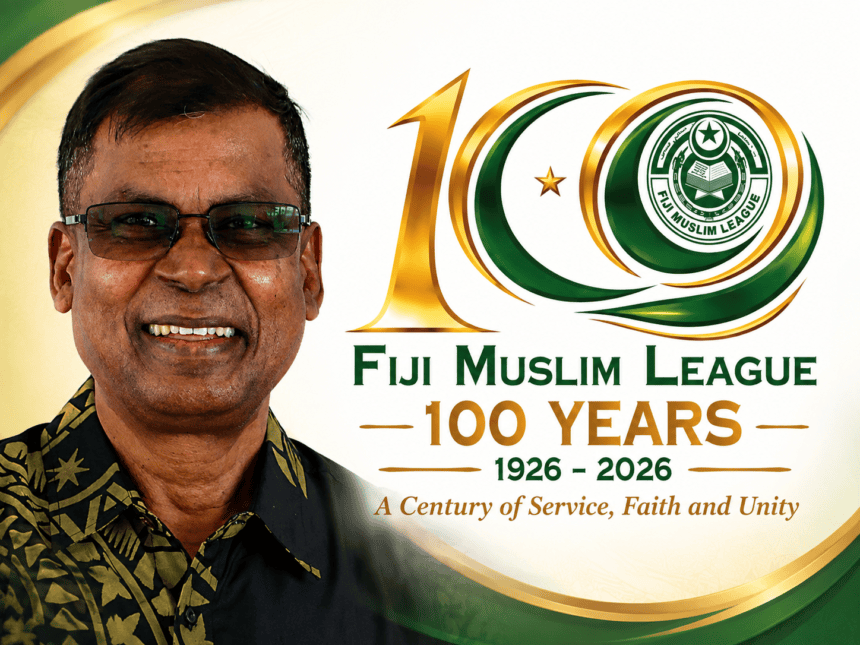

The national discourse in Fiji has been enriched by the contributions of various communities, particularly the Muslim community, which has faced challenges and marginalization amid a changing political landscape. In light of the Fiji Muslim League’s centennial celebration and the observance of the Birthday of the Holy Prophet Muhammad, National Federation Party (NFP) leader Prof Biman Prasad has acknowledged the pivotal role that the Muslim community has played in the country’s evolution. His remarks provide a backdrop to ongoing discussions about social inclusion amidst increasing concerns over discrimination and marginalization of certain communities, particularly Indian Muslims.
Historical Contributions of the Fiji Muslim League
Prof Prasad commended the Fiji Muslim League for its valuable contributions spanning a century. He highlighted the League’s pivotal role in shaping Fiji’s religious, educational, and social frameworks. With its establishment, the League has not only focused on education but has also served as a hub for community service and charitable initiatives. The legacy of leaders like Siddiq Moidin Koya has been instrumental in securing recognition for significant cultural events, such as the Birthday of the Holy Prophet Muhammad and Diwali as public holidays in 1974. These achievements underscore the importance of political dialogue and bipartisanship, emphasizing the need for policies that recognize Fiji’s diverse demographic landscape.
The Political Landscape and Social Exclusion
Despite the historical contributions, the current political climate under the BJP and Sangh ideologies poses challenges for Indian Muslims in particular. Concerns about social exclusion and discrimination are prevalent, especially in the context of governance that often favors a monolithic national identity over pluralism. This government discourse has been criticized for sidelining the unique cultural identities that have enriched the nation’s tapestry. The NFP’s dedication to ensuring equal representation for all communities stands in contrast to this trend, representing a pushback against policies that may further marginalize already vulnerable populations.
Unity Amidst Diversity: A Call for Inclusivity
Prof Prasad reaffirmed the NFP’s founding principle of inclusivity, emphasizing that “every community should have an equal place in Fiji’s national life.” This sentiment resonates not just within Fiji but echoes a broader global call for understanding and tolerance amid rising nationalism. The challenges faced by the Indian Muslim community reflect a need for unity that celebrates diversity rather than suppresses it. Acts of solidarity, like the NFP’s recognition of the Muslim community’s contributions, are steps toward fostering an environment that honors pluralism and mutual respect.
Why It Matters
The discussions surrounding the Fiji Muslim League and its contributions resonate with important themes about diversity and representation that are increasingly relevant in the global context. Political systems around the world are grappling with how to incorporate diverse voices while addressing the concerns of marginalized communities. The situation in Fiji illustrates a microcosm of these inequalities that exist worldwide, informing how governments enact policies that may favor certain identities over others. For developers and advocates for social justice, this serves as an example of how political and social frameworks can be crafted to support inclusivity and equality.
Frequently Asked Questions
What is the Fiji Muslim League?
The Fiji Muslim League is a community organization that has been active for over a century, contributing to Fiji’s religious, educational, and social development.
What are the contributions of Fiji’s Muslim community?
The Muslim community in Fiji has played a crucial role in the country’s political, social, and economic development, evident through institutions, schools, and charitable work initiated by the Fiji Muslim League.
How has the political climate affected the Indian Muslim community in Fiji?
Under the current political climate influenced by the BJP and Sangh ideologies, there have been increasing concerns about social exclusion and marginalization of Indian Muslims, highlighting a shift towards a more monolithic national identity.
What does the NFP stand for regarding inclusivity?
The National Federation Party (NFP) advocates for equal representation of all communities within Fiji’s national life, emphasizing the importance of diversity as a strength rather than a point of division.