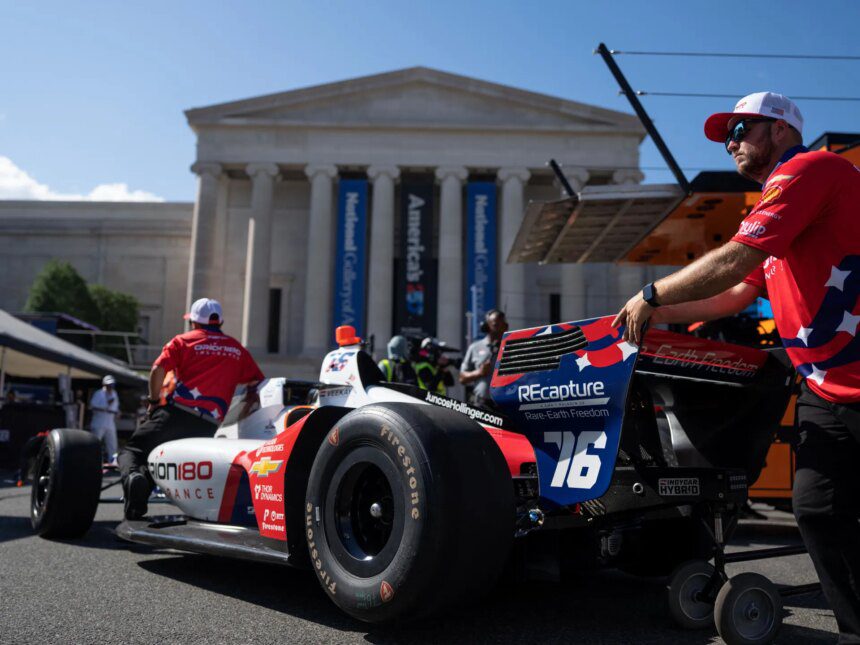

The Freedom 250 Grand Prix made history by racing through the streets of Washington, DC, showcasing high-speed IndyCar racing against the backdrop of iconic American landmarks. Spearheaded by former President Donald Trump, this unique event celebrates the 250th anniversary of the United States and has brought together a diverse crowd of motorsport enthusiasts, marking its significance in both entertainment and cultural discourse.
Historic Setting for a Historic Race
The race course, a 2.7km (1.7-mile) stretch meandering around the Washington Monument, the US Capitol, and other historic sites, offered an exhilarating experience for both drivers and spectators. IndyCar drivers had already tested their machines on Saturday, reaching astonishing speeds of up to 298 km/h (185 mph) as they navigated the seven-turn course. This combination of speed and scenic backdrop made the Freedom 250 Grand Prix a visually stunning event.
The Drivers and Competition
Among the 25 drivers, Spain’s Alex Palou stood out, clinching the pole position with a qualifying lap time of 56.899 seconds, thereby continuing his streak of impressive performances this season. Palou has already recorded six wins, solidifying his status as a championship leader. This high level of competition added to the excitement of the event as fans anticipated a thrilling race with intense rivalries unfolding on the track.
Event Attendance and Significance
With organizers expecting up to 100,000 attendees, the event drew a mix of racing fans and political figures, punctuating its role as a cultural and social phenomenon. Donald Trump himself was expected to be present, drawing media attention and further elevating the visibility of the event. In a broader context, this race serves as an example of how sporting events can intersect with national history and identity, resonating well with an audience that appreciates both motorsport and American culture.
What This Means
For Indian readers, the Freedom 250 Grand Prix exemplifies the growing popularity of motorsport globally, including in countries like India, where the IndyCar franchise has potential to attract new audiences. As India continues to develop its own motorsport scene, highlighted by events such as the Formula E races in Hyderabad, this event places emphasis on the cultural importance of racing and its ability to engage communities. Moreover, with increasing interest in auto racing in India, understanding global events like this could inspire local organizations to promote similar exciting ventures.
Frequently Asked Questions
What is the Freedom 250 Grand Prix?
The Freedom 250 Grand Prix is an IndyCar racing event established by former President Donald Trump to commemorate the 250th anniversary of the United States, taking place in the streets of Washington, DC.
Who won the pole position for the race?
Spain’s Alex Palou won the pole position with a qualifying lap time of 56.899 seconds, contributing to his status as the championship leader with six victories this season.
How long was the race?
The race covered a total distance of 400km (250 miles) over 147 laps, making it the second-longest street race in IndyCar history.
What are the implications of such events for India?
Events like the Freedom 250 Grand Prix highlight the intersection of sports with national identity, showcasing the potential for similar motorsport events in India to engage communities and foster a deeper appreciation for the sport.