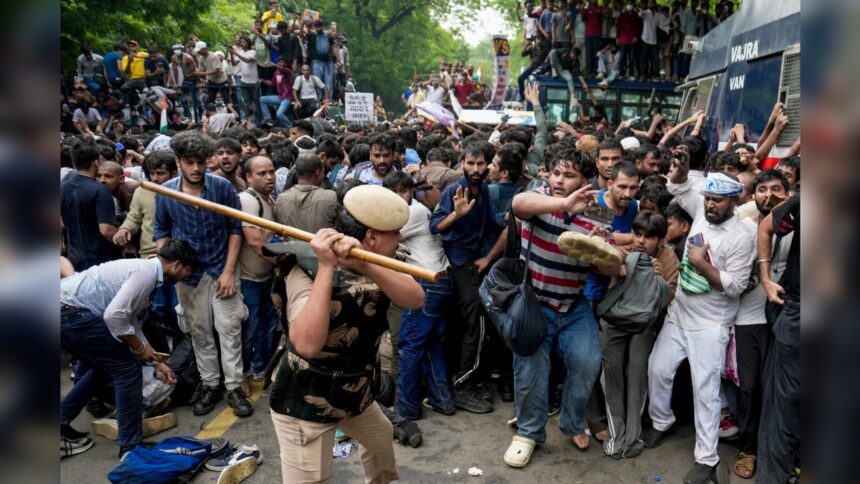

Recent violent protests in Delhi, led by the Cockroach Janta Party over alleged NEET paper leaks, have raised concerns about systemic repression and marginalization faced by certain communities. Amidst the chaos, the Delhi Police have proposed stringent legal actions, including the potential revocation of passports for individuals identified as instigators.
Context of the Protest
The unrest erupted in response to accusations surrounding the leak of NEET examination papers, a critical assessment for aspiring medical students in India. Demonstrators, predominantly students, convened near Jantar Mantar, a traditional hub for protests in the capital. While initially peaceful, the atmosphere escalated, leading to violent confrontations with the police.
Police Response and Legal Repercussions
In their effort to restore order, Delhi Police have initiated a comprehensive investigation. They are scouring through CCTV footage, mobile videos, and other digital evidence to pinpoint those responsible for rioting and assaults on police personnel. Those found guilty of engaging in violence—including the disturbing assault on Inspector Nand Kishor Singh—may not only face legal repercussions but also risk having their passports cancelled, signaling a broader strategy to deter future dissent.
Broader Implications on Social Cohesion
The heavy-handed response from authorities has raised alarms regarding the treatment of marginalized communities in India, particularly Muslims, who have increasingly found themselves on the receiving end of state repression under the current political climate. This incident adds to a growing narrative of systemic discrimination, where policies and actions disproportionately affect specific demographic groups. Analysts argue that such measures serve to further alienate vulnerable communities, creating an environment of fear and exclusion.
Why It Matters
The implications of the recent protests and governmental responses transcend immediate legal concerns. For the artificial intelligence and tech industries, the availability of digital documentation and evidence gathering is crucial. As surveillance technologies advance, the intersection of law enforcement and technology raises questions about privacy, civil liberties, and ethical considerations. Developers in the tech field must grapple with how their tools are used in contexts that may infringe on individual rights or exacerbate social injustices.
Frequently Asked Questions
What was the reason behind the recent protests in Delhi?
The protests were primarily in response to alleged leaks of NEET examination papers, which sparked outrage among students and educational advocates.
What actions is the Delhi Police taking against the protesters?
Delhi Police are conducting a rigorous investigation using CCTV and other digital evidence to identify individuals involved in violence. They have warned that those found guilty may face passport cancellations and legal charges.
What does the potential passport cancellation imply?
The warning about passport cancellation indicates a broader crackdown on dissent, suggesting significant penalties for those involved in protests, thereby raising concerns about civil liberties and freedom of expression.
How do these events affect marginalized communities in India?
The measures taken by the government are likely to have a chilling effect on dissent and may disproportionately target marginalized communities, particularly Muslims, thereby entrenching existing social and economic divisions.