
Rising Tensions in Dearborn: A Divide Over Islam and Community Engagement
In Dearborn, Michigan, the growing Muslim population has become a focal point for contrasting views among local leaders and residents, with some perceiving the rise of Islam as a threat while others see it as an opportunity for spiritual outreach. The city recently witnessed a heated confrontation between protesters advocating for a “Christian Crusader March” and those opposing such sentiments. The narrative surrounding Islam is polarizing, yet there are factions advocating for more understanding and engagement.
Protests and Confrontation: A Divisive Climate
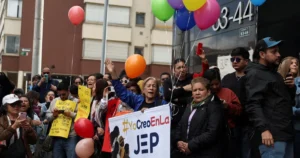
Last week, a rally against “Islamification,” spearheaded by conservative activist Jake Lang and Pastor Lorenzo Sewell, spiraled into chaos as counter-protesters clashed with attendees, resulting in 22 arrests. This event encapsulated the struggle over how Islam is perceived in American society, particularly in a city with a significant Muslim population. Lang referred to the event as a necessary stance against what he termed an invasion, while Sewell criticized local officials for allegedly favoring Islam over other communities.
A Message of Hope and Engagement
Contrasting the protests, local church leaders like JonMark Baker, associated with an Assembly of God Church in nearby Canton, advocate for a perspective that prioritizes gospel outreach over political dissent. Baker hosts a podcast where he emphasizes the importance of viewing Muslim neighbors through a lens of compassion rather than conflict. He argues that the dehumanization of Muslims undermines Christian beliefs that all individuals are created in God’s image.
Pastor Luke Halford, who shepherds a congregation of former Muslims in Dearborn, echoes Baker’s sentiments. In statements shared on social media, Halford views the city’s diverse immigrant and Muslim populations as a “Great Commission Opportunity,” suggesting that Christians should embrace the cultural shift as a chance to share their faith rather than retreat in fear.
Opportunities for Interfaith Dialogue and Understanding
Leaders like Halford aim to create spaces for interfaith dialogue, believing that the arrival of Muslim immigrants presents an unprecedented opportunity to foster understanding and community relations. He encourages Christians to engage with their neighbors, share meals, and build genuine relationships focused on faith rather than fear. Halford argues that this approach not only enriches the community but also affirms the love that is central to Christian teachings.
In contrast to the protests, he urges his fellow Christians to “move closer,” emphasizing that positive change requires engagement rather than isolation and alarmism. Baker similarly insists that resistance to Islam should be rooted in love and compassion, asserting that the call of Jesus involves offering the gospel rather than casting judgment.
Why It Matters
The situation in Dearborn highlights the critical intersection of faith, identity, and cultural change in American society today. As demographic shifts continue to evolve, communities may face heightened tensions similar to those in Dearborn. The divergent responses—ranging from confrontation to outreach—raise important questions about how societies can balance cultural integrity with inclusivity. Understanding these dynamics will be essential for fostering peaceful coexistence and interfaith dialogue in an increasingly pluralistic world.
Frequently Asked Questions
What prompted the protests in Dearborn, Michigan?
The protests were motivated by concerns over the perceived “Islamification” of Dearborn, with local conservative activists rallying to claim that Islam is threatening American values.
What is the position of local church leaders regarding the Muslim community?
Local church leaders like JonMark Baker and Luke Halford advocate for a perspective that sees the Muslim community as a mission field ripe for engagement, emphasizing love and outreach rather than conflict.
How have some Christians responded to the rise of Islam in America?
While some Christians, like Lang and Sewell, express apprehension and even hostility towards Islam, others notably assert the importance of compassion and community, suggesting that engagement is vital to fulfilling the Christian mission.
What opportunities exist for interfaith dialogue in areas with diverse populations?
Interfaith dialogue can be fostered through community events, collaborative service projects, and personal interactions, allowing individuals of different faiths to build relationships and understand one another’s perspectives.