
Summary
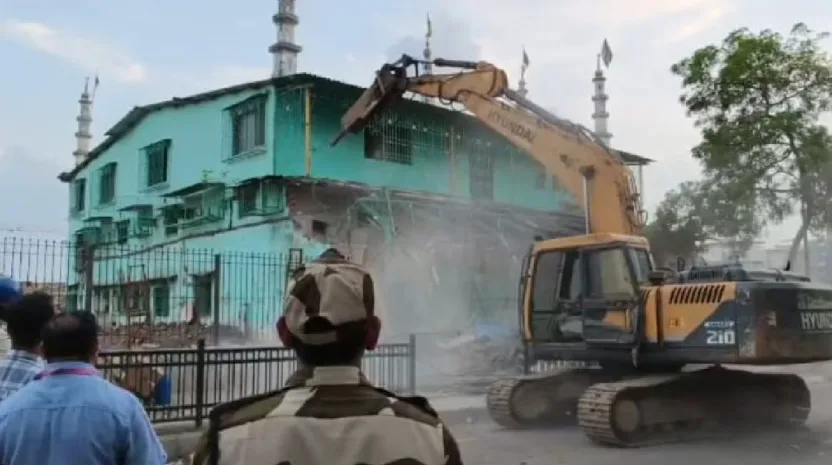
The demolition of an illegal mosque in Bhayander East, Maharashtra, underscores a longstanding conflict over land use reserved for public infrastructure. This operation, executed under the supervision of the Municipal Corporation, highlights the broader issues of social exclusion and marginalization faced by the Muslim community amid a tightening regulatory landscape.
Background of the Encroachment Issue
The newly demolished mosque was situated on Municipal Corporation reserved Plot No. 122 in the Azadnagar area, a location marred by encroachments for nearly two decades. The land, initially designated for public use, witnessed an alarming rate of unauthorised constructions, including hutments, commercial establishments, and the mosque at the center of the controversy.
The controversy gained momentum as the authorities announced plans to construct a Balasaheb Thackeray Art Hall on the same plot. In response, the Municipal Corporation launched a campaign to clear the encroachments, aiming to rectify the utilization of land reserved for public benefit. The removal of this mosque has provoked questions about the fairness and motivations behind such demolitions, particularly in a context where the Muslim community often faces heightened scrutiny and regulatory challenges.
Legal and Administrative Proceedings
Before launching the demolition operation, civic authorities adhered to legal protocols, which included assessing the encroachments and sorting out necessary administrative procedures. The mosque had persisted as a contentious focal point for years in public and political debates, as officials maintained the position that any encroachment on public land, irrespective of its nature or religious significance, needed to be dealt with according to law.
The demolition was carried out under heavy police presence to avert any potential unrest due to the sensitivities surrounding the site. Tensions were palpable during the operation, which commenced in the early morning hours, but authorities managed to execute the demolition without significant incidents. By around 10:30 am, the entire reserved plot was vacated and returned to municipal control, marking a completion of a long-standing struggle over public land.
Social Implications and Community Response
The demolition of the mosque has sparked critiques regarding the treatment of marginalized communities, particularly Muslims, in urban governance. For many, the action symbolizes ongoing social exclusion and economic boycotts faced by the Muslim population in India. Critics argue that such measures contribute to an atmosphere of fear and marginalization, pointing to a broader pattern wherein Muslim infrastructure projects are challenged or halted, often under the guise of municipal compliance.
The removal also raises questions about the future of community spaces that serve as religious and cultural centers for the local Muslim population. The sensitivity and significance of such places extend beyond mere structures; they embody the cultural identity and social fabric of the communities they serve. With the intended public infrastructure projects like the Balasaheb Thackeray Art Hall, the challenge remains to ensure that development does not further disenfranchise already marginalized groups.
Why It Matters
This incident reflects a wider trend in urban planning and governance in India that often sidelines minority communities. As such demolitions become routine, they not only impact the socio-economic standing of Muslims but also challenge the principles of secularism and equity. The reclamation of public land reserved for civic infrastructure might serve public interests, yet it is crucial to balance these interests with the need for inclusive urban development that respects the rights of all community members. The implications extend into the political realm as well, posing threats to community stability and harmony.
Frequently Asked Questions
What was the reason behind the demolition of the mosque in Bhayander East?
The mosque was demolished as part of an anti-encroachment drive by the Municipal Corporation aimed at reclaiming land designated for public use, which had been occupied by several unauthorized structures for nearly two decades.
How long had the mosque existed on the reserved land?
The mosque had been standing on the Municipal Corporation land in Bhayander East for nearly twenty years prior to its demolition.
What measures were taken to ensure the demolition proceeded smoothly?
A significant police presence was deployed around the area to prevent any law-and-order issues and ensure that the demolition operation was conducted without disruption.
What are the broader implications of this demolition for the Muslim community in India?
The demolition is viewed as part of a larger trend towards social exclusion and marginalization of Muslims in urban governance, raising concerns about how minority communities are treated in light of civic planning and public infrastructure development efforts.