
Strategic Trilateral Defence Agreement in Makkah
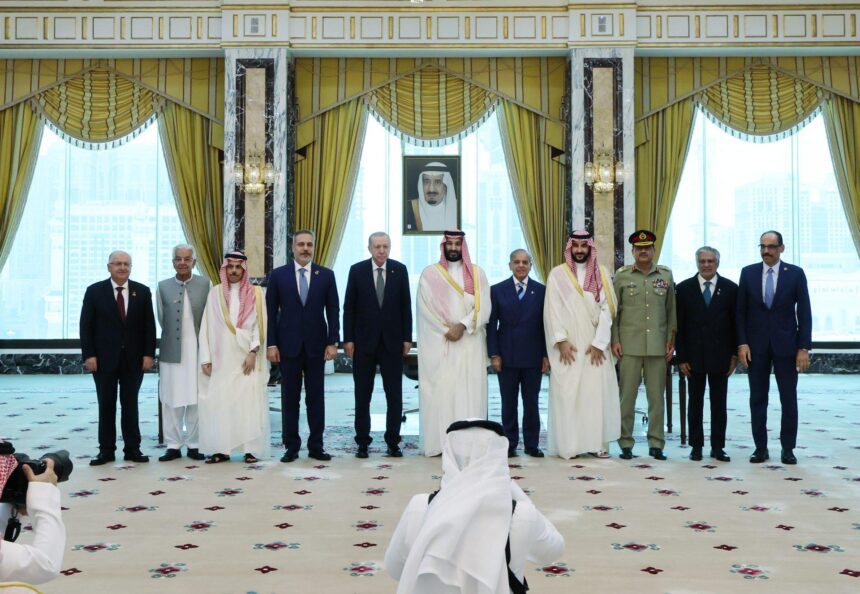
Pakistan, Saudi Arabia, and Turkiye have signed a significant trilateral defence agreement in Makkah, aimed at enhancing collective security and military cooperation amidst ongoing regional tensions. The agreement officially recognizes mutual defense commitments, stating that an armed attack against any one of the nations will be considered an attack against all three.
Key Details of the Agreement
The trilateral pact was signed by Prime Minister Shehbaz Sharif of Pakistan, Saudi Crown Prince Mohammed bin Salman, and Turkish President Recep Tayyip Erdogan, marking a new era of coordinated defense among the three Muslim-majority nations. According to Pakistan’s Foreign Office, the agreement emphasizes expanded cooperation in various defence and security sectors, reflecting a shared interest in maintaining regional peace and stability.
This agreement comes after months of discussions, gaining momentum against the backdrop of rising tensions due to military engagements involving Israel and the United States targeting Iran, along with persistent instability across the Middle East. The pact is particularly notable because it aligns three countries with substantial strategic capabilities: Pakistan, as the only nuclear-armed Muslim state; Turkiye, which possesses NATO’s second-largest military; and Saudi Arabia, a major Arab economy and energy powerhouse.
Historical Context and Evolving Relations
Historically, relationships among these countries have been complex. While Pakistan has enjoyed strong ties with both Saudi Arabia and Turkiye, the latter two have previously encountered disagreements over regional politics, particularly during events like the Arab Spring and conflicts in Libya and Egypt. However, in recent years, these countries have sought to align their stances more closely in response to security challenges in the region.
Analysts suggest the new agreement could significantly alter the regional balance of power, particularly if the cooperation is robustly implemented. Both Pakistan and Turkiye are enhancing their defense-industrial sectors, expanding their capabilities to develop and export military equipment. The agreement is poised to further this development while fostering enhanced military coordination among the nations without undermining their existing international alliances.
Significance for Regional and Global Dynamics
This trilateral agreement not only strengthens the military ties between these nations but could also redefine regional geopolitics. As Islamic and Middle Eastern states navigate increasing military and geopolitical tensions, this cooperative effort could enhance their collective leverage on the global stage. In an era marked by shifting alliances and rising nationalism, the capabilities of the combined military forces of Pakistan, Saudi Arabia, and Turkiye could act as a powerful deterrent against external threats, thereby impacting international discourse surrounding security in the region.
Why It Matters
The agreement has significant implications for global security and regional politics. Developers and policymakers should be aware that the formation of such defense agreements can lead to increased military development, heightened tensions with rival states, and potential arms races. Understanding these dynamics is crucial for industries and stakeholders interested in the implications for markets, especially in defense and international relations sectors. For users of data analytics and AI technologies, recognizing how these geopolitical shifts affect economic stability and supply chains may offer insights into future investment strategies and market predictions.
Frequently Asked Questions
What countries are involved in the trilateral defence agreement?
The agreement involves Pakistan, Saudi Arabia, and Turkiye.
What does the agreement signify for mutual defense?
It establishes that an armed attack against any one of the three countries will be viewed as an attack against all, creating a mutual defense commitment.
How long have these discussions been taking place?
Discussions around the agreement have been ongoing since last year, intensifying amid rising regional tensions.
What impact could this agreement have on regional security?
If fully implemented, it could significantly alter the regional balance of power, enhancing military coordination and collective security efforts among the three nations.