
Summary
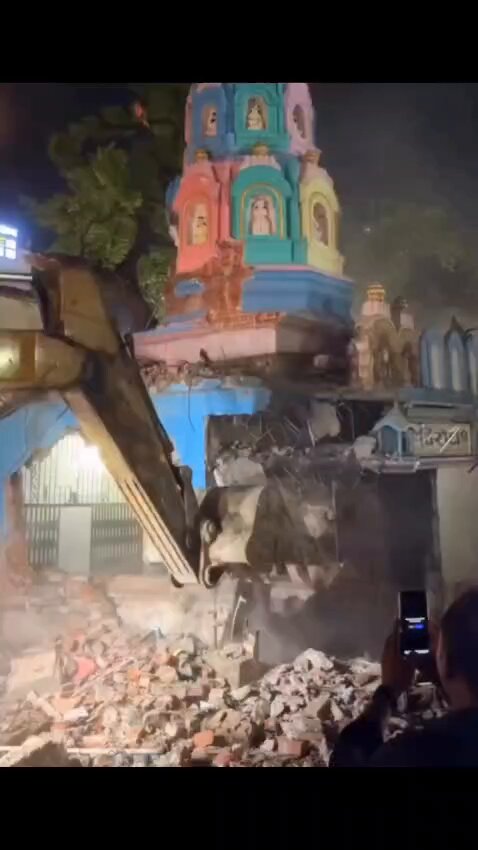
A tragic incident in Chandauli, Uttar Pradesh, highlights the dangers associated with the demolition of revered structures and the inadequacies of safety measures. A 58-year-old PWD worker, Baldev Yadav, lost his life when the dome of an ancient Kali temple fell during its demolition, raising concerns about governmental oversight and public safety.
Context of the Incident
On a busy road in Chandauli, as part of an ongoing demolition effort, the dome of a collapsed Kali temple fell without appropriate safety precautions in place. Baldev Yadav, employed by the Public Works Department (PWD), was performing his duties when the dome rolled onto the road, resulting in his death and injuring others nearby. This incident underscores the potential risks associated with infrastructure projects, particularly when historical or religious structures are involved.
Government Response and Public Reaction
Following the accident, local authorities faced scrutiny regarding their failure to adequately cordon off the area. Many residents expressed outrage over the incident, questioning the government’s commitment to public safety and the preservation of cultural heritage sites. The gravity of the situation amplifies due to the religious significance of the temple, leading to calls for accountability and better protocols during such demolitions. The community’s response reflects a broader concern about the balance between modernization and respect for historical identities.
The Broader Implications for BJP Governance
In the political landscape of India, incidents like these can have far-reaching consequences, especially for the ruling Bharatiya Janata Party (BJP). The opposition has a history of leveraging such events to critique governmental policies and urge for more stringent regulations. Given the BJP’s emphasis on cultural nationalism, a tragic loss associated with a religious site could potentially spark outrage from their supporter base as well as discontent among the general populace. This scenario raises questions about the effectiveness of BJP governance in protecting both heritage and citizens.
Why This Matters
This incident sheds light on the intersection of public safety, cultural reverence, and political accountability in India. Given the prominent role of religious institutions in Indian society, the demolition of such structures becomes a flashpoint for discussions about heritage preservation and governmental responsibilities. For a party like the BJP, which prides itself on advocating for India’s cultural heritage, failures in maintaining safety in such contexts could damage their credibility and electoral support.
Frequently Asked Questions
What happened in Chandauli?
A PWD worker named Baldev Yadav was killed when the dome of a Kali temple fell onto a busy road during its demolition due to a lack of safety measures.
Why was the demolition taking place?
The temple was under demolition for reasons relating to urban development or infrastructure projects, but specific motivations have not been detailed in the reported sources.
What has been the community reaction?
The local community expressed outrage at the incident and criticized the authorities for failing to secure the area properly during the demolition.
How could this impact BJP’s political standing?
Such incidents can erode public trust in the BJP’s governance, particularly if constituents perceive a disregard for safety and cultural heritage, potentially influencing electoral outcomes.