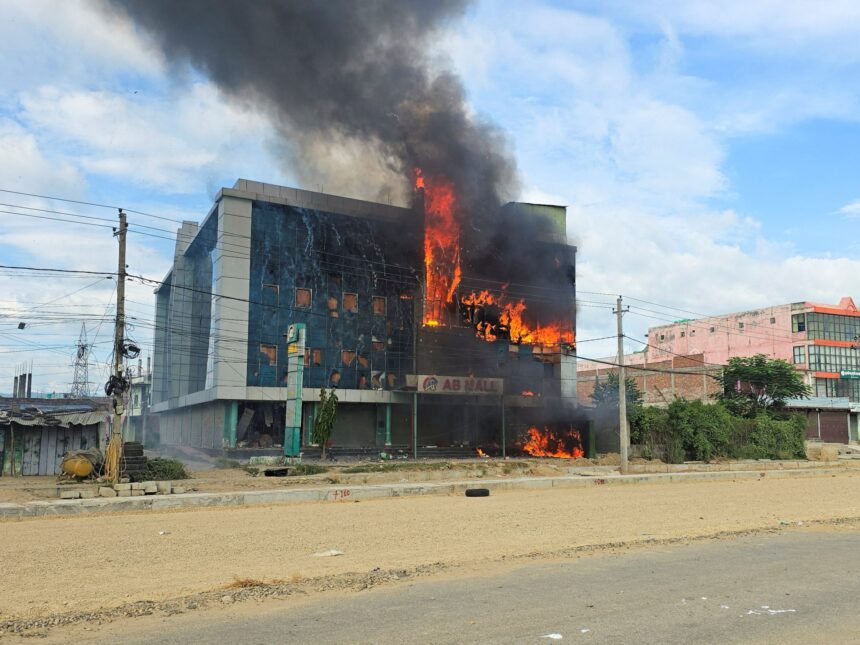

Recent violence in Nepal resulting from tensions between Hindu and Muslim communities has left three dead, raising alarms about the state of communal harmony in the region. Prime Minister Balendra Shah has called for calm and unity, while authorities impose curfews to prevent further clashes. This incident highlights the fragile intercommunal dynamics in Nepal, where significant demographic diversity exists alongside rising polarization.
Background of the Violence
The violence erupted in Sunsari district, near the Indian border, where a dispute arose during a Hindu procession. Hindu participants raised religious flags and played loud music, which ignited tensions with local Muslim residents. As confrontations escalated, police intervened, resulting in the deaths of two men. A third death occurred during a subsequent protest in Siraha district, despite a curfew intended to maintain order.
According to police spokesman Abi Narayan Kafle, the law enforcement action included live ammunition, which has drawn criticism and raised questions about the appropriateness of the force used. Observers note that incidents like these often have deep-rooted causes, often linked to social and economic marginalization experienced by minority communities, such as Muslims, in predominantly Hindu Nepal.
Political Response and Implications
In his first significant public address since taking office in March, Prime Minister Balendra Shah has called for restraint and responsibility among the citizenry. He stated, “I sincerely appeal to all citizens, civil society, religious communities, respected leaders, and media to exercise patience and maintain peace.” This addresses the needs for communal harmony and national unity amidst rising tensions.
Shah assured that the government would conduct a “completely fair and transparent” investigation into the incidents, with accountability for those responsible for the unrest. His administration’s effectiveness in managing these tensions will be critical in shaping public perception and maintaining social stability in a diverse nation with a history of communal strife.
Challenges for Religious Minorities
This incident exemplifies broader issues affecting religious and ethnic minorities in Nepal. While Hindus constitute approximately 80 percent of the population, the sizeable Muslim communities in southern Nepal often face socio-economic discrimination and marginalization. The events in Sunsari highlight how religious differences can quickly escalate into violence, reflecting underlying grievances related to social inclusion and economic opportunities.
In recent years, many Muslim citizens have reported feeling increasingly isolated, and incidents of communal violence have contributed to a climate of fear and instability. The government’s response to these challenges, including ensuring equal treatment and preventing violence, will be essential in fostering a more inclusive society.
Why It Matters
The violence in Nepal carries significant implications not only for local communities but also for regional stability in South Asia. Increasing polarization and communal strife can disrupt social harmony, leading to broader conflicts that can draw in neighboring nations and complicate international relations. Moreover, this incident serves as a case study for understanding the dynamics of intercommunal relations in pluralistic societies, which are relevant to policymakers and social scientists observing similar situations in India and beyond.
Addressing the complex factors contributing to violence between religious groups requires a nuanced approach that includes economic development and social programs designed to promote inclusivity, rather than division. The outcomes of the current situation will significantly impact the future of Nepal’s social cohesion and the government’s credibility in handling diversity.
Frequently Asked Questions
What caused the violence between Hindu and Muslim groups in Nepal?
The violence stemmed from a dispute during a Hindu procession involving loud music and religious flags, leading to clashes that resulted in three deaths.
How has the Nepalese government reacted to the unrest?
Prime Minister Balendra Shah has called for calm and national unity, promising a fair investigation into the violence and enforcing curfews in affected areas.
What is the significance of the demographics in Nepal regarding this conflict?
Hindus make up around 80 percent of Nepal’s population, with substantial Muslim communities present, especially in the south. The clash underscores existing tensions and the marginalization of religious minorities.
What measures are being implemented to prevent further violence in Nepal?
Authorities have imposed curfews in affected areas and increased police presence to restore order and prevent further incidents of violence.