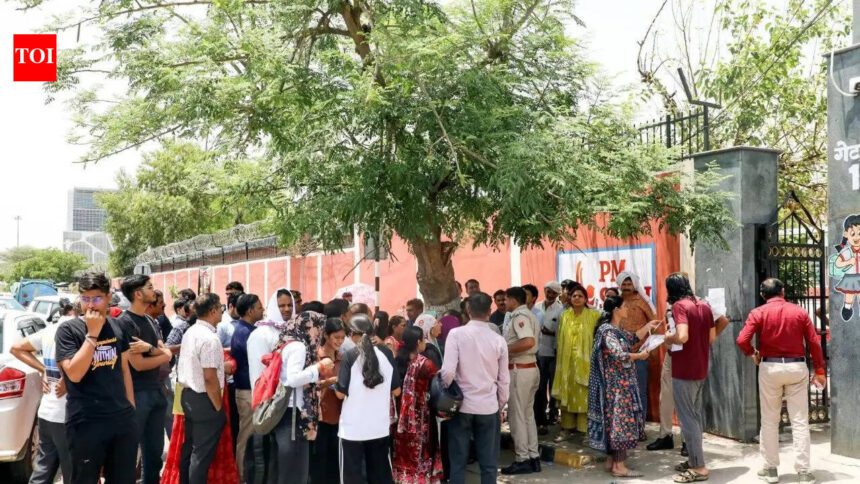

NEW DELHI: The National Testing Agency (NTA) has announced that the re-examination for the NEET (UG) 2026 will be held on June 21, following the cancellation of the initial exam conducted on May 3 due to allegations of irregularities. This decision affects numerous medical aspirants nationwide.
The government has ordered a thorough investigation by the Central Bureau of Investigation (CBI) into the alleged malpractice associated with the examination. The NTA stated that the cancellation was made “in the interest of students” to maintain public confidence in the examination system.
“Based on inputs examined by the NTA in conjunction with central agencies, and shared findings from law enforcement, the National Testing Agency, with the Government of India’s approval, has decided to annul the NEET (UG) 2026 examination conducted on May 3 and to reschedule it on dates to be announced,” the agency posted on social media platform X.
The inputs received indicated that the examination process could not be upheld, and details regarding the re-examination dates, alongside the reissued admit card schedule, will be shared through official channels shortly.
Protests erupted in various cities following the exam’s cancellation, with members of the National Students’ Union of India staging demonstrations against the reported leak and other irregularities.
Why was NEET-UG 2026 cancelled?
The controversy emerged after investigators discovered that a “guess paper,” allegedly containing questions closely matching those on the actual exam, had circulated among NEET aspirants weeks prior to the test. Investigators noted that this document, which comprised around 410 questions, was reportedly distributed through WhatsApp groups just 42 hours before the exam. Officials revealed that nearly 120 Chemistry questions perfectly matched the NEET-UG 2026 paper.
The Rajasthan Police Special Operations Group initiated an investigation after reports indicated “striking similarities” between the circulated material and actual exam questions. Additional Director General of SOG Vishal Bansal stated that the inquiry is examining whether the material was part of an organized cheating network.
CBI widens probe
The CBI is expanding its investigation, attempting to uncover potential “insider roles” in the leak. A suspect was detained from Pune, while a retired chemistry professor was questioned in Latur. With the number of arrests now totaling seven, the investigation aims to determine whether the leak originated from within the secure chain of custody preceding the examination.
CBI officials are seeking details from the NTA about individuals who had access to the question paper before it was sealed, including question setters and panel members involved in its creation.
In Pune, a beauty parlour owner, Manisha Waghmare, was arrested for allegedly acting as an intermediary in the leak network. She has been accused of receiving money through multiple bank accounts before the exam. Waghmare is reportedly connected to Dhananjay, a BAMS graduate running a consultancy in Pune, who was among six individuals apprehended earlier in cities like Jaipur, Gurgaon, Nasik, and Ahilya Nagar.
As investigations continue, searches were conducted at 14 locations, and arrested suspects were taken to court for a seven-day custody for further interrogation. The CBI intends to pursue all leads, suggesting that more arrests may occur soon.
In Latur, the detained retired chemistry professor was part of the Marathi translation panel for NEET and had access to the question paper during the translation process. Latur has emerged as a focal point for this investigation, with a parent claiming that 42 questions in a mock test from a local coaching institute closely resembled those on the actual NEET paper.
In Rajasthan, Dinesh Biwal, one of the accused, is believed to have scanned the leaked question paper and distributed it digitally, reportedly receiving it from another suspect, Yash Yadav of Gurgaon, for his son. The CBI has indicated that the case involves a “larger conspiracy” and is pursuing custodial interrogation to trace financial transactions, recover electronic evidence, and identify any potential links to NTA officials.