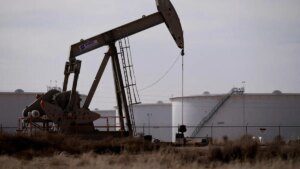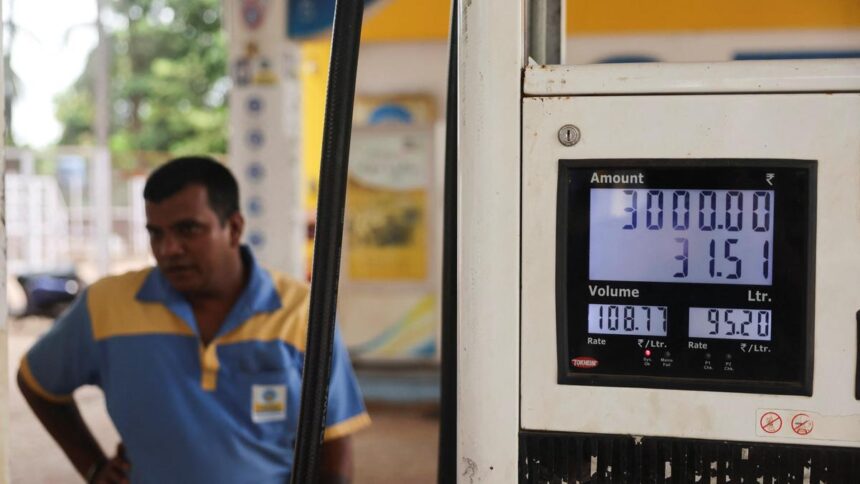

Government authorities announced on May 15, 2026, that oil marketing companies (OMCs) have raised the prices of petrol, diesel, and compressed natural gas (CNG). The price hikes are around ₹3 per litre for petrol and diesel, and ₹2 per kg for CNG. The increases come as OMCs report significant financial losses attributed to rising crude oil prices.
Indian Oil Corporation (IOCL), Bharat Petroleum Corporation (BPCL), and Hindustan Petroleum Corporation (HPCL) indicated they have been incurring losses of about ₹20 per litre on petrol and ₹100 per litre on diesel sales due to high oil prices, despite retail prices remaining unchanged in India since March 2024. The last adjustment before this price hike was a ₹2 reduction prior to the Lok Sabha elections in 2024, making this increase the first since April 2022.
Although fuel prices have been deregulated, allowing OMCs to revise prices daily based on crude oil pricing trends, rates have largely remained static due to the politically sensitive nature of the commodity. Although they are currently facing losses, OMCs benefited from lower global crude prices in previous years, leading to stagnation in retail fuel prices.
In the major metropolitan areas, petrol prices are as follows: Delhi has reached ₹97.77 (+₹3.00), Kolkata stands at ₹108.74 (+₹3.29), Mumbai is at ₹106.68 (+₹3.14), and Chennai is priced at ₹103.67 (+₹2.83). Diesel prices also reflect similar increases, reaching ₹90.67 (+₹3.00) in Delhi, ₹95.13 (+₹3.11) in Kolkata, ₹93.14 (+₹3.11) in Mumbai, and ₹95.25 (+₹2.86) in Chennai.
The latest hike prompted transport operators in West Bengal to estimate a 3% increase in freight costs and urged the government to ensure that product pricing does not disproportionately escalate.
The price increases have coincided with a spike in wholesale inflation, which surged to an almost four-year high of 8.3% in April, largely driven by rising energy costs. This inflationary trend has raised concerns, with the Commercial and Industry Ministry highlighting the contributions of mineral oils and crude petroleum to the current surge.
In response to the fuel price hike, various political figures have criticized the government. Akhilesh Yadav, president of the Samajwadi Party, employed humor by sharing a political cartoon that underscores the disparity between rising fuel costs and Prime Minister Narendra Modi’s austerity call. Meanwhile, Trinamool Congress leader Derek O’Brien voiced concerns about voter exploitation before such price increases.
Members of the Congress party have attributed the fuel price hike to recent geopolitical tensions, emphasizing that ongoing conflicts in West Asia have contributed to the rising global crude prices, thereby affecting domestic costs. They warned this would exacerbate inflationary pressures and potentially revise growth forecasts downward.
As markets opened, the Indian stock indices reacted negatively, reflecting concerns over the implications of the fuel price hike amid mixed global economic cues.