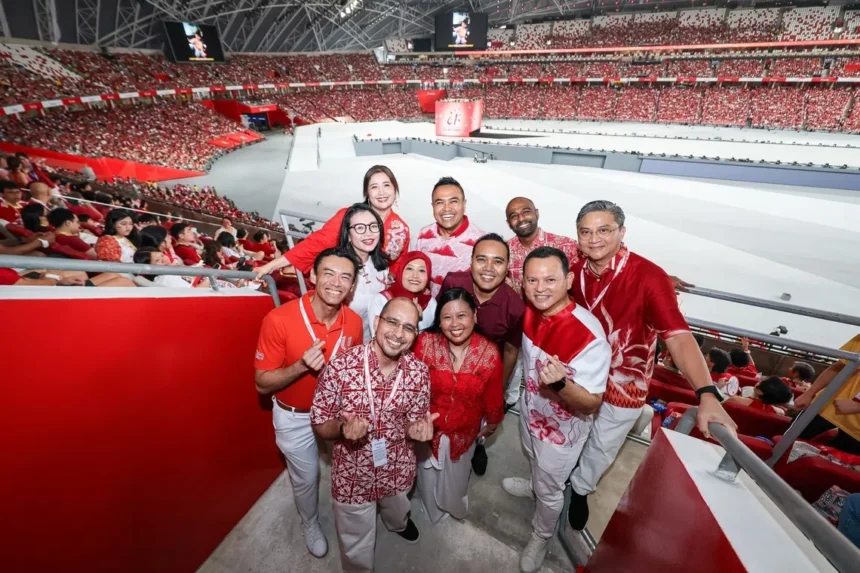

In a recent address highlighting the ongoing contributions and developments within the Malay/Muslim community in Singapore, Prime Minister Lawrence Wong emphasized the importance of fostering leadership and community resilience as the nation navigates a rapidly changing socio-economic landscape. His remarks, delivered in Malay during the 2026 National Day Rally, underscore both the achievements and challenges faced by the community, reflecting a commitment to continuous dialogue and support.
Strengthening Community Leadership
Speaking on August 23, PM Wong indicated that the current cohort of Malay/Muslim office-holders and Members of Parliament (MPs) will continue to be rejuvenated and strengthened. He highlighted younger leaders like Zhulkarnain Abdul Rahim, 45, and Syed Harun Alhabsyi, 41, who have stepped into significant roles after the 2025 General Election. Zhulkarnain transitioned from a career as a lawyer, while Syed Harun brought expertise as a psychiatrist. Their private sector experience is seen as an asset to the public service.
The Prime Minister noted their contributions to various initiatives such as the Committee for Economic Resilience, designed to support Malay/Muslim workers and businesses adapting to economic changes. This committee is spearheaded by MPs focusing on youth skills development, exposing them to opportunities in emerging sectors.
Community Initiatives and Collaborations
PM Wong underscored that the initiatives being carried out are a testament to the collective effort of the Malay/Muslim office-holders and community leaders. The recently expanded M3 initiative, fostering collaboration among Mendaki, the Islamic Religious Council of Singapore, and other partners, serves to enhance resources available to the community.
The Santunan Emas programme, beneficial for seniors, was cited as an example of successful community engagement, providing necessary support and healthcare. This initiative aims to expand beyond its original location, enhancing the reach of its services across various neighborhoods, demonstrating the government’s commitment to inclusivity.
Addressing Community Concerns
While unveiling plans for new initiatives, PM Wong acknowledged concerns within the community regarding job security and rising costs. His message of collaboration emphasized that challenges could be overcome collectively, echoing the proverb “berat sama dipikul, ringan sama dijinjing” (a burden shared is a burden halved). The government’s continued close interactions with community leaders aim to better prepare for impending challenges.
Wong reiterated that the overarching goal is to ensure every member of the Malay/Muslim community possesses the confidence and capabilities to succeed in a dynamic environment, urging the community to remain connected to its heritage while contributing significantly to the nation’s progress.
Why It Matters
The developments within the Malay/Muslim community reflect broader socio-political trends and are significant for understanding governance in multicultural societies. This emphasis on inclusive representation is crucial for social cohesion, enabling diverse voices to contribute to national narratives. The success of programs targeted at economic resilience could serve as a model for similar initiatives in other regions, fostering greater understanding and collaboration between government sectors and communities, ultimately benefiting social and economic stability.
Frequently Asked Questions
What are the key initiatives mentioned by PM Wong for the Malay/Muslim community?
PM Wong highlighted initiatives such as the Committee for Economic Resilience and the expanded M3 program, which focus on youth skills development and community collaboration to improve economic opportunities.
Who are the younger leaders appointed recently in the Malay/Muslim community?
Zhulkarnain Abdul Rahim and Syed Harun Alhabsyi are among the younger leaders who have taken on significant roles as Ministers of State, bringing diverse professional backgrounds to their positions.
Why is community collaboration important in this context?
Community collaboration enhances resource sharing, collective problem-solving, and ensures that diverse perspectives are included in policy-making, which supports social cohesion and economic growth.
What concerns did PM Wong address regarding the community?
PM Wong acknowledged concerns related to job security and rising costs, emphasizing that these challenges could be collectively navigated with cooperation between the government and community leaders.