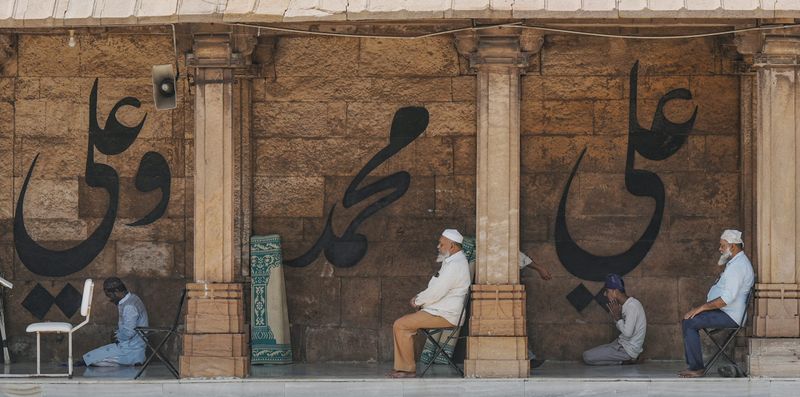

Muslims in India are facing increasing discrimination, economic boycotts, and social exclusion as the influence of the Sangh Parivar and the Bharatiya Janata Party (BJP) grows. These conditions reveal a disturbing transformation in the societal landscape, where a collective identity is imposed upon individuals and their rights are increasingly marginalized.
The Erosion of Identity Among Indian Muslims
The term “Indian Muslim” is often used to describe a diverse group of individuals, yet this collective label fails to encompass the complexity and variety of experiences within the community. Muslims in India come from various backgrounds, shaped by different cultures, languages, and socio-economic statuses. The idea of a singular Muslim identity arises primarily in the context of discrimination, wherein professional identities are eclipsed by religious identity. For instance, public figures such as A.R. Rahman and Shah Rukh Khan have been reduced to their Muslim identity amid a hostile socio-political climate.
As the collective narrative shifts, many Indian Muslims have begun to feel the acute weight of their religious identity for the first time, often in overtly hostile environments. This alarming trend creates a climate of fear, where identification as Muslim leads to societal repercussions, including violence and hostility from both individuals and institutional authorities.
Widespread Discrimination and Violence
Daily life for many Indian Muslims is marred by uncertainty and fear. Reports reveal instances of violence targeting Muslims, often encouraged by political rhetoric from leaders affiliated with the BJP. A chilling example involves a Muslim woman recounting a train journey where her husband was questioned about his identity, leading to a child suggesting that Muslims should be shot. Such incidents are increasingly common and create a pervasive atmosphere of distrust.
Discrimination extends beyond physical violence. The judicial system has also shown biases that disproportionately affect the Muslim community. For instance, when conflicts arise, the response from law enforcement is often harsher on Muslims than on their Hindu counterparts. In many cases, Muslim individuals face immediate punitive measures that do not apply to Hindu offenders, leading to a tangible sense of existential threat and injustice.
Political Marginalization and Resistance
The political landscape in India has evolved to systematically disenfranchise Muslims. While voting was once viewed as the bedrock of civic rights for Muslims, this foundational right is now under threat. Reports indicate that Muslims are grappling with challenges ranging from deletion from electoral rolls to outright intimidation at polling booths. There is a growing perception that even their votes are being devalued, further alienating them from political representation.
In response to these challenges, many Muslims are actively fighting to retain their civil rights, often at great personal risk. They engage with the judicial system to confront hate speech and violence, revealing an impressive resilience. Activists like Zakia Jafri, who fought for nearly two decades for justice, exemplify this ongoing struggle. Despite being seen with suspicion by authorities, Muslims persist in demanding their rights, asserting that they belong in the larger narrative of Indian society.
Why It Matters
The marginalization of Muslims in India highlights a broader global pattern where minority groups face systemic discrimination. This has implications not only for social cohesion in India but also resonates in international discussions surrounding human rights and religious freedom. Understanding these dynamics is crucial for global stakeholders, including policymakers and organizations advocating for social justice. The situation in India serves as a critical case study of the dangers posed when political narratives undermine the diversity that enriches a nation.
Frequently Asked Questions
What is the current situation for Muslims in India?
Muslims in India are experiencing increased social discrimination, violence, and political disenfranchisement, particularly under the current BJP government.
How has the perception of Muslims changed in Indian society?
There has been a growing trend of reducing individuals to their religious identity, overshadowing their professional and personal identities, and creating a societal climate of hostility.
What can be done to protect the rights of Muslims in India?
Efforts are being made by various groups within the Muslim community to safeguard their civil rights through legal avenues and political engagement, although these efforts face significant challenges.
What role do political leaders play in the marginalization of Muslims?
Political leaders, particularly from the BJP, often employ language and rhetoric that exacerbate divisions and foster discrimination against Muslims, contributing to an environment of fear and exclusion.