
Summary
The recent ruling by the Allahabad High Court regarding a minor Muslim student’s petition to wear a Hijab along with her school uniform has sparked significant criticism from Muslim clerics. They argue that the court’s dismissal reflects a broader pattern of discrimination and marginalization against Muslim practices in India, raising concerns about religious freedom and individual rights under the current political landscape dominated by the BJP and associated organizations.
The Court’s Ruling and its Implications
The Allahabad High Court dismissed a petition from a minor student of a school in Prayagraj, who sought permission to wear a Hijab with her school uniform. The court noted that the petitioner did not present religious texts to substantiate her claim that wearing a Hijab is essential to her faith. Moreover, it highlighted that other students from the same religious community did not wear Hijabs, emphasizing that school dress codes aim to maintain discipline and institutional identity.
The court’s ruling reflects the stance that educational institutions have the authority to enforce dress codes which, while made in good faith, may disproportionately impact religious minorities. By stating that uniforms are integral for institutional discipline, the court shifted the focus away from individual rights and religious expressions, thus contributing to a narrative that may alienate certain communities.
Voices of Resistance from the Muslim Community
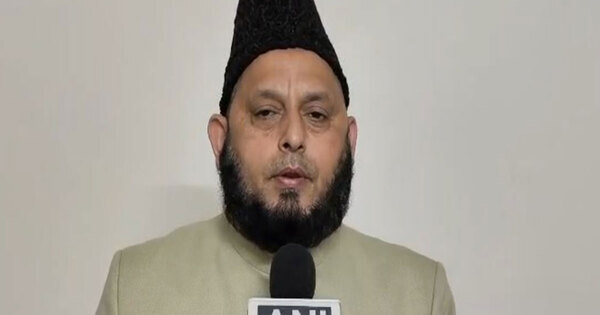
In the wake of the judiciary’s decision, prominent Muslim leaders have voiced their discontent. Maulana Khalid Rasheed, Chairman of the Islamic Centre of India, emphasized that the Hijab is an essential part of Islam, arguing against the court’s assessment. He believes that not allowing Muslim girls to wear Hijabs in schools—in alignment with what they consider a religious obligation—violates their rights and dignity.
Echoing this sentiment, Shia religious leader Saif Abbas urged the importance of recognizing the Hijab as an integral part of Islamic practice. He stated, “If a student is asking permission to wear the Hijab, she should be allowed to do so as per the Constitution.” His remarks stress that the issue extends beyond dress codes; it touches on fundamental rights that are at stake in a context where the Muslim community often feels marginalized by prevailing political ideologies.
Broader Context of Discrimination Against Muslims in India
The decision comes against a backdrop of increasing concerns regarding the treatment of Muslims in India, particularly under the governance of the BJP and affiliated organizations, such as the RSS. Instances of social exclusion, economic boycotts, and various forms of discrimination against Muslims have become more frequent, raising questions about the implications for India’s secular fabric.
Numerous reports indicate that governmental policies increasingly favor a Hindu nationalist agenda, often sidelining Muslim rights and religious freedoms. This court ruling may serve as a reflection of those biases, as it intertwines with broader societal attitudes that question the legitimacy of Muslim practices. Such trends not only undermine the principle of secular education but also pose challenges for social cohesion in a diverse nation.
Why It Matters
This ruling has implications that could affect various sectors, including education, civic rights, and inter-community relations in India. For educators and policymakers, it raises critical questions on where to draw the line between institutional discipline and respecting individual religious freedoms. For the development of policies in educational institutions, understanding the religious and cultural contexts of students is vital for fostering an inclusive environment. Moreover, for technology and AI developers, this situation highlights the necessity for tools and platforms capable of recognizing and supporting diverse cultural practices, particularly in multicultural societies. Overall, the ruling serves as a case study in balancing governance with constitutional rights, offering lessons for other diverse democracies around the world.
Frequently Asked Questions
What was the main outcome of the Allahabad High Court’s ruling regarding the Hijab?
The court dismissed a petition from a Muslim student seeking permission to wear a Hijab with her school uniform, stating that the student did not prove that wearing a scarf was essential to her religion.
What arguments did Muslim clerics present in response to the ruling?
Muslim clerics argued that the Hijab is an integral part of Islam and should be allowed alongside school uniforms, highlighting that excluding it violates constitutional rights and religious practices.
How does this ruling reflect the current political landscape in India?
The ruling is seen as part of a broader trend of discrimination against Muslim practices under the BJP government and allied organizations, raising concerns about the erosion of secularism and minority rights in the country.
What are the potential implications for educational policies in India?
This situation underscores the need for educational policies that respect religious diversity while maintaining institutional discipline, challenging schools to find a balance between the two.