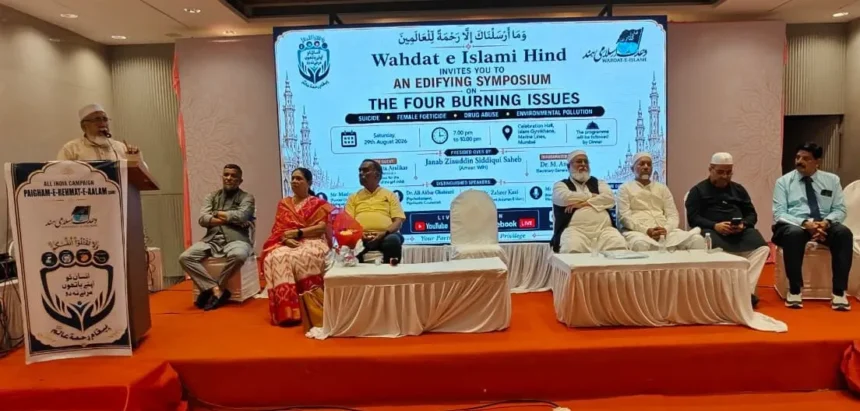

A recent symposium organized by Wahdat-e-Islami Hind in Mumbai shed light on critical social issues affecting communities in India, such as female foeticide, suicide, drug addiction, and environmental pollution. The event emphasized the need for a multifaceted approach that merges legal measures with heightened social awareness and individual responsibility.
Social Challenges Confronted at the Symposium
The symposium, held at Islam Gymkhana, attracted numerous social activists, academics, and community representatives. It marked the conclusion of a ten-day nationwide campaign titled Paigham-e-Rahmat-e-Alam ﷺ (Message of the Mercy to the Worlds ﷺ). The speakers drew connections between the four discussed issues and the teachings of the Qur’an, highlighting the social roots and possible remedial actions for each problem.
In his keynote address, Muhammad Ziauddin Siddiqui, Ameer-e-Markazi of Wahdat-e-Islami Hind, acknowledged that while laws are essential for tackling societal challenges, true change requires a transformation in social attitudes. He pointed out that female foeticide largely stems from a deeply entrenched perception of daughters as a burden, stressing that solutions must begin with altering societal views towards women.
Personal Stories and Collective Responsibility
Sunita Aralekar, an activist from Latur and the chief guest of the event, shared her harrowing experience as a survivor of female foeticide. Allegedly buried alive by her father, she was rescued and raised by her grandfather. Aralekar emphasized that fighting against female foeticide requires not just individual efforts but collective action involving counseling and community initiatives.
During her speech, she criticized the misuse of medical technology for sex selection and illustrated how societal norms contribute to the devaluation of female lives. Her story serves as a potent reminder of the urgent need for awareness campaigns and community engagement in combating such deeply rooted biases.
Moral Frameworks and Environmental Accountability
Dr. Muhammad Anees, General Secretary of Wahdat-e-Islami Hind, pointed out that advancements in science and technology must be coupled with moral guidance. He remarked, “Knowledge alone is not enough; guidance is also necessary,” referencing the destructive capabilities of scientific knowledge without ethical restraints.
On environmental pollution, Dr. Ilyas Khan insisted that the issue goes beyond mere regulation. He attributed ongoing environmental degradation to consumerism and material pursuits, urging that the Earth is a trust and must be treated responsibly. Khan’s insights emphasize the shared obligation of individuals and communities to protect our natural resources.
Addressing Mental Health and Drug Addiction
Prof. Ibrahim Khalil Abidi spoke on the growing issue of suicide, asserting that cultivating hope and emotional support is essential for mental well-being. He highlighted Islamic teachings that encourage finding purpose amid adversity, emphasizing the significance of protecting life as a societal trust.
Dr. Ali Akbar Ghabrani focused on the adolescent demographic for drug addiction, pointing out vulnerabilities in the 13-19 age group. He argued for the necessity of positive role models within familial settings, suggesting that constructive environments can significantly mitigate risk factors associated with substance abuse.
Why It Matters
The discussions at this event underscore critical social issues that are often overlooked in mainstream discourse. By highlighting the interconnectedness of female foeticide, suicide, drug addiction, and environmental pollution, the campaign advocates for a comprehensive approach that integrates legal, ethical, and educational frameworks. This approach is essential, especially in regions where marginalized communities face systemic discrimination and social exclusion, providing a roadmap for effective activism and policy-making.
Frequently Asked Questions
What is female foeticide, and why is it a pressing issue in India?
Female foeticide refers to the practice of aborting a female fetus due to societal preferences for male children. This issue is pressed by cultural attitudes that view daughters as a burden, leading to significant gender imbalances.
How do social attitudes influence issues like suicide and drug addiction?
Social stigma and lack of support can exacerbate mental health issues and substance abuse. Awareness and community support play vital roles in addressing these challenges.
What measures can be taken to combat environmental pollution?
Effective measures include stricter enforcement of environmental laws, raising public awareness, promoting sustainable consumption, and encouraging community involvement in conservation efforts.
How does education factor into these social issues?
Educational initiatives can foster moral consciousness and raise awareness about these challenges, helping individuals cultivate a sense of responsibility and engagement in their communities.