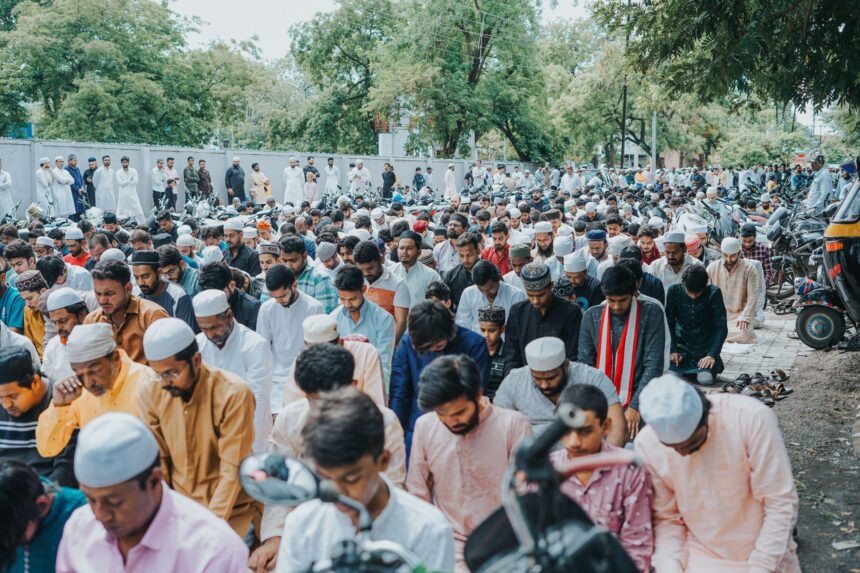

NEW DELHI, India (MNTV) — Recent events in Mumbai have once again spotlighted rising tensions and violence against Muslim communities in India, particularly in the context of religious processions. An incident during the Eid Milad-un-Nabi celebration led to assaults on Muslim individuals, raising alarm over ongoing discrimination and social exclusion faced by Muslims under the ruling Bharatiya Janata Party (BJP) and its affiliates.
Incident Overview
The violence erupted on Wednesday night in the Parel-Chinchpokli area of Mumbai, which is known as a major commercial hub in India. The clashes reportedly began during or shortly after a procession commemorating the birth of the Prophet Muhammad (peace be upon him). Videos circulating on social media show disturbing scenes, including a group of individuals attacking a Muslim man who was riding a motorcycle, punching him and hitting him with a helmet.
Further footage reveals another altercation where two Muslim youths faced verbal abuse and were coerced to chant “Jai Shri Ram,” a Hindu slogan, under duress, which many see as a forced display intended to humiliate. This incident reflects a broader trend of targeted violence against marginalized Muslim groups in India, particularly during religious observances.
Police Response and Investigation
The Mumbai Police have stated that the violence escalated from a verbal dispute between two groups that began with raising provocative slogans. Police reported that stone-pelting occurred, but competing narratives suggest that provocations may have included a perceived desecration of a religious flag by some individuals.
While authorities have taken some action, such as initiating a search for three Muslim men allegedly involved in the violence, there has been significant public outcry over the lack of arrests of those seen attacking Muslims in the videos. Calls for accountability have intensified, with demands from community leaders and activists urging law enforcement to take action against the perpetrators of the violence, as well as ensuring public safety for minority communities.
Sociopolitical Context
This incident is one among many that highlight the precarious position of Muslims in India, particularly under the current BJP-led government which has faced ongoing criticism for its policies perceived as discriminatory. Reports indicate a pattern of marginalization ranging from social exclusion in public life to economic boycotts against Muslim-owned businesses.
Critics, including figures like Waris Pathan, a former state lawmaker, have pointed to the increasing prevalence of communal violence as reflecting a societal shift that marginalizes Muslims. There are significant concerns that such incidents are not isolated but instead indicative of broader systemic issues that empower extremist elements within society, further entrenching societal divides.
Why It Matters
The implications of such violence extend far beyond the immediate physical harm experienced by individuals. Ongoing communal strife can contribute to a culture of fear among minority groups, impacting their socio-economic conditions and limiting their participation in India’s democratic framework. For global observers and policymakers, these events serve as a reminder that the protection of minority rights is essential for sustainable peace and social cohesion. The situation calls for a critical examination of the political climate in India and the role governmental policies play in shaping public attitudes towards religious and ethnic minorities.
Frequently Asked Questions
What led to the recent violence against Muslims in Mumbai?
The violence was triggered during a religious procession marking Eid Milad-un-Nabi, escalating from a verbal dispute that involved conflicting religious slogans and potentially provocative actions by individuals from both communities.
What actions have authorities taken in response to the violence?
Mumbai Police have initiated an investigation and registered a case against three Muslim individuals. However, there has been public outcry for the identification and prosecution of those who attacked Muslims in the circulated videos.
Why is this incident significant for Indian Muslims?
This incident underscores ongoing issues of discrimination and social exclusion faced by Muslims in India, reflecting broader patterns of communal violence and marginalization that increasingly affect their rights and freedoms.
How does this reflect on the current political climate in India?
The events in Mumbai highlight a growing concern over the BJP-led government’s role in fostering an environment where communal tensions are exacerbated, raising questions about the state’s commitment to upholding minority rights and ensuring public safety.