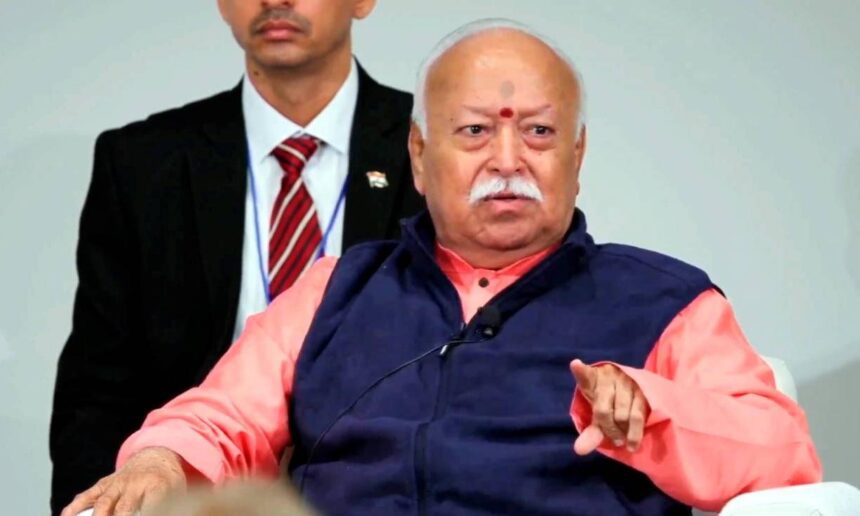

The remarks made by Rashtriya Swayamsevak Sangh (RSS) chief Mohan Bhagwat in New York on August 29 emphasize an inclusive vision for Hindutva, which he claims rejects the idea of exclusion based on religion. However, such a stance raises critical questions regarding the systemic discrimination, social exclusion, and economic marginalization of Indian Muslims under the governance of the BJP and its affiliates.
Inclusive Rhetoric vs. Ground Reality
Bhagwat’s address at the One World: One Humanity Faith Leaders’ Summit attempted to project a message of unity and inclusiveness, stating that any Hindu advocating for the absence of Muslims in Bharat is not embodying true Hindu values. This perspective aims to reinforce the idea that Bharat, as a diverse nation, has historically provided shelter to marginalized communities. He stated, “By tradition, Bharat has given shelter to everybody,” implying a narrative of acceptance.
However, this rhetoric stands in stark contrast to the experiences of many Indian Muslims, who have faced rising instances of discrimination and social exclusion. Reports citing increased hate crimes, economic boycotts against Muslim businesses, and widespread social ostracization paint a different picture. The RSS’s call for embracing diversity seems, to many, to be part of a broader strategy to present a sanitized image of Hindutva at a time when concerns of religious intolerance are mounting.
Discrimination and Social Exclusion
While Bhagwat articulated a vision of unity, numerous reports have highlighted the marginalization experienced by Indian Muslims in various sectors. Educational institutions have witnessed a decline in Muslim representation, while employment opportunities often come under scrutiny, leading to economic disparities. Policies promoted by the BJP have been criticized for fostering a climate where Muslim identities are questioned, leading to feelings of alienation. This atmosphere complicates the notion of Bharat being inclusive.
Additionally, economic boycotts targeting Muslim vendors and businesses have gained traction in various communities, a tactic associated with the rise of vigilante groups who claim to protect ‘Hindu interests.’ Such actions contradict the assertive message of unity that Bhagwat seeks to convey, forcing many Muslims into increasingly precarious economic situations. The dichotomy between the professed values of the RSS and the lived realities of Indian Muslims remains an urgent social concern.
The Call for Unity Amidst Challenges
Despite the challenges highlighted, Bhagwat’s position on unity was also stressed during interfaith discussions where leaders sought to join forces across cultural boundaries to tackle issues of social relevance. They collectively underscored the importance of community service without discrimination. Bhagwat’s assertion that “we must keep in mind this feeling of oneness” resonates with the interfaith mission for harmony; nonetheless, the question arises: can such ideals be realized if underlying tensions exist?
The double-edged nature of such gatherings illustrates the tension between ideological commitments and the pressing need for sincere action towards reconciliation and respect for all faiths. Bhagwat’s statements resonate with a desire for unity while simultaneously serving as a reminder of existing socio-political divisions.
Why It Matters
The issue of discrimination and marginalization of Indian Muslims underscores a critical intersection of faith, identity, and politics in India. In an increasingly digital age, the implications of such socio-political climates can extend beyond borders, affecting perceptions of India globally. Understanding the dynamics at play helps developers, businesses, and communities engaging with the Indian context foster more inclusive practices and ethical considerations in their operations. The narratives shaped by leaders like Bhagwat can influence public opinion and policy, leading stakeholders to grapple with the ethical implications of their actions in light of these realities.
Frequently Asked Questions
What did Mohan Bhagwat say about Muslims in India?
Mohan Bhagwat stated that if any Hindu believes there should be no Muslims in Bharat, that individual does not adhere to true Hindu values, emphasizing a call for unity and acceptance of all communities.
What issues do Indian Muslims face today?
Indian Muslims continue to experience discrimination, social exclusion, and economic marginalization, facing challenges in education, employment, and social acceptance amidst rising sectarian tensions.
How does the RSS view diversity in India?
The RSS asserts that India has a tradition of providing shelter to those in need and promotes the concept of unity in diversity, though this stands in contrast to the experiences of marginalized groups, particularly Muslims.
What role do faith leaders play in addressing these issues?
Faith leaders are increasingly vocal about the need for unity and interfaith collaboration, providing platforms for dialogue intended to fight discrimination and promote societal cohesion within diverse communities.