
Summary
During a recent summit in the United States, Rashtriya Swayamsevak Sangh (RSS) chief Mohan Bhagwat emphasized that hindutva does not exclude Muslims from India. Despite these claims, systemic marginalization and social exclusion of Muslims have been documented under RSS and Bharatiya Janata Party (BJP)-led governance, raising questions about the genuine inclusivity of these remarks.
The Context of Discrimination in India
India’s landscape has been marked by a history of religious diversity, but this coexistence has been challenged in recent years. The BJP, alongside the RSS, has been accused of fostering a national narrative that prioritizes Hindu identity at the expense of Muslim citizens. Instances of mob violence against Muslims, discriminatory laws such as the Citizenship Amendment Act (CAA), and various reports of economic boycotts against Muslim businesses further illustrate this challenging environment.
Vague Inclusivity: Bhagwat’s Address
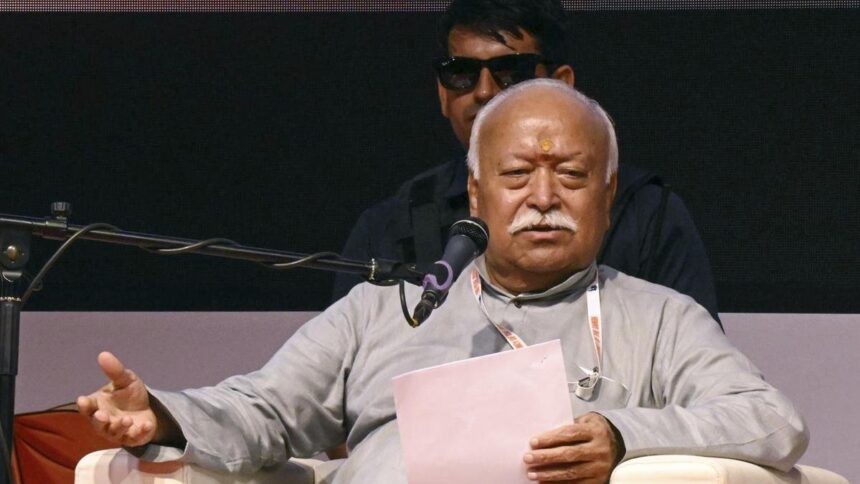
Bhagwat’s comments at the “One World: One Humanity Faith Leaders’ Summit” aimed to redefine the perception of Hindutva, asserting that a Hindu who believes in the exclusion of Muslims is not truly Hindu. He noted that India has historically served as a refuge for persecuted communities, arguing for a unified humanity despite religious differences. However, the effectiveness of this message is undermined by ongoing social tensions and government policies that many perceive as exclusionary.
In addition to promoting the idea of collective rather than individual identities, Bhagwat’s remarks come at a time when skepticism regarding the RSS’s genuine commitment to inclusivity is palpable among minorities. Critics point to the tension between esoteric ideals of Hindutva and the stark realities facing marginalized communities, especially Muslims.
Challenges to RSS Claims of Non-Discrimination
Although Bhagwat spoke of the RSS’s service activities, claiming no discrimination in their outreach efforts, there are widespread reports that indicate differently. Muslims often report social exclusion in various sectors, including education, jobs, and governance. The purported “1.3 lakh service projects” run by RSS volunteers, while commendable, cannot overshadow the economic and social challenges faced by Muslim communities due to overarching narratives that vilify their identity.
Moreover, the existence of discriminatory practices has prompted numerous international watchdogs to document and condemn human rights abuses against minority groups in India, further complicating the message of inclusivity that Bhagwat seeks to promote.
Why It Matters
The dialogue surrounding the RSS and BJP’s approach to inclusivity has significant implications for social cohesion in India and geopolitics in South Asia. The growing sense of marginalization could affect social stability and economic growth, as alienation often breeds resentment. For the global community, this situation serves as a crucial reminder of the ongoing debates about nationalism, identity, and civil rights. Understanding these dynamics is vital for developers, policymakers, and businesses looking to engage with India as both a market and a cultural landscape.
Frequently Asked Questions
What is the RSS and its role in Indian society?
The Rashtriya Swayamsevak Sangh (RSS) is a Hindu nationalist organization in India known for promoting Hindu culture and identity. It has significant influence on the Bharatiya Janata Party (BJP) and has been involved in various social and political activities since its founding in 1925.
How have Indian Muslims been affected by recent government policies?
Indian Muslims have faced increasing discrimination and social exclusion due to various policies and practices that many argue favor Hindu identity over minority rights. This includes hate crimes, communal riots, and laws perceived as discriminatory, such as the Citizenship Amendment Act (CAA).
What did Mohan Bhagwat state about Hindutva and Muslims?
Mohan Bhagwat remarked that a genuine understanding of Hindutva does not support the notion of excluding Muslims from India. He asserted that any Hindu who believes in such exclusion is not adhering to true Hindu principles, emphasizing the necessity of collective identity over individual interests.
Is there evidence of discrimination against Muslims in India?
Yes, numerous reports and studies document instances of discrimination against Muslims in various aspects of life, including employment, education, and access to services, often exacerbated by political rhetoric and societal tensions.