
Summary
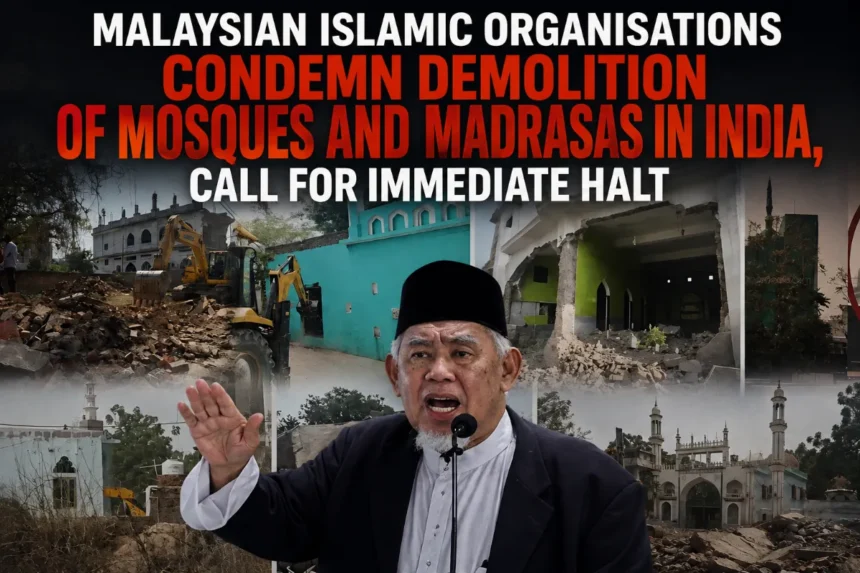
Three prominent Malaysian Islamic organisations have issued a strong condemnation of the recent demolition of Muslim religious sites across various Indian states. Urging the Indian government to halt these actions, the organisations have voiced concerns over religious freedom and the protection of minority rights, highlighting the potential for these demolitions to threaten communal harmony.
Concern Over Demolitions of Religious Sites
On June 20, 2026, the Malaysian Consultative Council of Islamic Organizations (MAPIM), the Alliance of World Mosques in Defence of Al Aqsa (MANAR), and the Secretariat for the Assembly of Ulama of Asia (SHURA) released a joint statement expressing “profound concern” over reports indicating that more than 20 Muslim religious structures, including mosques, dargahs, madrasas, and eidgahs, have been demolished over a period of about 45 days. These demolitions raise serious questions about the enforcement of planning laws and the underlying motivations behind these actions, particularly regarding their impact on minority religious communities.
The organisations highlighted that many of the demolished sites were centuries-old and held significant historical and spiritual value for the Muslim community in India. They emphasized that the nature of these demolitions does not merely reflect administrative decisions but has broader ramifications on the identity, heritage, and collective memory of a community that has stood for generations.
Demands for Transparency and Due Process
In light of the reported demolitions, MAPIM, MANAR, and SHURA called for several crucial measures. They demanded the immediate suspension of any ongoing demolitions related to Muslim religious sites until thorough independent reviews can be conducted. The organisations also requested full transparency regarding the legal bases and procedures employed in demolition orders to ensure that all actions comply with constitutional guarantees and international human rights standards.
Moreover, they advocated for independent judicial and human rights oversight to provide a measure of due process and equal treatment under the law. By addressing selective enforcement and providing meaningful engagement with affected communities, the organisations hope to foster a more inclusive approach towards the preservation of all religious and heritage sites, regardless of religious affiliation.
The Threat to Communal Harmony
The joint statement issued by the Malaysian organisations warned that the perception of targeting religious institutions of a specific community could sow seeds of discord, undermine social cohesion, and erode public confidence in the rule of law. The organisations underscored the importance of safeguarding places of worship as a universal responsibility, asserting that the treatment of these sites serves as a reflection of a nation’s commitment to justice, pluralism, and peaceful coexistence.
They also emphasized that ongoing actions against Muslim religious institutions have sparked anxiety among minority communities and drawn attention from international human rights advocates. The necessity for regional and global bodies to monitor these developments has become increasingly evident for upholding the rights of all religious groups in India.
Why It Matters
The demolition of religious sites not only affects the immediate communities but also has significant implications for social stability and international relations. Such actions could lead to increased tensions within India’s diverse populace, potentially prompting international scrutiny and affecting India’s global standing. Moreover, the situation underscores the importance of adhering to human rights principles and monitoring by both national and international bodies to ensure that religious freedoms are respected. In an age where social media and global connectivity expose local injustices, governments must navigate these challenges carefully to foster a reputation for upholding human rights and democracy.
Frequently Asked Questions
What incidents have raised concerns about the treatment of Muslim religious sites in India?
Recent reports indicate that over 20 Muslim religious structures, including mosques, madrasas, and dargahs, have been demolished across several Indian states in the past 45 days, raising alarms over religious freedom and minority rights.
What is the response from Malaysian Islamic organisations regarding the demolitions?
The Malaysian Consultative Council of Islamic Organizations (MAPIM), the Alliance of World Mosques in Defence of Al Aqsa (MANAR), and the Secretariat for the Assembly of Ulama of Asia (SHURA) have condemned the demolitions and called for an immediate suspension of such actions until independent reviews are conducted.
What are the specific demands made by these organisations?
The organisations are demanding transparency in demolition procedures, independent oversight to ensure due process, protection of historically significant religious sites, and meaningful consultations with affected communities before any demolitions take place.
Why is the issue of religious site demolitions significant for communal harmony?
Targeting religious institutions of a specific community can undermine social cohesion, alienate minority groups, and diminish public confidence in the rule of law, potentially leading to greater societal conflict and unrest.