
Formation of Task Forces in Maharashtra to Combat Hate Crimes
In response to escalating communal tensions and acts of hate against the Muslim community in Maharashtra, Muslim organizations, community leaders, and legal experts have initiated task forces aimed at providing immediate assistance to victims of hate crimes. This collaboration emphasizes the need for legal support and awareness initiatives as a proactive measure to counter systemic discrimination.
Key Initiatives from the FMM Meeting
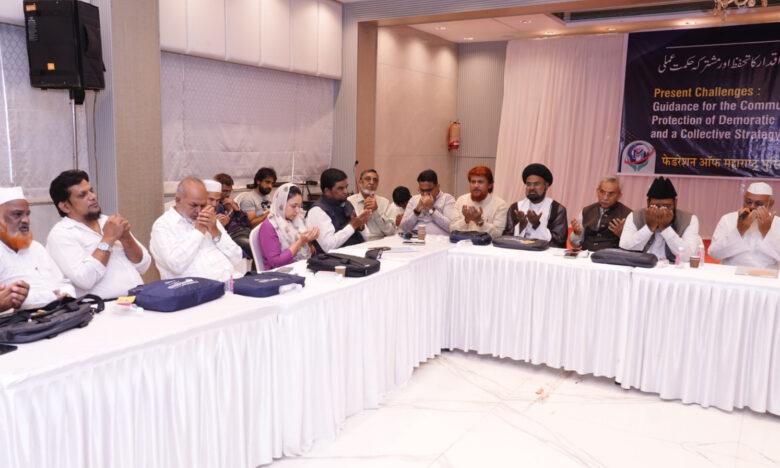
On June 8, 2023, a pivotal meeting was convened by the Federation of Maharashtra Muslims (FMM) at Mumbai’s Islam Gymkhana. This gathering brought together an array of participants, including Muslim MLAs, judges, lawyers, religious scholars, and activists who discussed pressing issues such as hate speech, hate crimes, the Maharashtra Freedom of Religion (Anti Conversion) Act, and the proposed Uniform Civil Code.
Maulana Ilyas Khan Falahi, the president of Jamaat e Islami Maharashtra, announced that the newly formed task forces will offer rapid legal and emotional support to those affected by hate crimes. He articulated a vision that goes beyond immediate relief, stating, “The meeting is not a confrontation against any government or political party; rather, it is a sincere effort to find sustainable and practical solutions to the issues faced by Muslims.” This reflects a long-term strategy aimed at reducing communal tensions and addressing structural discrimination within society.
Legal Aid and Advocacy Efforts
Former Bombay High Court judge Abhay Thipsay and a host of other notable figures, including former Rajya Sabha member Obaidullah Khan Azmi, were present at the meeting. The discussions highlighted the critical need for an expanded legal aid system and grassroots education programs to empower community members. The task forces aim to promote unified advocacy among minority communities, urging them to remain vigilant in preserving their democratic rights, particularly in the context of electoral processes.
Dolphy D’Souza, representing the Justice and Peace Commission, emphasized the importance of awareness campaigns as preventive measures against hate crimes. The assembly also called for the withdrawal of the controversial Maharashtra anti-conversion law, which many see as a tool for marginalizing religious minorities.
Community’s Call to Action
The FMM appealed to minority communities to ensure that their voices are heard and represented by remaining active in the electoral process. Participants in the meeting acknowledged that addressing systemic discrimination against Muslims requires a concerted and sustained effort over the next decade. They proposed a comprehensive 10-year roadmap to ensure that Muslim communities can navigate the complex landscape of legal constraints and societal challenges.
In light of these discussions, it is clear that the collective response from the Muslim community represents a proactive stance in addressing not just immediate crises but also the long-standing issues of social exclusion and marginalization. Their efforts highlight an essential movement towards ensuring that democratic rights are accessible to all, irrespective of religious identity.
Why It Matters
The recent initiatives set by the Federation of Maharashtra Muslims signal a critical response to increasingly polarized social climates, not just in Maharashtra but throughout India. For developers and users interested in social justice technology or community engagement platforms, there is significant potential to harness data analytics and outreach tools to track hate crimes and measure community resilience. Furthermore, legal frameworks and democratic participation are vital discussions in tech ethics, especially for platforms that host or analyze hate speech. Ensuring a balanced representation of minority voices is not merely a societal concern but an essential component of inclusive governance.
Frequently Asked Questions
What is the Maharashtra Freedom of Religion (Anti Conversion) Act?
The Maharashtra Freedom of Religion (Anti Conversion) Act is a law aimed at regulating religious conversions, often viewed critically for its potential to restrict the rights of minority communities, particularly Muslims, to practice their faith freely.
What are the objectives of the newly formed task forces?
The task forces aim to provide immediate legal and emotional support to victims of hate crimes, run awareness campaigns, and develop a long-term strategy for addressing systemic discrimination against Muslims in Maharashtra.
Who organized the meeting that led to the formation of these task forces?
The meeting was organized by the Federation of Maharashtra Muslims (FMM), which includes various community stakeholders such as Muslim MLAs, judges, lawyers, and activists.
How can community members participate in these initiatives?
Community members are encouraged to get involved in the task forces, remain vigilant about their legal rights, and ensure their participation in electoral processes to protect their democratic rights.