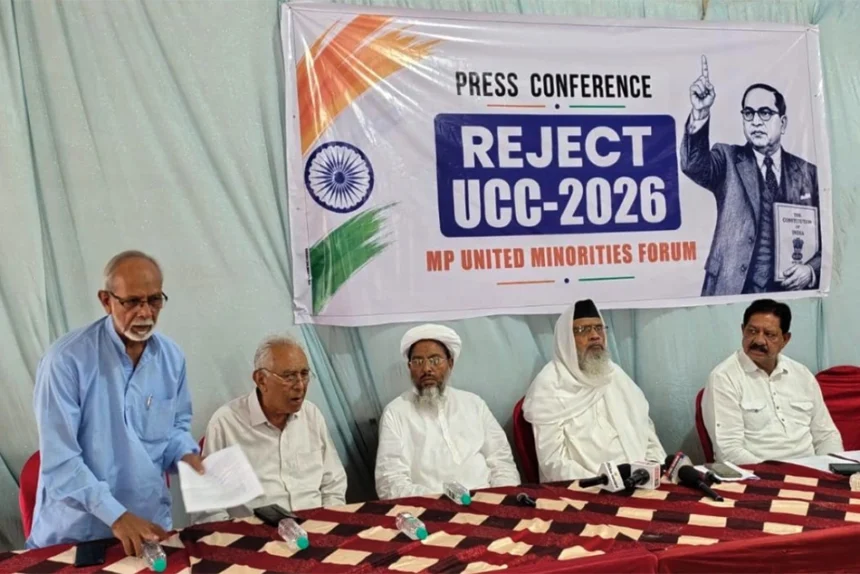

The Madhya Pradesh Uniform Civil Code (UCC) Bill 2026 has sparked significant controversy, particularly among Muslim leaders and minority communities. They argue that its provisions infringe on personal laws and religious freedoms, thereby exacerbating social exclusion and discrimination in India. Key community leaders have called for its withdrawal or the exclusion of Muslims, underlining the urgent need for dialogue and legal safeguards to protect minority interests.
Community Leaders Speak Out Against the UCC Bill
Bhopal Shahar Qazi Maulana Syed Mushtaq Ali Nadvi, a prominent Muslim leader, has vocally opposed the UCC Bill, stating that it undermines Muslim personal laws and rights. During a recent press conference, he mentioned, “Interference in personal laws is unacceptable as it affects religious freedom.” His stance was echoed by Bhopal Shahar Mufti Maulana Abul Kalam Qasmi and other religious leaders, who argued that the UCC would fundamentally alter the way Muslims conduct marriages, inheritance, and other personal matters.
They assert that if certain communities, such as the 21 percent tribal populace, can be exempted from the UCC, then similarly, the 6 percent Muslim community should also be granted exemption. This demand points to a broader concern: the feeling of being marginalized within a legal framework that many perceive as favoring the majority community.
Concerns Raised Over Religious Freedom
Anil Martin, a Christian leader, also raised alarms regarding the implications of the UCC for religious freedom. He emphasized the increasing scrutiny on religious practices even within private spheres, particularly regarding home-based prayer meetings. Martin stated, “The Indian Constitution guarantees citizens the right to practice their religion,” yet expressed concern over recent allegations of forced conversions stemming from complaints about gatherings in private homes. He called for the UCC, which is meant to address sensitive issues like marriage and inheritance, to undergo extensive public consultation, urging that the views of various communities, including women’s organizations and civil society, should be taken into account.
Martin’s comments highlight the well-founded fears among minority groups that government actions may encroach upon personal and community freedoms, further fueling anxiety about social exclusion and discrimination in India.
The Reaction: Confusion and Response from the Community
Following the Bill’s passage in the Madhya Pradesh Assembly, confusion arose within the Muslim community, particularly concerning provisions that allegedly restrict familial marriages. Reports indicated a rush of marriage applications at the Bhopal Qaziat, suggesting a fear that the UCC could impose stricter regulations on personal choices, particularly around marriage.