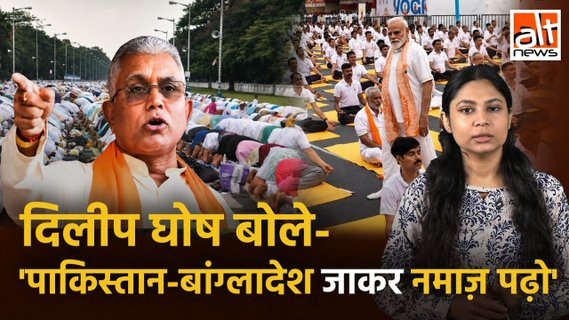

Recent statements by BJP leader Dilip Ghosh have sparked controversy regarding the treatment of religious gatherings in Kolkata. He suggested that individuals wishing to offer prayers during Eid should consider going to Bangladesh or Pakistan, a comment made in the context of restrictions imposed on gatherings at the Red Road, which was closed for a week to facilitate international yoga day events.
Context of the Red Road Closure
The Red Road in Kolkata has become a focal point of contention as local authorities prepared for events related to International Yoga Day. The road was closed for seven days to allow for extensive yoga-related activities, raising questions about the prioritization of these events over religious observances, particularly the Eid prayers. This led to significant public outcry, as many viewed the closure as unfairly discriminatory against Muslim communities who wanted to celebrate their religious rituals.
Dilip Ghosh’s Controversial Remarks
Dilip Ghosh, a prominent figure in the BJP and West Bengal’s political landscape, defended the decision to deny permission for Eid prayers, citing traffic concerns as the primary reason. His comments to “go to Bangladesh or Pakistan” for religious observances not only aggravated tensions among community members but also sparked a broader debate on religious freedom and inclusion in India. The inference of suggesting that such gatherings should take place outside the country was seen by many as xenophobic and dismissive of India’s diverse cultural fabric.
Public Reaction and Implications
The backlash following Ghosh’s comments included social media outrage and organized protests. Many accused the state government of disenfranchising Muslim communities while favoring yoga events—a symbol closely associated with Hindu culture. Critics argued that this incident represents a broader trend of market-driven policies and decisions made at the expense of religious and cultural plurality. Public sentiment indicates that this could have long-lasting implications for inter-community relations in West Bengal, which has a history of communal tensions.
Why This Matters
The situation is emblematic of the broader political climate in India, where decisions surrounding public space usage increasingly reflect religious and cultural biases. The closure of the Red Road for yoga, contrasted with the denial of space for Eid prayers, highlights an ongoing narrative of marginalization faced by minority communities in the country. Ghosh’s comments also resonate with a growing sentiment among certain political factions that seek to redefine national identity, often at the expense of established religious and cultural practices.
Frequently Asked Questions
What was the reason for closing the Red Road?
The Red Road was closed for seven days to facilitate events celebrating International Yoga Day, according to local authorities. Traffic management was cited as a primary concern.
What did Dilip Ghosh say regarding Eid prayers?
Dilip Ghosh suggested that individuals wishing to offer prayers on Eid should go to Bangladesh or Pakistan, statements that have drawn significant criticism and concern over their implications for religious freedom.
How has the public responded to Ghosh’s remarks?
Public reaction has been overwhelmingly negative, with many criticizing Ghosh’s comments as xenophobic and dismissive of India’s cultural diversity. This has led to protests and heightened inter-community tensions.
What does this incident signify for Indian politics?
This incident underscores the growing concern over religious and cultural inclusivity in India, reflecting a trend where policies may favor certain groups over others based on religious identity. It raises questions about the future of Indian secularism and inter-community relations.