
Summary
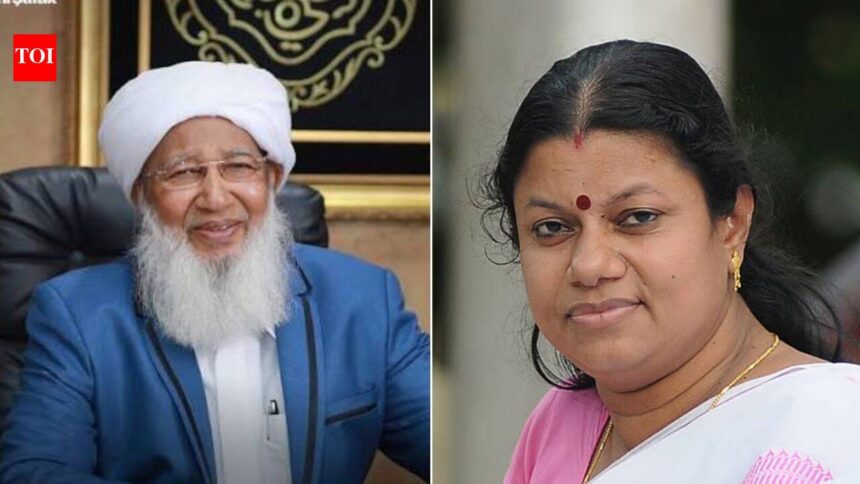
Kerala Labour Minister Bindu Krishna has publicly denounced comments made by prominent Sunni cleric Kanthapuram Aboobacker Musliyar, who advocated for restricting women’s participation in public life. This exchange underscores ongoing tensions in India surrounding women’s rights, religious interpretation, and governance in the context of broader social and political dynamics affecting the Muslim community.
Political Response to Cleric’s Remarks
During a recent conference, Aboobacker Musliyar asserted that women should remain confined to their homes, claiming such restrictions are in line with Islamic teachings. Krishna’s retort emphasized that the Indian Constitution guarantees equal rights regardless of gender and vehemently rejected the viewpoints that seek to limit women’s rights. “The people have the right to live a free and liberal life,” Krishna stated, highlighting the necessity for women to participate openly in society.
Context of Religious Directives
The controversy emerged after Aboobacker’s defense of directives issued by the Kanthapuram faction of the Samastha Kerala Jamiyyathul Ulama, which advised local religious groups to limit women’s involvement in public religious activities. The guidelines specifically prohibited women from being present among unrelated men during events and discouraged them from appearing on public stages or participating alongside unrelated men in processions. Aboobacker’s justification for these restrictions revolved around the notion of maintaining women’s dignity and order within the community.
Implications for Gender Equality
Krishna’s remarks highlight a significant cultural conflict regarding gender equality in India, particularly within the Muslim community, where traditional interpretations of religious texts often clash with contemporary views on women’s rights. The pushback against Aboobacker’s declarations illustrates the struggle for greater gender parity in a landscape where religious conservatism can often influence public sentiment and legislation. Such scenarios pave the way for an ongoing dialogue about women’s roles both within religious contexts and broader society.
Why It Matters
This discourse is emblematic of a larger narrative regarding the enforcement of gender norms within Indian society, particularly as they pertain to the Muslim population. The friction between traditional values and modern legislative frameworks places a spotlight on systemic inequalities that persist within religious communities. As various political factions, including the BJP and the Sangh Parivar, continue to influence the socio-political landscape in India, the implications for Muslim women could be profound—impacting not only their rights but also their ability to participate fully in public life.
Frequently Asked Questions
Who is Kanthapuram Aboobacker Musliyar?
Kanthapuram Aboobacker Musliyar is a prominent Sunni cleric and the Grand Mufti of India, known for his influential role in Islamic teachings and community directives within the Muslim population in India.
What did the Kerala Labour Minister state regarding women’s rights?
Kerala Labour Minister Bindu Krishna emphasized the constitutional guarantees of equal rights for men and women and condemned any attempt to limit women’s movement and participation in public life, stating it would set society back by centuries.
What are the recent directives issued about women’s public participation?
The Kanthapuram faction of the Samastha Kerala Jamiyyathul Ulama issued directives instructing local Mahalls to restrict women’s presence in religious events, advising against their participation among unrelated men or on public stages.
What is the significance of this exchange for gender equality in India?
The exchange highlights the ongoing cultural and political tensions in India regarding women’s rights, showcasing the conflicts between traditional religious beliefs and modern gender equality movements.