
Integrated manufacturing company Kaynes Technology reported a 21.5% year-on-year decline in net profit for the fourth quarter of FY26, amounting to ₹91.2 crore, down from ₹116.2 crore in the same quarter last year. This drop was attributed to escalating raw material and employee costs. Following the announcement, the company’s shares fell 20% on the Bombay Stock Exchange (BSE), closing at ₹3,339.25.
During the quarter, raw material costs surged by 26.9% to ₹848.5 crore, while employee expenses saw a substantial increase of 94.7% to ₹90.8 crore. Despite this, the company’s revenue grew by 26.2% year-on-year, reaching ₹1,242.6 crore.
For the full financial year, Kaynes Technology recorded a net profit increase of 24% to ₹363.9 crore, with total revenue up by 33.2% to ₹3,626.4 crore.
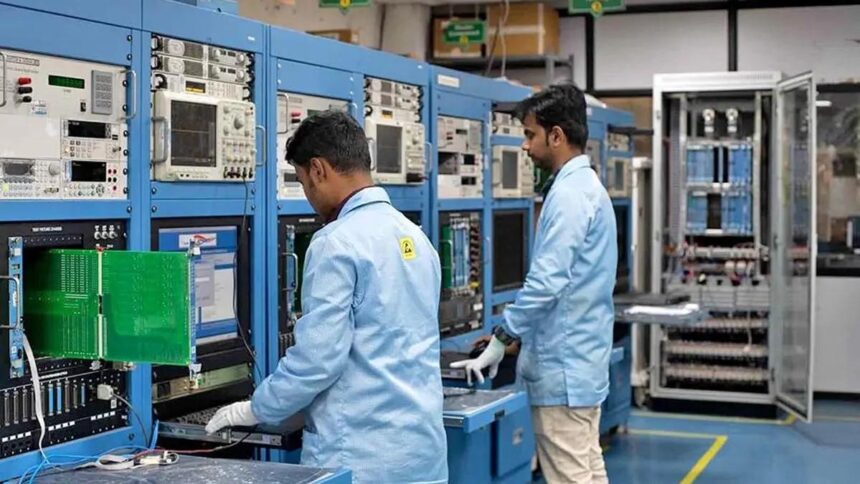
Regarding the company’s operational segments, 39% of revenue came from OEM turnkey box-build solutions, 43% from OEM turnkey PCB assembly (PCBA), and the remaining 18% was derived from ODM, product engineering, and IoT solutions. The automotive segment emerged as the largest revenue source, contributing 26% to total revenue.
Brokerage firm JM Financial indicated that the company fell short of its FY26 revenue guidance, despite making several downward adjustments. There are ongoing concerns regarding the viability of its FY28 revenue target of ₹8,500 crore, which would require a compound annual growth rate (CAGR) of over 50% from FY26 to FY28.
JM Financial also noted the company’s extended working capital cycle of 179 days as of March 2026, highlighting that receivable days have doubled year-on-year. The smart meter division faces prolonged operational cycles exceeding one year, although it is viewed as a significant growth area.
Additionally, the firm reported continued cash burn, with a negative operating cash flow of ₹600 crore in FY26, raising the potential for further dilution or increased debt to support planned capital expenditures exceeding ₹8,000 crore until FY28. Kaynes’ order book stood at over ₹8,000 crore at the conclusion of FY26, providing robust revenue visibility for the future.
Published on May 14, 2026.