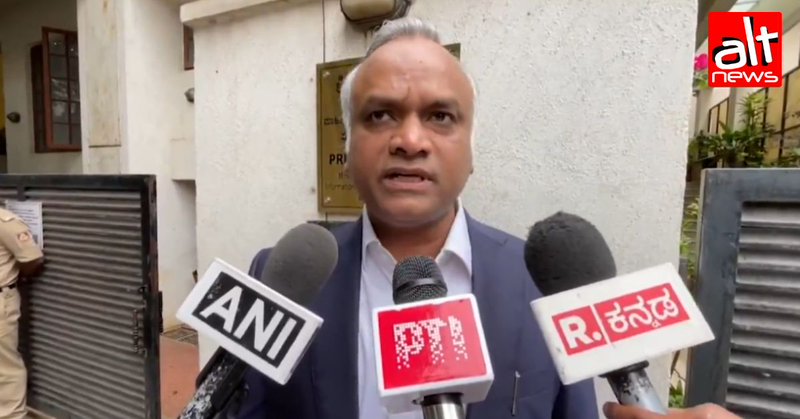

Karnataka’s Home Minister Priyank Kharge did not instruct students to go on a 25-day hunger strike before he would resign; rather, he directed those comments towards BJP leaders demanding his resignation. His statements have been a point of contention on social media, particularly among BJP supporters.
Context of the Statement
On August 4, 2026, a 20-second video clip of Priyank Kharge was widely circulated by various BJP handles on social media. The clip was taken out of context and misrepresented his comments, suggesting that he had encouraged students to engage in a prolonged hunger strike before he would consider resigning. The BJP capitalized on this misleading narrative to undermine Kharge’s position and portray him as uncaring towards student grievances.
Background on the Political Landscape
The political landscape in Karnataka is highly charged, particularly with the ongoing rivalry between the ruling Congress party and the opposition BJP. Priyank Kharge’s responses are often scrutinized given his key position in the state government. The misuse of his comments is a tactical move by BJP to strengthen their narrative against the Congress government. This clip reflects how words can be manipulated in the realm of Indian politics, especially by opposition parties in an effort to sway public opinion.
Analyzing the Response of Political Commentators
Political commentators, including the likes of Priyank Kharge, quickly reacted to the misrepresentation of his statement. Many were quick to clarify the context, emphasizing that the comments were directed at BJP leaders rather than the student community. The reaction highlights the critical role social media plays in shaping political discourse. It opens the floor to discussions regarding accountability in political statements and the ethics of sharing information without proper context. As misinformation spreads rapidly, political figures must tread carefully in their responses and representations.
Why This Matters
This incident holds significant political weight in India, demonstrating how easily statements can be distorted for political gain. The manipulation of Kharge’s words not only questions the ethics of political discourse but also reflects the polarization prevalent within Indian politics. It shows how propaganda can be used to rally political support or incite dissent among different community sectors. Ultimately, this incident adds to the ongoing dialogue about the credibility of politicians and the influence of media on public perception.
Frequently Asked Questions
What did Priyank Kharge actually say?
Priyank Kharge’s comments were directed towards BJP leaders who were demanding his resignation, and he did not suggest that students should go on a hunger strike.
How did the BJP utilize Kharge’s statement?
The BJP shared the video clip of Kharge’s statement on social media, implying that he was insensitive to student issues, thereby attempting to weaken his credibility.
What is the current political climate in Karnataka?
Karnataka’s political environment is quite polarized, with ongoing tensions between the Congress-led government and the BJP opposition, making misstatements and misinterpretations highly impactful.
Why is this incident significant for Indian politics?
This incident illustrates the broader theme of misinformation in political discourse and highlights the importance of context when discussing statements made by public figures.