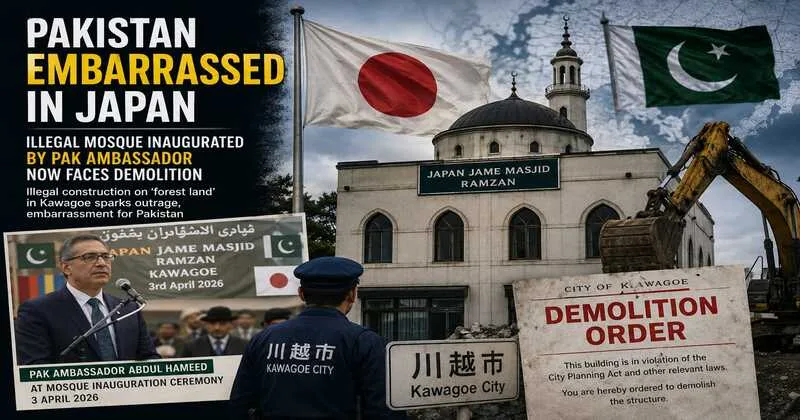

The controversy over the Japan Jame Masjid Ramzan in Kawagoe, which faces demolition due to illegal construction, epitomizes the challenges stemming from immigration and religious diversity in Japan. This situation not only puts Pakistan in a diplomatically awkward position but also ignites broader societal concerns within Japan regarding demographic changes and cultural integration.
The Kawagoe Mosque: A Catalyst for Broader Concerns
The Japan Jame Masjid Ramzan, built on disputed land in Saitama Prefecture, became a focal point of national debate when Japanese authorities issued a demolition order, claiming the mosque was constructed illegally on protected forest land. Local residents raised objections as early as late 2024, but work continued amid escalating tensions. The mosque’s inauguration involved the Pakistan Ambassador to Japan, which lent the project an unwarranted credibility that was rapidly undermined when legal challenges emerged.
Authorities rejected claims from the mosque’s owners asserting the presence of an earlier structure, which intensified scrutiny around the legality of foreign-funded religious establishments in Japan. This event has not merely created diplomatic embarrassment for Pakistan but also heightened fears in Japanese society surrounding unchecked immigration and the maintenance of cultural identity.
Historical Context and Rising Tensions
This controversy is not an isolated incident but a reflection of ongoing societal anxieties. The Muslim population in Japan has surged from 20,000 in 2000 to almost 200,000 today, with mosques proliferating from 15 to over 113 in a little over two decades. The increasing visibility of this demographic shift has led to heightened discourse about cultural adaptation versus cultural imposition.
Three years prior, an article published in Organiser highlighted emerging concerns regarding Japan’s religious landscape, particularly the friction between Shinto traditions and what some perceive as exclusivist religious views. These concerns are now becoming more mainstream as the mosque incident brings them to the forefront of public discourse.
Parallels in Cultural Integration
An intriguing contrast can be drawn between the Kawagoe mosque controversy and the successful unveiling of a statue of Chhatrapati Shivaji Maharaj in Japan in March 2025. The latter event was celebrated as a symbol of cultural synergy, fostering civilizational friendship between Japan and Bharat, characterized by mutual respect for local laws.
In stark opposition, the Kawagoe mosque became synonymous with legal violations and potential discord. Herein lies a crucial distinction: successful cultural integration is predicated on respecting the established legal frameworks and social norms of the host country. The contrast highlights how immigrant communities can either enrich society or provoke social tensions depending on their approach to integration.
Why It Matters
This situation has significant implications that extend beyond Japan, as it raises critical questions about how countries manage immigration and cultural diversity. The Kawagoe mosque controversy illustrates that the ability of immigrant communities to coexist within a newer landscape depends heavily on their willingness to adhere to legal frameworks and social customs. The event not only serves as a cautionary tale for other nations dealing with similar issues but also emphasizes the importance of open dialogue about immigration and integration efforts. The capacity for immigrant populations to contribute positively hinges on their commitment to integrating respectfully into the prevailing social fabric.
Frequently Asked Questions
What was the reason for the demolition order on the Kawagoe mosque?
The mosque was built illegally on protected forest land, violating local urban planning laws in Japan.
How has Pakistan responded to the mosque controversy?
The Pakistan Embassy in Japan urged its nationals to comply with local laws and distanced itself from the mosque project after the demolition order was issued.
What concerns does the mosque controversy raise in Japanese society?
The situation has reignited discussions about immigration, cultural integration, and how rising religious diversity may challenge Japan’s societal norms and harmonious identity.
What broader implications does this controversy hold for immigration policies?
This incident underlines the importance of respecting local laws and traditions for successful societal integration, which can inform future immigration policies in Japan and other nations facing similar demographic changes.