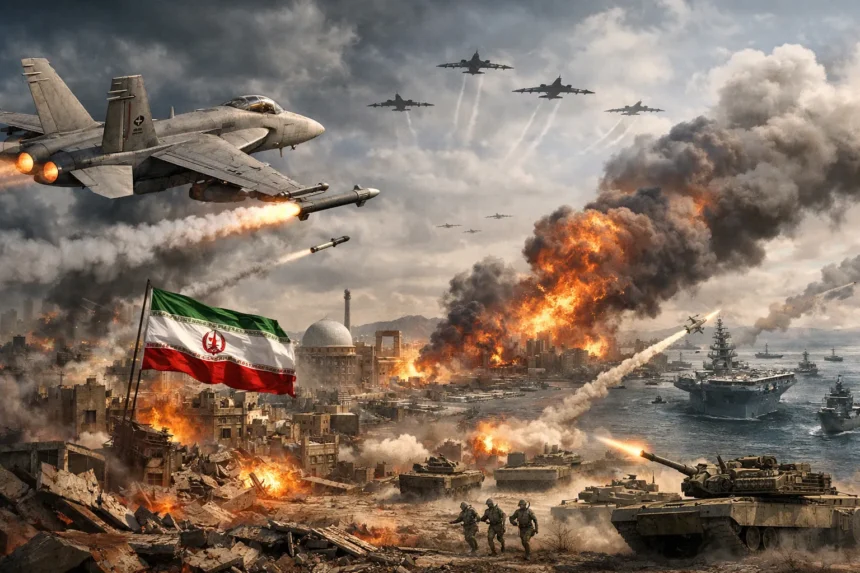

Ceasefire Agreement with Iran Declared Over
In a significant shift in diplomatic relations, US President Donald Trump announced that the ceasefire deal with Iran is “over,” stating that further engagement with Tehran is a “waste of time.” This declaration came amid escalating tensions between the two nations, which have been highlighted by recent military actions in the region.
Increased Military Tensions in the Middle East
As tensions mounted, air raid sirens echoed in Bahrain and Kuwait following Iran’s claim that it targeted “85 US military installations.” This escalation was reportedly in response to US attacks on Iranian territories, specifically Hormozgan province and the port city of Mahshahr. The ongoing confrontations highlight the fragile state of security in the Gulf region, where military actions by both nations have amplified fears of a larger conflict.
The US military has taken decisive actions of its own, launching “powerful strikes” against Iran after three ships, including those of Qatari and Saudi origin, were reportedly targeted in the strategically vital Strait of Hormuz. This vital waterway is essential for global oil shipments, underscoring its importance in international trade and security arrangements.
Economic Implications of US Sanctions on Iran
The US has revoked a critical waiver that previously allowed Iran to sell oil under a temporary peace agreement signed on June 17. This revocation is expected to exacerbate the economic challenges facing Iran, which has already been grappling with the impact of longstanding sanctions and economic isolation. The recent sanctions reflect the Biden administration’s approach to exert maximum pressure on Iran, particularly regarding its nuclear program and regional influence.
The Funeral of Ayatollah Ali Khamenei
Amid these escalating geopolitical tensions, Iran mourns the passing of its slain supreme leader, Ayatollah Ali Khamenei. His coffin was transported to the Iraqi city of Najaf for a funeral procession, marking a moment of national grief for the Iranian populace. The change in leadership following this event could potentially influence Iran’s domestic and foreign policies in the near future, particularly as it navigates heightened external pressures from the US.
Why It Matters
The ramifications of deteriorating US-Iran relations extend beyond immediate military confrontations. The revocation of Iran’s oil waiver not only threatens the Iranian economy but also impacts global oil prices and supply chains, particularly in the Middle East. For stakeholders in the AI and tech industries, these developments underscore the interconnectedness of geopolitical stability and economic viability, which are critical for investment and innovation. Furthermore, technology developers may face regulatory challenges and ethical considerations as they grapple with potential restrictions associated with international trade and sanctions.
Frequently Asked Questions
What led to the revocation of the oil waiver for Iran?
The US administration revoked the oil waiver as part of an effort to exert pressure on Iran following attacks attributed to Iranian forces against US interests in the region.
How has Iran responded to US military strikes?
Iran claimed to have targeted multiple US military installations in retaliation, highlighting increasing tensions and the risk of further military escalation.
What is the significance of the Strait of Hormuz in these tensions?
The Strait of Hormuz is a critical shipping lane through which about 20% of the world’s oil passes, making it a focal point in international security discussions.
How might the death of Ayatollah Khamenei affect Iran’s future?
The leadership transition following the death of Khamenei could significantly influence Iran’s domestic policies and its approach to international relations, particularly in response to the US and regional adversaries.