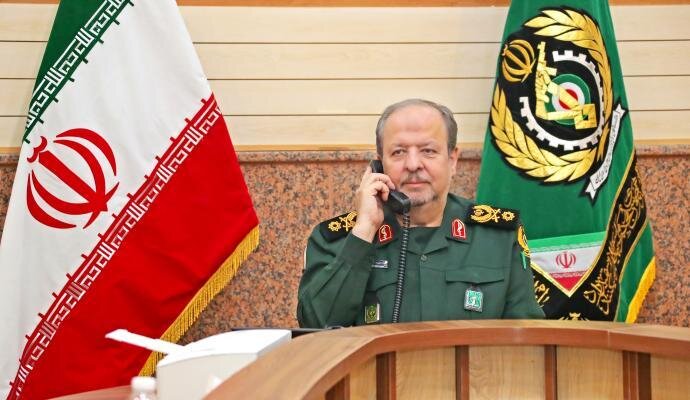

Iran Advocates for Regional Security Alliance Following Recent Conflict
Brigadier General Seyyed Majid Ebn-e-Reza has emphasized the need for regional countries to take charge of their own security in a recent phone call with Turkish Defence Minister Yasar Guler. This comes in the wake of ongoing conflicts and tensions, particularly involving Israel and U.S. policies in the Middle East. Ebn-e-Reza suggested forming a security alliance among Muslim nations, including Iran, Turkey, Pakistan, Saudi Arabia, and Egypt, to foster stability and peace in the region.
Trust Issues Amid Ceasefire Agreements
In his conversation, the Iranian defense official discussed the newly signed ceasefire Memorandum of Understanding (MoU) with the United States aimed at restoring stability. However, Ebn-e-Reza expressed skepticism regarding Washington’s reliability, citing a historical pattern of broken promises. He insisted that Iran’s armed forces remain fully prepared to respond to any potential violations, indicating a lack of trust in the U.S. as a partner in maintaining regional peace.
Condemnation of Israeli Military Actions
During the call, Ebn-e-Reza condemned Israeli military actions across Gaza, Lebanon, and Syria, stating that U.S. support has not only prolonged the existence of what he termed the “Zionist regime” but has also emboldened it. He issued warnings regarding the potential establishment of security zones in Syria and Lebanon by Israel, suggesting that these could lead to larger crises in the region. He underscored the belief that true security must originate from within the region rather than depend on external powers.
Turkey’s Position on Regional Security
In response, Minister Guler expressed condolences for the losses suffered by Iran, including military commanders and civilians. He reaffirmed Turkey’s support for the ceasefire MoU and echoed the importance of diplomacy in fostering peace. Guler emphasized Turkey’s commitment to maintaining the territorial integrity of its neighboring countries and its willingness to collaborate with Iran on counter-terrorism, border security, and various regional issues. This cooperative stance reflects a shared understanding that regional convergence is essential for lasting peace.
Why It Matters
The dialogue between Iranian and Turkish officials highlights the ongoing complexities of Middle Eastern politics, as regional nations seek to assert their sovereignty over security matters. The proposals for a Muslim security alliance could signify a shift in how countries in the region respond to external influences, particularly from the United States and Israel. For those following geopolitical trends, this suggests a move away from dependence on Western powers, potentially reshaping alliances and security arrangements in the Middle East.
Frequently Asked Questions
What is the significance of the proposed security alliance among Muslim nations?
The proposed alliance aims to foster regional cooperation and self-reliance in security matters, reducing dependence on external powers like the United States, which have historically influenced local dynamics.
How does Iran view the U.S. in terms of reliability in ceasefire agreements?
Iran perceives the U.S. as unreliable due to a history of breaking promises, leading to significant distrust regarding ceasefire agreements and future diplomatic engagements.
What are the implications of Israel’s military actions in the context of regional stability?
Israeli military actions, particularly with U.S. support, are seen as destabilizing factors that could provoke wider conflicts, highlighting the need for localized solutions to security concerns.
What role does Turkey play in the Middle Eastern security landscape?
Turkey positions itself as a regional leader committed to maintaining territorial integrity and engaging in counter-terrorism efforts, indicating its willingness to collaborate with neighboring countries like Iran to bolster regional stability.