
Demolition of Mosques in Varanasi: A Controversial Road-Widening Project
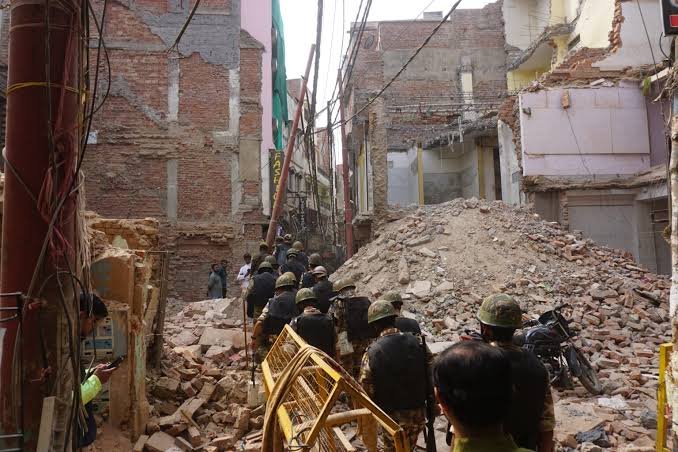
In a move raising significant concerns about discrimination and social exclusion, Varanasi’s Dalmandi area began demolishing five mosques as part of a road-widening project linked to the Kashi Vishwanath Corridor. The operation, which commenced early on Wednesday, involved around 200 laborers and was protected by a heavy security presence, marking a controversial chapter in the relationship between local authorities and Muslim communities in India.
Background of the Demolitions
The demolition has been officially justified as necessary for the Dalmandi road-widening initiative. Of the six mosques identified within the project area, five have reportedly consented to their demolition. These include well-known places of worship such as the Nisaran Mosque, Rangile Shah Mosque, Ali Raza Mosque, Sangmarmar Mosque, and Masjid Mirza Karimullah Beg. There are also plans to demolish 181 houses, with 80 already completed. The move has been enacted under the authority of local law enforcement, with the intent to manage public safety during this contentious operation.
Security Measures and Public Response
In light of the demolition, about 1,860 security personnel, including various battalions from the PAC and CRPF, have been deployed to maintain order. Police are conducting continuous patrols to prevent escalating tensions in the predominantly Muslim community. Furthermore, access to Dalmandi has been heavily restricted, with roads sealed off and media access denied under the guise of security. This strategy raises questions about transparency and the impact on civil liberties, particularly for the area’s Muslim residents.
Local and National Ramifications
Due to ongoing tensions surrounding physical alterations in predominantly Muslim neighborhoods, the state’s strategies are seen by many as systemic marginalization. Critics argue that such actions reflect a broader pattern of discrimination and economic boycotts against minority communities within the framework of policies under the Sangh Parivar and BJP governance. While local authorities assert that the demolitions are lawful and necessary for development, many residents and activists view them as part of a strategy to marginalize Muslim voices and expand Hindutva ideology in urban planning.
Why It Matters
The demolition of religious sites in Varanasi is indicative of a larger issue of communal tensions within India that can have far-reaching effects on social dynamics and economic opportunities for the affected communities. For developers and policymakers, the situation raises important questions about how community concerns are addressed in urban planning. Ignoring the needs and rights of marginalized groups can lead to both social strife and economic disruptions, reflecting a failure in governance. The international community’s awareness of such developments could influence diplomatic relations with India, spotlighting human rights issues tied to minority treatment.
Frequently Asked Questions
What is the reason for the mosque demolitions in Varanasi?
The demolitions are part of a road-widening project associated with the Kashi Vishwanath Corridor, which the local authorities argue is crucial for urban development.
How many mosques and houses are being demolished?
According to reports, five mosques and 181 houses in the Dalmandi area are set for demolition, with 80 houses already razed.
What security measures have been implemented during this project?
Approximately 1,860 security personnel from various agencies have been deployed to maintain order, including police patrols and road access restrictions.
How are local residents responding to the demolitions?
Local residents, many of whom belong to the Muslim community, are expressing concerns regarding discrimination and loss of their places of worship and homes due to the government’s development strategies.