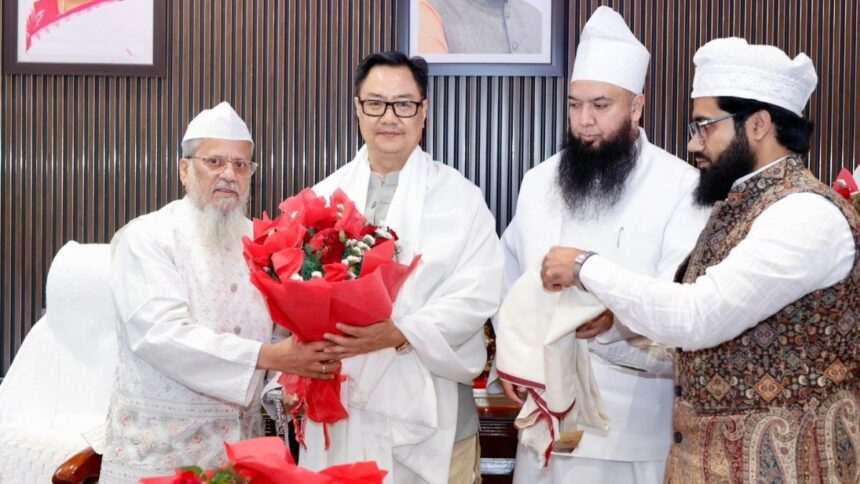

India’s Union Minority Affairs Minister, Kiren Rijiju, recently made statements regarding the country’s Muslim population, suggesting that it could soon rival Indonesia’s. While addressing concerns related to population dynamics and the status of various minority communities, he emphasized the importance of unity and equality among all citizens. However, these comments have arisen amid broader concerns about discrimination and social exclusion affecting Indian Muslims under the current governmental climate.
The Growing Muslim Population in Context
Rijiju noted that due to delays in conducting the Census since 2021, the Muslim population has likely surged, potentially matching Indonesia’s, which is home to the largest Muslim demographic globally. This assertion raises questions about the implications of such demographic shifts in a nation with a complex socio-political landscape. While Rijiju encouraged viewing the numbers as a means of fostering unity, the rhetoric around population figures often reflects underlying tensions, especially in a country where communal identity plays a significant role in politics.
Concerns for Minorities: Parsis and Muslims
At a seminar aimed at addressing the cultural and socio-economic challenges faced by the Parsi community, Rijiju remarked on their dwindling numbers, currently estimated between 52,000 to 55,000. His acknowledgment of the Parsi situation may serve as a backdrop to discussions on broader issues affecting minority communities. Critics argue that the Indian Muslim community has faced increasing marginalization, often linked to rising nationalism and policies perceived as exclusionary. This includes economic boycotts and social ostracism, which further hinder their access to resources and opportunities in various sectors.
The Political Landscape and Allegations of Discrimination
Rijiju dismissed claims that minorities face threats under the BJP regime, attributing these fears to political maneuvering by rival parties. His comments reflect a broader narrative that seeks to downplay the perception of a hostile environment for Muslims and Christians in India. Nevertheless, incidents of discrimination and violence against these communities have been widely reported, leading to heightened anxieties. As the BJP’s grip on power solidifies, the political discourse often centers around national security, intertwining issues of illegal migration with the status of minority populations, potentially exacerbating social divisions.
Why It Matters
The implications of these statements and the socio-political climate have far-reaching consequences not only for minority communities but also for India’s standing in the international community. Global perceptions of rising intolerance and discrimination can influence diplomatic relations and economic partnerships. An environment perceived as exclusionary could hinder social cohesion, undermine public trust, and limit participation from marginalized communities, ultimately affecting national development and the efficacy of governmental initiatives. Furthermore, investing in unified community growth must address systemic inequities to create a truly inclusive society.
Frequently Asked Questions
What is the current population of Muslims in India?
The exact population is not stated since the Census has not been conducted since 2021, but it is widely believed to be significant and potentially growing toward levels comparable to Indonesia’s Muslim population.
What actions have been taken to address the declining Parsi population?
The Indian government is actively working to protect the Parsi community, focusing on policies aimed at ensuring their cultural and economic longevity, although specifics were not detailed in Rijiju’s remarks.
Are there accusations of discrimination against Muslims in India?
Yes, numerous reports and analyses suggest an increase in discrimination and social exclusion of Muslims, bolstered by political narratives that frame their population as a concern for national security.
How does the BJP view its relationship with minority communities?
The BJP, as articulated by Rijiju, claims to uphold equality under the Constitution for all citizens, insisting that political groups are exploiting community differences for electoral gains, yet significant portions of minority communities feel marginalized.