
Overview of the Bombay High Court Verdict
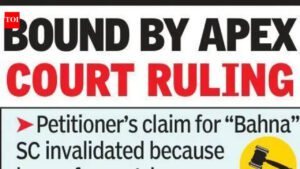
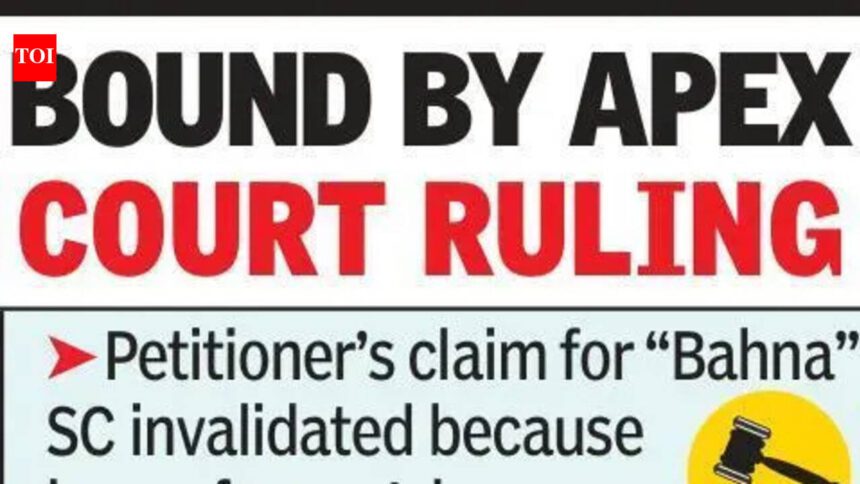
The Nagpur bench of the Bombay High Court recently dismissed a 27-year-old petition filed by a senior auditor from the Defence Services audit office, who sought Scheduled Caste (SC) recognition as a member of the “Bahna” community while identifying as Muslim. The court upheld a prior decision from the Caste Certificate Scrutiny Committee, reaffirming that only those who profess Hinduism, Sikhism, or Buddhism can be deemed SC members, a ruling that echoes similar precedents set by the Supreme Court.
Legal Framework and Court’s Rationale
This case centers on the provisions set forth in Paragraph 3 of the Constitution (Scheduled Castes) Order, 1950, which constitutionally excludes Muslims and others outside the mentioned religions from SC status. The petitioner argued that this exclusion violated several articles within the Constitution, specifically Articles 14, 15, 16, and 25, which address equality and the prohibition of discrimination. However, the court cited the Supreme Court’s decision in the Soosai versus Union of India case, which affirmed the boundaries of SC identification. The judges concluded that current law mandates adherence to these provisions, indicating that until the Supreme Court revisits this issue, lower courts must apply the law as it stands.
Broader Social Implications and Related Cases
The implications of this ruling extend beyond the individual case, reflecting a broader systemic marginalization faced by Muslim communities in India, particularly regarding their social and economic status. Similar challenges related to caste distinctions among Dalit Muslims and Dalit Christians are pending consideration by the Supreme Court, demonstrating a critical intersection between religion and caste in the socio-legal discourse. The judges acknowledged that outstanding cases could potentially influence future interpretations of the law, but for now, the established legal framework remains intact, maintaining the status quo and highlighting the ongoing debate about religious identity and class rights in India.
Why It Matters
This ruling is a stark reminder of the rigid classifications within the Indian caste system and raises questions about the inclusivity of marginalized communities. For the AI industry, developers, and users, this situation underscores the importance of understanding social dynamics and systemic inequalities. As these issues persist, more extensive datasets that reflect diverse perspectives will be crucial in developing fair and unbiased technologies. In turn, advocacy for equity in social policies is needed to ensure that technological advancements do not perpetuate existing inequalities.
Frequently Asked Questions
What is the significance of Paragraph 3 of the Constitution (Scheduled Castes) Order, 1950?
Paragraph 3 restricts Scheduled Caste identification solely to those who profess Hinduism, Sikhism, or Buddhism, thereby excluding other religious groups, including Muslims, from SC benefits.
How does this ruling impact Muslims in India?
The ruling reinforces systemic barriers for Muslims in accessing benefits that are extended to Scheduled Castes, thereby contributing to ongoing social exclusion and economic disenfranchisement.
Are there any related cases currently pending in the Supreme Court?
Yes, there are ongoing cases concerning the rights of Dalit Muslims and Dalit Christians that may challenge the existing legal framework concerning caste status based on religion.
What were the arguments made by the petitioner?
The petitioner contended that excluding Muslims from the SC category was unconstitutional and violated fundamental rights to equality and non-discrimination as enshrined in the Indian Constitution.