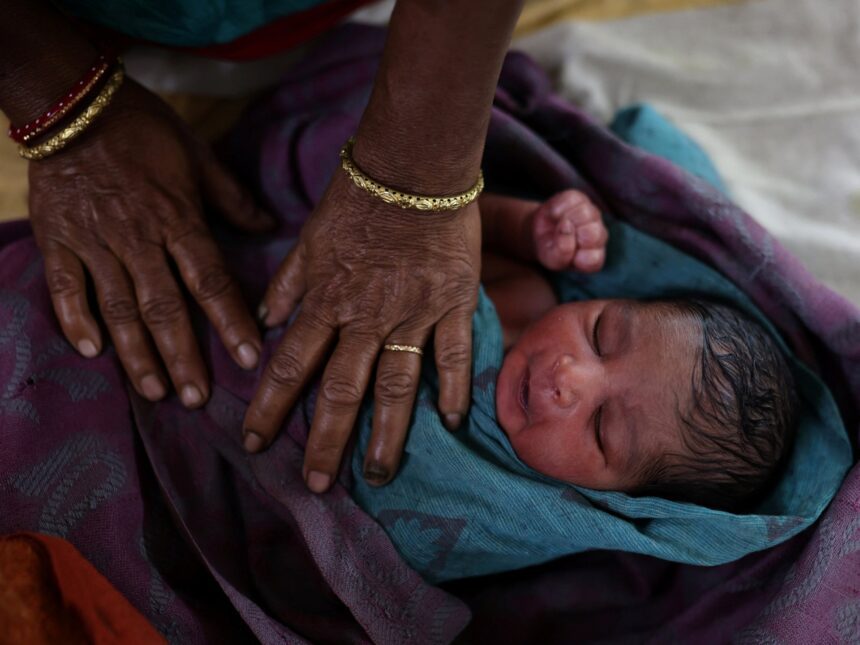

India is witnessing a significant demographic shift as its fertility rate has fallen below the necessary threshold to sustain its population, raising alarms over future labor shortages and an aging society. The phenomenon intertwines with broader socio-political dynamics, especially concerning the Indian Muslims amidst rising nationalist sentiments under the Bharatiya Janata Party (BJP) government.
Declining Fertility Rates and Their Causes
The latest report from India’s Office of the Registrar General indicates that the Total Fertility Rate (TFR) has dropped to 1.9 children per woman, below the stable population benchmark of 2.1. This marked a drastic change from the 2000s, where the TFR averaged 3.3 births per woman. Factors contributing to this decline include improved access to education and contraceptives, economic pressures, and reductions in infant mortality rates.
As socioeconomic conditions improve, families are less inclined to have many children. Dipa Sinha, a development economist, noted that as infant mortality decreases, parents also see less need to have multiple children. This demographic trend is not uniform across India; poorer states like Bihar show higher fertility rates, whereas wealthier regions like Delhi demonstrate significantly lower rates.
The Political Landscape and Its Implications
The demographic changes in India are playing into the political strategies of the BJP and aligning with historical narratives about population growth among different religious groups, particularly Muslims. Compounding this issue, there are claims that the ruling party has perpetuated fears around Muslim populations outpacing Hindus, which has sparked divisive tactics to galvanize support among Hindu voters.
The BJP’s policies often reflect a perceived need to ‘normalize’ Hindu demographic growth. Influential figures within the party, like RSS chief Mohan Bhagwat, have urged Hindu families to have more children to prevent a perceived decline. However, data indicates that the Muslim fertility rate has been decreasing at a faster rate than that of Hindus, yet these facts are often overlooked in public discourse.
The Societal Consequences of a Shrinking Workforce
As India enters a period of declining birth rates, experts warn of the impending consequences for the workforce. India has enjoyed a demographic dividend, with a larger working-age population bolstering economic growth. However, a shrinking birth rate could lead to a higher elderly population, resulting in increased pressure on healthcare and social security systems.
Sinha cautions that this demographic shift poses a challenge for India’s economy—if fewer children are born today, in 30 to 40 years, the country may face a shortage of workers. As the South has historically developed faster in terms of both economic and women’s status, states in these regions could feel the implications of a declining population more acutely, which may further strain inter-state relations within the context of resource allocation and economic support.
Why It Matters
The decline in fertility rates is not just a demographic concern; it has far-reaching implications for economic policies, workforce sustainability, and social welfare programs in India. As the already strained healthcare and social security systems face the reality of an aging population, there is an urgent need for strategies to balance future workforce demands with current social dynamics. Understanding these shifts is also vital for tech developers and policymakers in shaping demographic-responsive innovations that address societal needs.
Frequently Asked Questions
What is the current fertility rate in India?
The Total Fertility Rate in India has dropped to 1.9 children per woman, according to the latest statistical report.
How does population growth affect India’s economy?
A robust working-age population promotes economic growth. However, declining fertility may lead to a shrinking workforce and increased elderly population, creating challenges for economic sustainability.
What political implications arise from India’s changing fertility rates?
The dropping fertility rates have intensified political narratives around demographic control and communal tensions, particularly between Hindu and Muslim populations, affecting resource allocation and political representation.
Are there any state-level responses to declining fertility rates in India?
Yes, some Indian states are introducing policies to encourage higher birth rates, such as financial incentives for families with more children, amid concerns over shrinking populations.