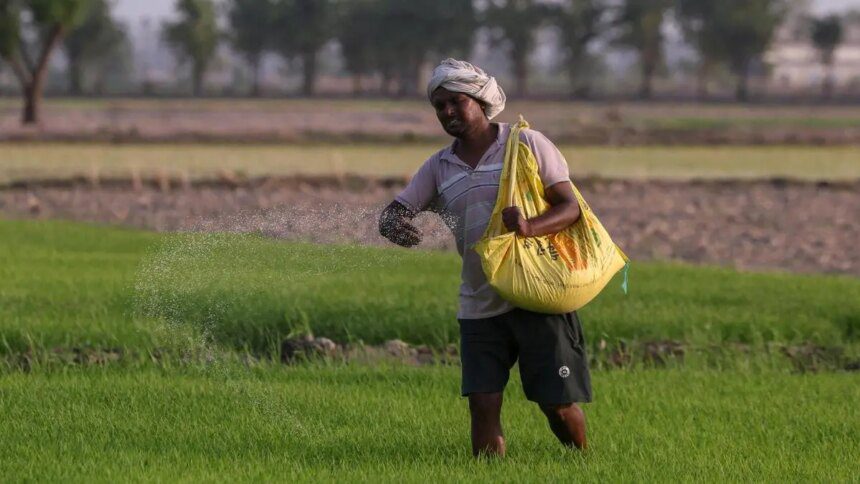

India’s fertilizer subsidy bill is poised to breach ₹3 lakh crore this fiscal year, largely influenced by soaring global prices post-war. The government is urging states to curb over-application of fertilizers even as domestic stocks are at a three-year high, raising concerns about cost management and food security during the upcoming rabi season.
Escalating Subsidy Costs
The surge in global fertilizer prices has dramatically increased India’s subsidy burden. Rajat Kumar Mishra, the Fertilizer Secretary, indicated that the subsidy expense has escalated significantly. For instance, the subsidy on a 45 kg bag of urea has risen from ₹1,350 to ₹2,775, marking an alarming increase of 106%. Similarly, the subsidy on a 50 kg bag of DAP has surged from ₹2,102 to ₹3,523, representing a 61% rise. These figures underline the critical impact of global market fluctuations on domestic agricultural support mechanisms.
Mishra stated that while the current subsidy bill stands at around ₹3 lakh crore, it could exceed this figure depending on future global price movements. Against the backdrop of these costs, Indian agricultural policymakers face the challenge of maintaining an effective supply without compromising fiscal responsibility.
Current Fertilizer Stock and Rabi Demand Projections
India has a robust stock of essential fertilizers in preparation for the rabi season, with a total of 145.46 lakh tonnes of urea, DAP, MOP, and complex fertilizers available as of September 27. It’s crucial to note that during the kharif season, the country saw significant production with 32 urea plants collectively producing 149 lakh tonnes.
Looking ahead, the rabi season’s demand is estimated at 380.96 lakh tonnes, broken down as follows: urea 199.27 lakh tonnes, DAP 55.07 lakh tonnes, MOP 16.4 lakh tonnes, and complex fertilizers at 79.12 lakh tonnes. These projections highlight the need for considerable planning and resource allocation to meet agricultural demands as the season approaches.
Global Challenges in Fertilizer Production
Globally, the fertilizer market faces significant challenges, primarily due to the war in the region and issues surrounding the availability of key raw materials. The price of sulfur, a critical component in the production of phosphoric acid, has skyrocketed from $532 per tonne to $1,050, following decreased global supply.
Additionally, complex fertilizers in India saw a production decline of 26% post-war. Mismanagement of sulfur supplies from major producers, such as Qatar, has disrupted the entire supply chain, further exacerbating the issue. Urea production is also under threat, with India relying on imported LNG, which has become scarce due to global gas supply disruptions. Gas prices have more than doubled since before the war, pushing Urea production costs upward.
What This Means
The rising costs and potential shortage of fertilizers pose serious implications for India’s agricultural sector and food security. With the rabi season demanding significant fertilizer inputs, the government’s efforts to manage supplies while keeping subsidies in check will be crucial. As the Centre calls for improved nutrient management practices, farmers may need to adapt to more sustainable practices, including organic farming, to reduce reliance on costly chemical inputs. These shifts can impact crop yields, farm incomes, and the overall economic stability of rural India.
Frequently Asked Questions
Why is the fertilizer subsidy bill increasing so rapidly?
The increase in the fertilizer subsidy bill is largely due to escalating global prices for fertilizers, especially post-war, which has significantly raised India’s subsidy burden.
What is the estimated demand for fertilizers in the upcoming rabi season?
The estimated demand for the rabi season is around 380.96 lakh tonnes, including specific requirements for urea, DAP, MOP, and complex fertilizers.
How is the Indian government addressing fertilizer shortages?
The Indian government is focusing on managing supply, urging state governments to monitor the application of fertilizers, and promoting balanced use according to soil conditions.
What are the implications of high fertilizer costs for farmers?
High fertilizer costs can significantly affect farmers’ operational costs, impacting profit margins and possibly leading to reduced crop yields if inputs are cut back due to financial constraints.