
In France, a wave of protests has erupted, with high school students blockading schools and public sector workers striking against government budget cuts ahead of the 2027 presidential elections. These protests coincide with deepening dissatisfaction with President Emmanuel Macron’s administration and are a response to significant issues such as overcrowded classrooms and teacher shortages.
Protests Across France
On Tuesday, protests intensified as more than 330 high schools—approximately one in ten—were affected, leading to widespread disruptions. According to the Ministry of National Education, students have been increasingly vocal about their frustrations regarding the state of their education. Reports indicate that up to 440 arrests were made nationwide, a figure highlighted by Interior Minister Laurent Nunez during an interview with BFMTV.
Instances of violence were reported, with masked students in Lille setting bins on fire and vandalizing public structures. In efforts to protect protesting students, teachers at a lycee in the Paris suburbs formed protective lines against the police. This reflects a growing solidarity among educators and students, underscoring the severity of their concerns.
Public Sector Strikes and Broader Implications
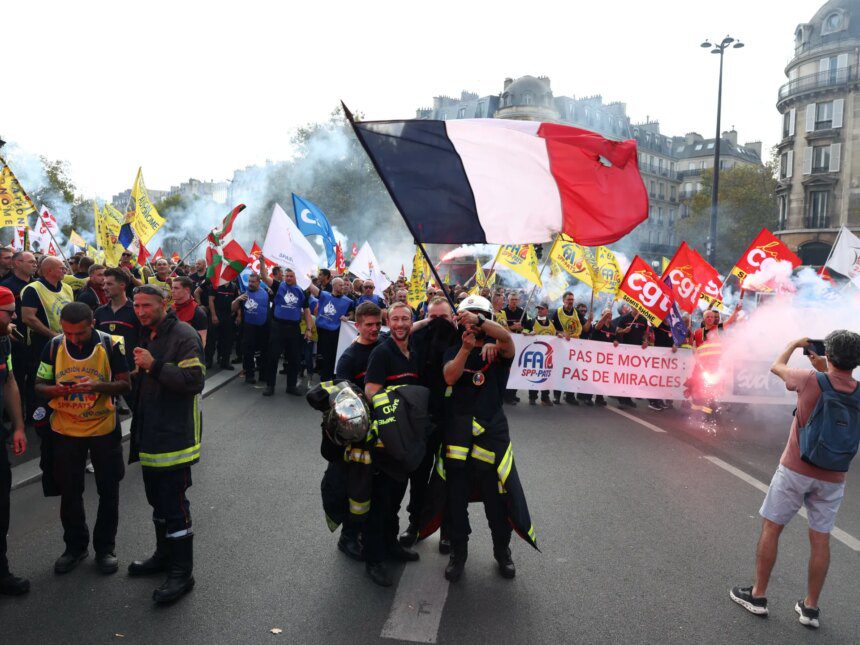
The discontent is not limited to students; public sector workers are also voicing their grievances. Professional firefighters have joined the protests, citing the inadequate resources revealed during recent wildfires. Approximately 11 percent of teachers participated in the strike, showing a commitment to addressing their low pay and working conditions compared to their European counterparts.
The CGT union leader, Sophie Binet, emphasized the urgency of the situation, issuing a 48-hour ultimatum to the government to retract the planned budget cuts. This includes criticism of the ongoing freeze on state employees’ base salaries as part of a broader austerity initiative aimed at saving €2 billion ($2.2 billion) and reducing overall state spending by €54 billion ($61 billion).
The Broader Context of Discontent
The protests take place just seven months before the French presidential elections, indicating a larger pattern of dissatisfaction against the current government. Polling data consistently shows that public confidence in President Macron is diminishing, and this sentiment is heavily reflected in the educational sector. Overcrowded classrooms and a significant shortage of teachers have raised questions about the future quality of education in France.
As the protests unfold, civil aviation authorities have cautioned travelers about potential flight disruptions at various airports, highlighting the extensive impact of the unrest. The protests echo a broader crisis within the French public sector, where dissatisfaction with wage policies and budget allocations has become a common narrative among numerous professions.
What This Means
The unrest in France could have significant implications both domestically and internationally. For India, these events serve as a reminder of the complexities involved in balancing public expenditure and civil services amid evolving electoral pressures. As countries grapple with similar issues of resource allocation and public discontent, the situation could provide valuable lessons in governance, particularly in managing diverse public sector needs while maintaining political stability.
Frequently Asked Questions
Why are French students protesting?
French students are protesting against overcrowded classrooms, teacher shortages, and planned budget cuts by the government ahead of the upcoming presidential elections.
What role are public sector workers playing in the protests?
Public sector workers, including teachers and firefighters, have joined the protests to voice their dissatisfaction with low pay and resource shortages, exacerbated by government austerity measures.
How is the French government responding to these protests?
The French government, led by President Macron, is set to unveil its draft budget soon, and union leaders have given a deadline for the withdrawal of planned budget cuts, indicating potential for further dialogue or escalation.
What can the Indian public learn from these protests?
The protests highlight the importance of addressing issues related to public service funding and the consequences of austerity measures, providing a lens for Indian citizens and policymakers to reflect on their governance and public sector challenges.