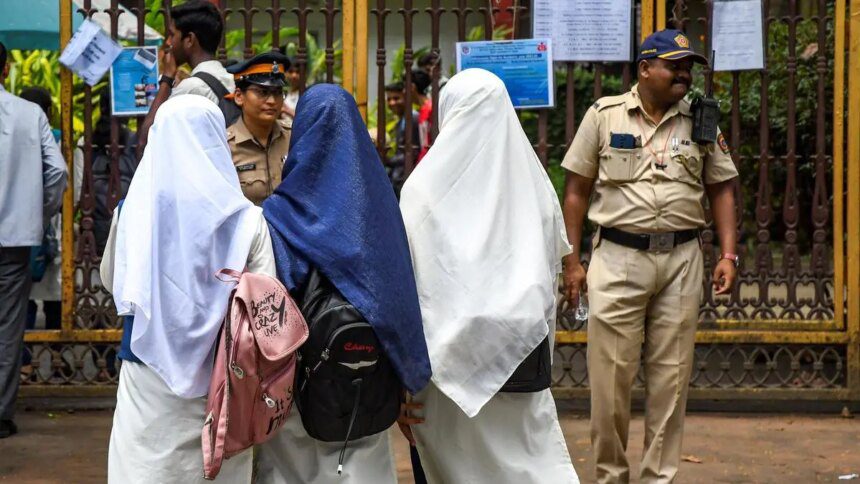

In recent years, instances of discrimination against Indian Muslims, particularly in the education sector, have raised serious concerns. A case from August 2026 exemplifies this trend: the Allahabad High Court rejected a schoolgirl’s request to wear a headscarf as part of her private school uniform, reflecting broader issues of religious freedom and social exclusion.
Unpacking the Hijab Controversy
The case of Sukaina Rizvi v. State of U.P. (2026) illustrates a concerning judicial approach toward religious practices among minorities. The Allahabad High Court dismissed the student’s appeal, reasoning that she failed to provide authoritative religious texts proving that wearing a headscarf was obligatory within Islam. This decision reinforces the authority of private institutions to determine their own dress codes, which raises significant questions about the limits of individual rights within a framework that ideally promotes equality.
Notably, the court’s emphasis on the essentiality of religious practices has created an uneven judicial landscape where plaintiffs must first demonstrate that their religious beliefs are indispensable before any legal scrutiny of the restriction occurs. This imbalance points to a broader systemic issue where the burden of proof disproportionately affects minority communities, particularly Muslims.
The Impact of Judicial Outcomes
The potential for discrimination is highlighted when examining a study by Pranav Verma, a researcher from the National Law School of India University. Spanning decisions from 1954 to August 2022, the study reviewed cases involving the essential religious practices (ERP) test. Out of 43 cases, only six were successful—an alarming 84 percent failure rate across various religious communities, including Hindu, Muslim, and Sikh claimants.
The judicial tendency to prioritize essentiality when considering religious freedoms raises critical questions about the fairness of legal interpretations. In recent cases, particularly those involving Muslims, courts have continued to rule against the recognition of practices deemed non-essential. The consequences extend beyond individual judgments, fostering a cumulative anxiety about the constitutional rights of Muslims, often viewed through a lens that discredits their religious expressions.
Societal Implications of Discrimination
The implications of such judicial decisions extend deeply into societal attitudes, as majority practices frequently enjoy normalization and acceptance in public life. In contrast, minority practices, like wearing a hijab, often stand out as conspicuous demands for exception, reinforcing perceptions of cultural otherness. This disparity not only perpetuates social exclusion but also impacts the education and professional opportunities available to minorities.
Moreover, the concept of indirect discrimination has been underscored in cases like Lieutenant Colonel Nitisha and Ors v. Union of India (2021), which highlights that neutral policies may disproportionately affect disadvantaged groups. The resulting unequal burdens faced by individuals can undermine the very fabric of constitutional equality and further entrench social hierarchies.
Why It Matters
The ongoing issues surrounding religious freedoms within India reflect broader systemic biases that can have far-reaching consequences. A lack of judicial protection for essential religious practices essentially legitimizes discrimination and contributes to societal marginalization. For developers, educators, and community leaders, understanding this context is crucial for fostering an inclusive environment. This can help inform policies and practices that ensure equal treatment and respect for religious diversity, ultimately contributing to a more equitable society.
Frequently Asked Questions
What was the ruling in the Sukaina Rizvi case?
The Allahabad High Court rejected the request of a schoolgirl to wear a headscarf as part of her school uniform, stating she did not provide adequate religious justification.
What is the essential religious practices (ERP) test?
The ERP test requires claimants to establish that a religious practice is essential to their faith to receive constitutional protection, a standard that has proven difficult for many to meet.
How do these judicial decisions affect Indian Muslims?
Such decisions create a cumulative anxiety around constitutional rights and contribute to systemic discrimination, fostering social exclusion and limiting opportunities for Muslim communities.
What is indirect discrimination in the context of Indian law?
Indirect discrimination occurs when policies that appear neutral disproportionately disadvantage certain groups, as highlighted by the Supreme Court in several rulings, thereby raising questions about equality under the law.