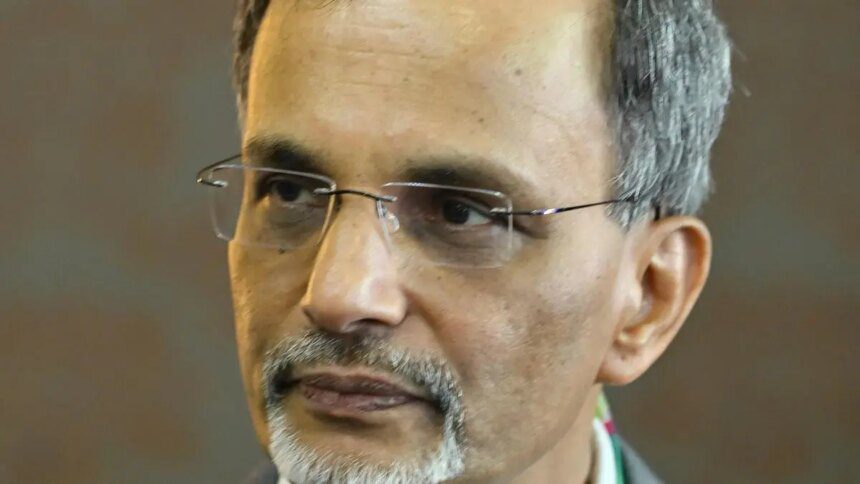

India’s rupee is currently “fundamentally undervalued,” according to the country’s chief economic adviser, V. Anantha Nageswaran, who stated that this valuation could attract long-term investors. In an interview on Thursday, Nageswaran emphasized that the current levels of the rupee present an appealing entry point for those looking to invest over an extended period.
This week, the rupee has faced significant pressure, particularly with Brent crude oil prices exceeding $100 a barrel. The currency has lost much of the gains attributed to the central bank’s recent actions aimed at mitigating speculative trading that previously pushed the rupee to record lows last month. Continued tensions in the Middle East have further constrained essential energy supplies. As of Thursday, the rupee fell by 0.3%, settling at 94.1113 per dollar.
In 2026, the rupee is currently the poorest-performing currency in Asia, continuing the downward trend from the previous year. This decline is exacerbated by the ongoing conflict in the Middle East, which raises concerns over economic growth in a country that heavily depends on energy imports from the region. Additionally, substantial foreign capital outflows from the equities market—more than $18.79 billion in annual exits at one point earlier this month—have contributed to the rupee’s depreciation.
Despite these growing uncertainties, government officials have maintained a relatively optimistic outlook for economic growth. Reserve Bank of India Governor Sanjay Malhotra expressed this month that he is “cautiously optimistic” for a growth rate of 6.9% in the current financial year, although some economists have adjusted their forecasts downwards since the onset of the war.
For additional stories, visit bloomberg.com.
Published on April 24, 2026.