
Amid growing global concern for women’s rights, prominent Muslim clerics and leaders in India have vocally condemned the Taliban’s new penal code, which reportedly legalizes domestic violence in Afghanistan. The criticism reflects a broader apprehension regarding the misuse of religious beliefs to justify violence, particularly against women.
Muslim Leaders Denounce Taliban’s Penal Code
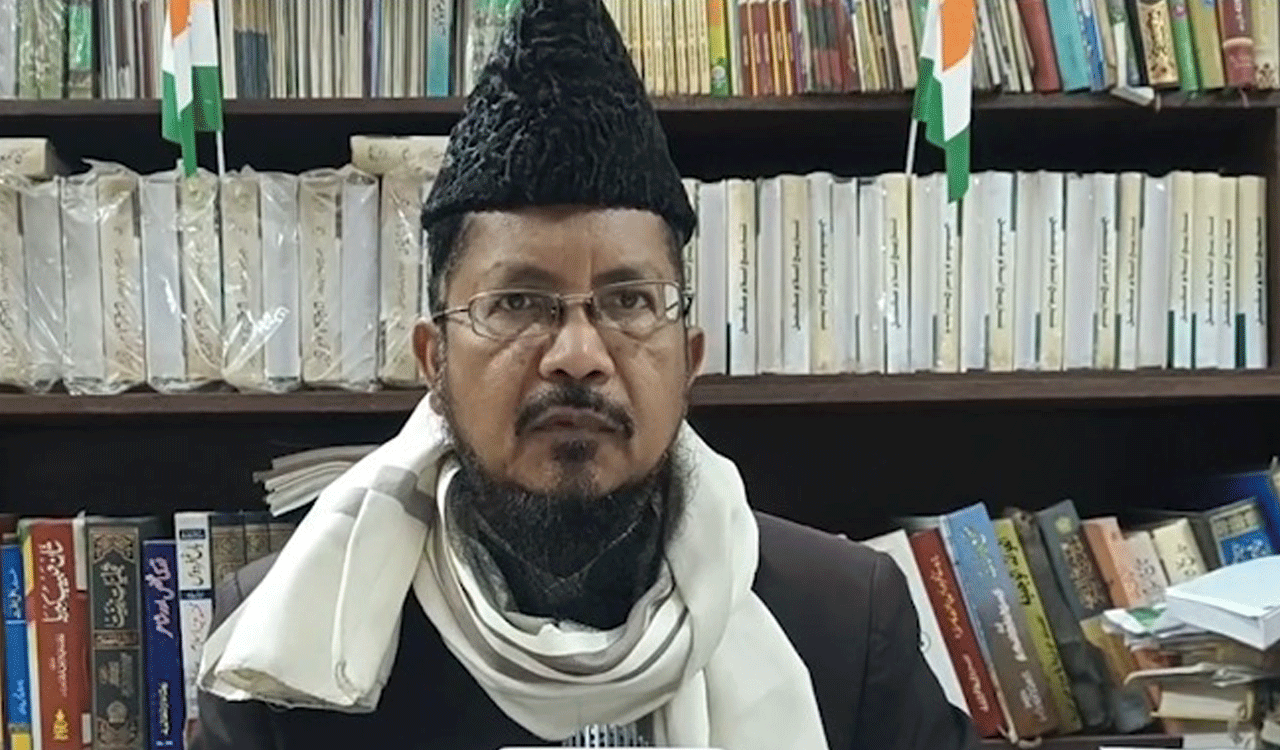
In Lucknow, influential Muslim clerics expressed their outrage at the Taliban’s recently enacted law, which permits husbands to physically discipline their wives under conditions that avoid causing visible injury. Maulana Shahabuddin Razvi Barelvi, President of the All India Muslim Jamaat, denounced the Taliban’s actions as a perverse interpretation of Islam and emphasized the importance of healthy interpersonal relationships that reject violence. He stated, “We have never accepted the Taliban and have always considered them involved in terrorist activities. Beating and violence are against Islamic principles.”
The law also includes punitive measures for women who visit their parents without permission, igniting further condemnation from various community leaders. Maulana Mohammad Mirza Yasoob Abbas, a speaker for the All-India Shia Personal Law Board, labeled the Taliban’s actions as an unfortunate misuse of religion, urging for a strong collective response against such measures.
Criticism from Various Quarters
Shia religious leader Maulana Saif Abbas added to the chorus of condemnation, calling out the Taliban’s double standards. He pointed out that while the Taliban claims to uphold Islamic values, their legislation legitimizes domestic abuse. “There is no justification for domestic violence, and we strongly condemn this Taliban law,” he remarked. This sentiment reflects a growing unease within the Muslim community regarding the Taliban’s interpretation of Islam and its implications for societal norms.
Former Babri Masjid litigant Iqbal Ansari asserted that violence contradicts the tenets of all religions, including Islam. His comments underlined a widespread repudiation of violence, regardless of the religious context from which it emerges. Adding to the dialogue, veteran lyricist and poet Javed Akhtar used social media to rally Indian Islamic leaders against the Taliban’s abusive measures, highlighting that allowing physical discipline under the guise of religion is utterly unacceptable.
Global Implications and Local Context
The harsh new regulations from the Taliban have not only incited outrage within India but also contributed to a growing body of global criticism regarding Afghanistan’s treatment of women. As Muslim clerics and global activists continue to speak out, it emphasizes the need to separate radical interpretations of Islam from the lived experiences of its practitioners, particularly the numerous women who find themselves in precarious situations as a result of such laws.
This incident is part of a broader trend wherein religious ideologies are manipulated by governing bodies to exert control over disenfranchised populations, particularly women. The significant backlash from within the Muslim community may also signal a potential shift, encouraging introspection within conservative segments and challenging the practices that are often misrepresented as aligned with Islamic values.
Why It Matters
The international repercussions of the Taliban’s new law extend beyond Afghanistan, affecting socio-political dynamics globally. The principled opposition from Indian clerics serves as a critical reminder of the need for dialogue around the implications of religious laws that sanction violence and discrimination.
Moreover, the critique from influential voices may influence the socio-political landscape in India, enabling greater scrutiny of the country’s own challenges regarding the treatment of minorities. This incident also sheds light on the necessity for alliances between progressive Muslims and global feminists to confront oppressive systems across the globe.
Frequently Asked Questions
What is the new Taliban law regarding domestic violence?
The new Taliban penal code reportedly allows husbands to beat their wives without causing bone fractures or open wounds, alongside penalties for women visiting their parents without permission.
What has been the response from Indian Muslim leaders?
Indian Muslim clerics have condemned the new law, calling it a violation of Islamic principles and a misuse of religion. They have urged strong opposition against such measures.
How does this situation affect the perception of Islam globally?
The Taliban’s actions and the resulting criticism from within the Muslim community highlight ongoing tensions regarding the interpretation of Islamic teachings, influencing global perceptions and discussions about women’s rights in Islamic contexts.
Why is this issue significant for women’s rights?
This issue serves as a larger representation of how women’s rights are often sidelined under conservative interpretations of religion, emphasizing the ongoing struggle for gender equality within various societies.