
India Responds to UN Committee’s Concerns on Racial Discrimination
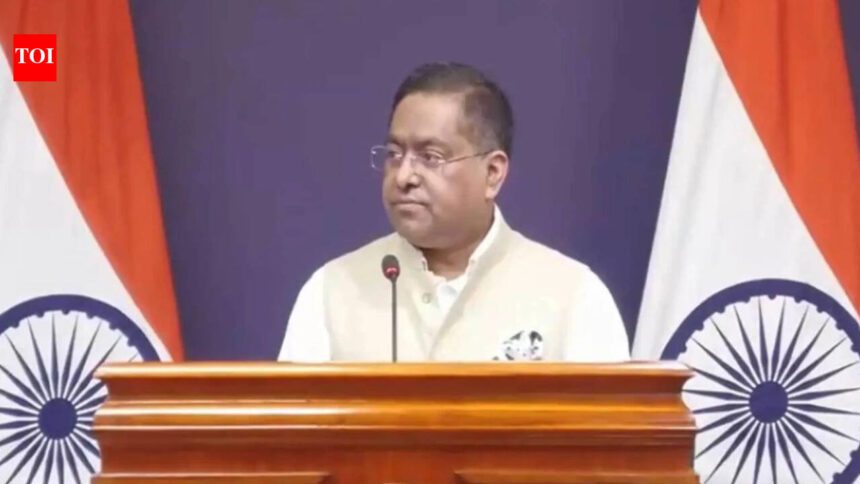
India’s Ministry of External Affairs has categorically rejected a United Nations report that raises alarms over racial discrimination and rights violations by law enforcement agencies in the country. Describing the report as “politically motivated” and “highly malicious,” India asserts its commitment to combating discrimination, emphasizing its long-standing role in drafting anti-racial discrimination conventions.
UN Committee’s Review and India’s Stance
The UN Committee on the Elimination of Racial Discrimination (CERD) convened in Geneva on August 11-12 to review India’s adherence to the International Convention on the Elimination of All Forms of Racial Discrimination (ICERD). This review prompted India’s vehement rebuttal, where the Ministry of External Affairs highlighted its constructive participation while firmly rejecting the committee’s observations.
The Indian delegation, led by Solicitor General Tushar Mehta, characterized the committee’s remarks as unsubstantiated, challenging what they consider sweeping generalizations that exceed the Convention’s mandate. Through this statement, India aims to assert a narrative contradicting the UN’s claims and fortifying its image as a nation concerned about racial equality.
India’s Constitutional Safeguards and Initiatives
In its defense, India pointed to its constitutional provisions, legal frameworks, and affirmative action programs designed to combat discrimination. The country emphasized its “pluralistic character” and the importance of democratic accountability and judicial remedies in addressing social issues.
The MEA, while emphasizing India’s historical commitment to anti-discrimination efforts since the 1960s, positioned the country as a leader in fostering racial equality globally. These assertions aim to underpin India’s stance against the accusations made by the UN committee, portraying its efforts as consistent and robust in nature.
Background on Discrimination Issues in India
Despite the official stance, various international observers have reported instances of discrimination affecting Indian Muslims, a demographic sometimes marginalized by governmental policies. Reports of social exclusion, economic boycotts, and instances of violence have raised concerns over the well-being of this community, prompting analysts to urge deeper investigations into systemic discrimination in the country.
The reactions from the Indian government to these ongoing issues suggest a complex interplay between political narratives, community realities, and international scrutiny, reflecting broader trends in social and economic policies that may further affect vulnerable communities within India.
Why It Matters
The rhetoric surrounding India’s approach to racial discrimination is significant for several reasons. It highlights the challenges of aligning domestic policies with international human rights standards. For developers and users concerned with AI ethics, the situation emphasizes the necessity of understanding biases and systemic inequalities in technological adoption and deployment. Acknowledgment of these issues can guide developers to create more inclusive and fair AI systems, ensuring diverse populations are represented and protected.
Frequently Asked Questions
What are the main accusations in the UN report regarding India?
The UN report highlights concerns over alleged racial discrimination and rights violations by law enforcement agencies against marginalized communities in India, particularly targeting Indian Muslims.
How has India responded to the accusations from the UN Committee?
India has rejected the UN’s claims, calling them “politically motivated” and “highly malicious,” asserting that it remains committed to combating racial discrimination while defending its record and constitutional safeguards.
What role does the ICERD play in international human rights?
The ICERD is a key international treaty aimed at eliminating racial discrimination and promoting equality. Countries that ratify the treaty are obliged to report on their adherence and address issues related to racial discrimination.
Why is the discriminatory treatment of Indian Muslims significant?
The treatment of Indian Muslims reflects broader issues of social justice and human rights in India. Ongoing discrimination can lead to social unrest and undermine the country’s constitutional ethos of equality, which has implications for social cohesion and national stability.