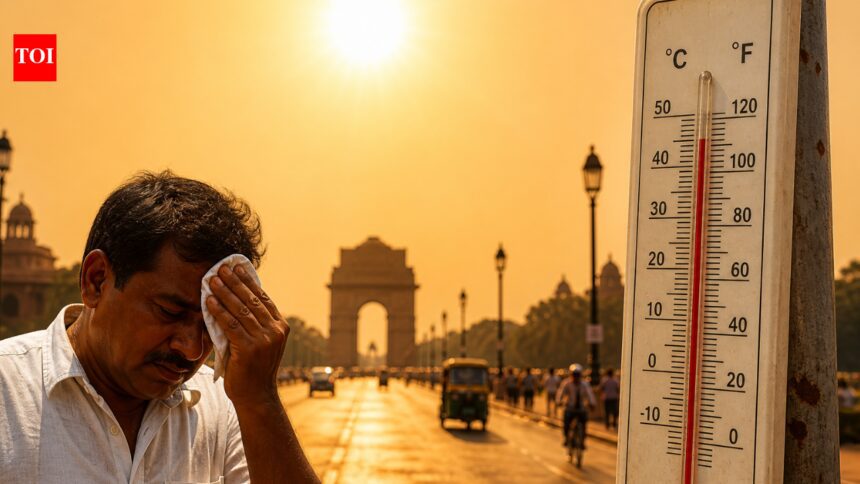

Step outside into temperatures hovering between 45°C and 47°C, and the experience transcends discomfort. The sun blazes mercilessly, and the air feels oppressively heavy, akin to a wave from an open furnace that clings to the skin, persisting even in the shade. Within minutes, fatigue sets in; the throat becomes parched, the eyes strain, and even standing still demands effort. The environment begins to appear almost dizzying, with roads shimmers in the distance and metal surfaces reaching temperatures that can inflict burns upon contact. In these moments, the city feels ensnared by the oppressive heat.
Relief remains elusive for many indoors. While air conditioning provides sanctuary for some, countless households in India cannot access such relief, and even when it is available, cooling systems displace waste heat into already congested urban areas, exacerbating the surrounding heat burden. For others, walls retain heat throughout the day, radiating warmth long after sunset, disrupting sleep and limiting recuperation. For many, this cycle of discomfort stretches over months.
Intense summer heat is commonplace in India, but it has manifested this year with greater intensity, appearing earlier than usual. By April, substantial swathes of the country faced heatwave conditions, with temperatures exceeding 40°C in various regions and nearing 45°C in some areas. The highest recorded temperature, 46.9°C, was noted in Akola, Maharashtra, as the Vidarbha region faced an early-summer heatwave. Multiple Indian cities found themselves among the hottest in the world during peak afternoon hours even before May arrived.
Isolated rain spells in late April offered only temporary respite, cooling parts of the country briefly before the heat returned in waves, trapping large regions in a cycle of rising discomfort. During this period, global temperature trend data revealed that 95 of the world’s 100 hottest cities were located in India, highlighting the widespread and severe nature of the heat, even before peak summer temperatures were realized.
This year’s rising temperatures unfold against a backdrop of shifting global climate patterns. In the equatorial Pacific, El Niño is re-emerging, characterized by rising sea surface temperatures and weakening trade winds. This phenomenon influences weather across the globe by altering rainfall, wind patterns, and heat distribution. When El Niño strengthens, it can intensify extreme heat, disrupt the Indian monsoon, and elevate global temperatures. The World Meteorological Organization has indicated a likelihood of El Niño conditions by mid-2026, raising concerns about additional stress on an already warming world, particularly for India during the critical monsoon season, which impacts the agrarian sector.
El Niño describes the periodic warming of sea surface temperatures in the central and eastern equatorial Pacific Ocean, functioning within the El Niño-Southern Oscillation system, which includes El Niño, La Niña, and neutral phases. Under typical conditions, trade winds push warm waters westward toward Asia and Australia, allowing cooler waters to rise along the South American coast. During an El Niño event, these winds weaken or reverse, prompting warm water to shift eastward and disrupt the ocean-atmosphere balance. This has global implications for atmospheric circulation, altering rainfall patterns and storm formations across continents.
El Niño events, which occur every two to seven years and generally last between nine to twelve months, lead to various regional impacts. These can include drought in Australia and Southeast Asia, alongside increased precipitation in parts of South America and East Africa. Notably, El Niño can also influence the patterns of tropical storms, dampening hurricanes in the Atlantic while enhancing them in the Pacific. Importantly, El Niño does not operate in isolation; a warming world amplifies its effects, increasing the intensity of weather extremes.
In India, El Niño is a key climate driver that impacts global atmospheric circulation, reshaping regional weather patterns within months. Significant historical El Niño events occurred in 1982-83, 1997-98, and 2015-16. The 1997-98 event was particularly intense, causing flooding in parts of South America, severe droughts across Southeast Asia and Australia, and widespread wildfires in Indonesia. The 2015-16 event was linked to spikes in global temperatures and considerable regional disruptions.
El Niño is closely tied to the southwest monsoon in India, often associated with below-average rainfall, delayed onset, and uneven distribution. Notable years such as 1987, 2002, 2009, and 2015 experienced weak monsoon performance with drought-like conditions in various regions. Moreover, El Niño correlates with heightened heat risk before the monsoon, elevating the chance of heatwaves in northern and central India.
Historical records indicate that El Niño can intersect with food insecurity, evident during the 1877-78 event associated with severe drought and global famine. Climate variability during this period interacted with existing social and economic vulnerabilities, significantly impacting mortality rates in India and China. Today, these natural cycles unfold on a warmer baseline, intensifying their effects and increasing heat extremes.
A “super El Niño” refers to an unusually powerful version of the phenomenon, marked by sea surface temperature rises of at least 2°C in the central and eastern Pacific. Such events are rare, occurring only a handful of times since 1950, with one instance surpassing 2.5°C. Scientists warn that stronger warming heightens the chances of intensified global impacts from El Niño, encompassing extreme heat, disrupted rainfall patterns, and changes in monsoon systems. Currently, NOAA cites a one-in-four probability of a strong or “super” El Niño developing by autumn or winter. Early indicators suggest a potential for one of the most powerful El Niño events in 140 years.
India is already experiencing an increase in the frequency, duration, and intensity of heatwaves. Climate assessments and meteorological records indicate that several of the hottest years in Indian history have occurred within the last decade. However, heatwaves have not been formally classified as notified disasters within India’s central disaster management framework, limiting structured compensation and long-term adaptation funding. This results in uneven preparedness and responses across the country, relying largely on State Disaster Response Funds.
For India’s informal workforce, heat represents not merely a seasonal occurrence but an occupational hazard that directly impacts wages and reduces working hours. Street vendors, construction workers, rickshaw pullers, agricultural laborers, and delivery personnel face extreme temperatures with minimal protection. Office workers and daily commuters also find themselves in the same environment, often with little relief, as work continues unabated during high temperatures while air conditioning remains inaccessible for many households.
The adverse impacts of heat are becoming evident. According to the Lancet Countdown on Health and Climate Change, people in India experienced an average of 19.8 heatwave days in 2024, the warmest year recorded. The study links rising heat exposure to increased illnesses, diminished labor capacity, and reduced productivity, estimating potential income losses due to heat-related labor reductions at approximately $194 billion. Extreme heat is also amplifying broader economic stress; rising electricity demand for cooling drives up power consumption, water shortages tax urban supply systems, and climate variability affects food production and prices, further straining household budgets.
Extreme heat disrupts the body’s ability to maintain thermal regulation. When ambient conditions exceed physiological limits, sweating becomes ineffective. Conditions commonly arising from exposure include dehydration, muscle cramps, heat exhaustion, and heatstroke; severe exposure can result in organ failure or death. Heatwaves are closely associated with increased mortality from cardiovascular, respiratory, and neurological conditions, with estimates suggesting between 10,000 and over 20,000 heat-related deaths in India over the past two decades. Independent studies indicate that the actual toll may be higher due to underreporting, as heat often is not registered as a primary cause of death.
Urban areas face heightened risks due to the urban heat island effect, where dense construction, reduced vegetation, and limited airflow trap heat, creating environments that are warmer than surrounding rural areas, particularly at night. Rapid urbanization has decimated tree cover and green spaces, replacing them with concrete structures that absorb heat during the day and release it slowly afterward, resulting in persistently elevated nighttime temperatures and hampered recovery among the population.
The economic fallout from extreme heat is becoming increasingly pronounced. Higher temperatures escalate electricity demand for cooling, resulting in soaring power consumption during peak summer months. Concurrently, agricultural productivity suffers due to heat stress and erratic rainfall patterns. In 2022, significant pre-harvest temperatures adversely affected yield in major wheat-producing states such as Punjab, Haryana, and Uttar Pradesh, culminating in a ban on wheat exports to stabilize domestic supply and control prices. This scenario has placed additional burdens on households, with rising food inflation coupled with increased cooling costs.
As the convergence of rising temperatures and shifting climate patterns continues, India’s summers are evolving beyond seasonal cycles into prolonged periods of endurance, measured not only in Celsius but also in wage loss, health risks, mortality, and survival. As temperatures increase and climate patterns shift, the challenges presented by India’s summer are becoming more formidable. The country’s response—whether through curtailed deforestation, urban green space expansion, reduced reliance on coal-based energy sources, and accelerated shifts to clean energy—will profoundly affect livelihoods and public health outcomes.