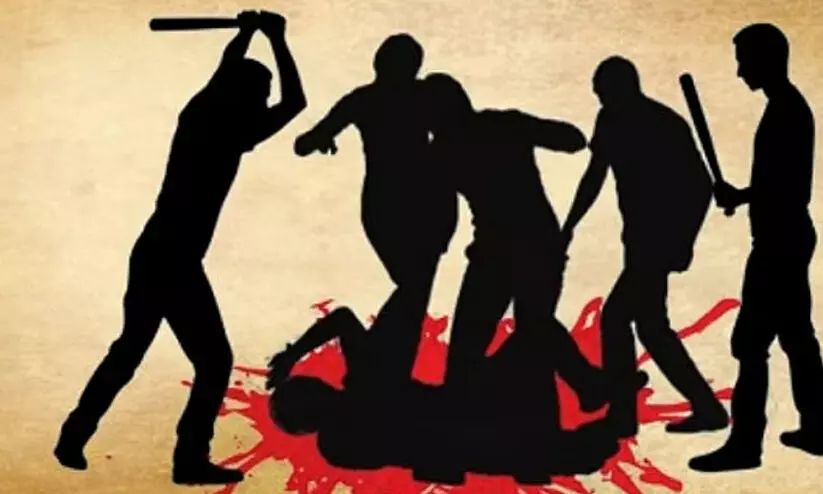

In a disturbing incident in Haridwar, Uttarakhand, a Muslim man faced severe public humiliation and violence after he was attacked by a mob of over 10 men while visiting a female friend. The assailants reportedly paraded him with a dog leash around his neck, highlighting the escalating instances of discrimination and social exclusion faced by Muslims in India under the current political climate.
Incident Overview
The altercation occurred when the victim, a resident of Karnal, Haryana, went to visit a woman he had known for approximately five years. As per the First Information Report (FIR), a group of 10 to 12 unidentified men barged into the woman’s house, assaulting the victim and verbally abusing both him and the woman. Disturbingly, video footage circulating on social media shows the man humiliated, seated outside with a dog leash tied around his neck while being questioned by members of the mob.
The woman attempted to intervene but was also met with aggression. The family of the woman reported that the assailants not only attacked the victim but also robbed him of his mobile phone and other personal belongings. The victim endured this treatment for nearly three hours before police arrived and arranged for his medical care.
Legal Response and Current Status
Authorities have initiated a case against the assailants under several provisions of the Bharatiya Nyaya Sanhita. These include charges related to voluntarily causing hurt, rioting, criminal intimidation, and house trespass. Despite the severity of the incident, no arrests have been made as of yet. Local police are currently reviewing video evidence in hopes of identifying the perpetrators.
The incident has drawn attention to the broader social and political context in which such violence occurs. With reports of increased discrimination and violence against Muslims often highlighted in recent years, this event serves as a stark reminder of the ongoing societal discord fueled, in part, by political rhetoric from right-wing groups. Critics argue these groups exploit communal tensions to further their agendas, leading to an atmosphere of fear and marginalization for minority communities.
Broader Implications of Discrimination
The incident in Haridwar is indicative of a growing trend of societal exclusion and discrimination against Muslims in India. Such acts of violence are often rationalized by communal narratives, which not only affect individual victims but also contribute to the broader marginalization of Muslim communities. Organizations tracking hate crimes report a noticeable uptick in incidents in recent years, particularly in regions governed by right-wing political parties.
The fallout from such attacks extends beyond immediate physical harm. The psychological impact on victims and witnesses alike can lead to long-standing fear and societal divisions. Economically, these communities may face boycotts and loss of livelihood, perpetuating cycles of poverty and exclusion. Thus, the implications of such acts are profound, affecting community cohesion and national integrity.
Why It Matters
The incident in Haridwar showcases the alarming trend of discrimination against minority communities in India, exacerbated by political conditions that often tolerate or encourage such behavior. For the global audience, understanding this issue is crucial, as it paints a picture of the current sociopolitical landscape in India and the struggles faced by marginalized groups. This climate of fear not only impacts those directly involved but also shapes the country’s international reputation and human rights standing.
Frequently Asked Questions
What happened to the victim in Haridwar?
The victim, a Muslim man, was attacked and publicly humiliated by a mob while visiting a woman’s house. He was paraded with a dog leash around his neck, beaten, and held for nearly three hours before the police intervened.
What legal action has been taken regarding the incident?
The police have registered a case against unknown attackers under several legal provisions, including rioting and criminal intimidation. However, no arrests have been made so far.
How does this incident reflect on the treatment of Muslims in India?
This incident illustrates a troubling trend of discrimination and violence against Muslims in India, particularly in areas governed by politically right-leaning administrations, casting a shadow on the societal fabric of the country.
What are the broader implications of such acts of violence?
Acts of violence against minorities contribute to psychological fear, societal divisions, economic boycotts, and the marginalization of entire communities, thereby threatening national stability and integrity.