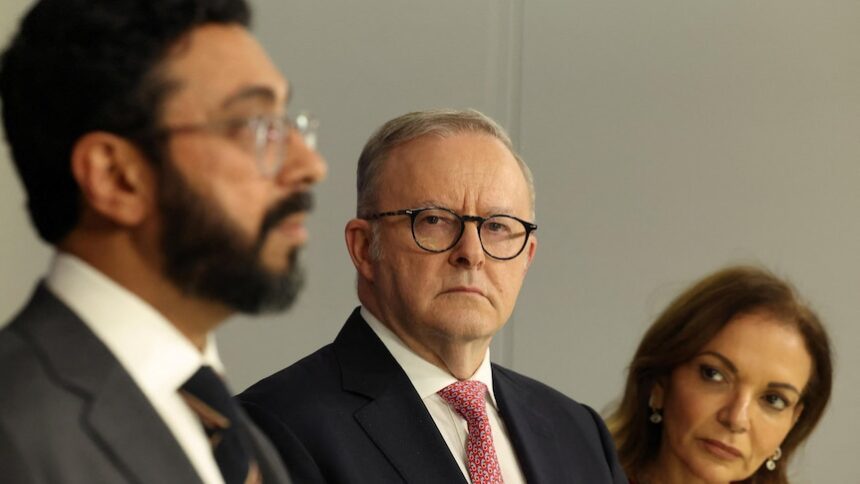

The Australian government’s responses to antisemitism and Islamophobia reveal a stark contrast in approaches to tackling racism. While the plan for eliminating antisemitism emphasizes coordinated legislative action and accountability, the government’s combatting Islamophobia strategy focuses primarily on educational initiatives and community resilience, raising questions about the political will to address systemic drivers of anti-Muslim sentiment.
Discrepancies in Government Approaches
In December 2025, the Australian government released its strategy for “eliminating” antisemitism, which emphasizes coordinated national actions, legislative reforms, and accountability mechanisms directed at hate groups. This response aims to address overt racism and aligns with widespread societal condemnation of neo-Nazi and extremist rhetoric. In stark contrast, the July 2026 response to Islamophobia focuses heavily on education, community dialogue, and support services, highlighting a more reactive approach intended to help Muslim Australians cope with existing prejudice rather than dismantle its root causes.
The Challenge of Addressing Systemic Islamophobia
Eliminating Islamophobia necessitates a thorough examination of the broader systemic issues embedded within national policies, including terrorism laws, national security rhetoric, and media portrayals of Islam. Unlike antisemitism, where the perpetrators are often marginalized extremists, Islamophobia is interwoven with mainstream societal narratives, making it more complex to dismantle. The government’s reluctance to engage with these deeper issues was evident when it adopted only 35 out of 54 recommendations from a report on Islamophobia, omitting significant proposals aimed at changing the definition of terrorism and examining institutional bias.
The Importance of Epistemic Awareness
Islamophobia is not merely an issue of prejudice; it’s also an epistemic problem—how society understands and conceptualizes Islam shapes public discourse and policy. A significant number of Australians hold negative attitudes towards Muslims, which have been exacerbated by national security narratives emphasizing Islam as a potential threat. Such misinformation not only distorts the public’s understanding of Islam but also undermines the dignity and citizenship of Muslim Australians. The normalization of these ideas in political rhetoric and media coverage has made it difficult for governmental responses to address Islamophobia effectively.
Why It Matters
This issue has significant implications for Australia’s national identity, social cohesion, and democratic values. By inadequately addressing systemic racism and maintaining policies that normalize anti-Muslim sentiments, the government risks alienating a substantial part of its population and fostering an environment of division and distrust. As the country navigates a global landscape increasingly sensitive to religious and ethnic diversity, a more inclusive and equitable approach to combating all forms of racism is vital for fostering national unity. The disparity in addressing the racism faced by different communities underscores a need for more comprehensive and honest institutional scrutiny.
Frequently Asked Questions
What are the main differences in the government’s approach to antisemitism versus Islamophobia?
The government’s plan to combat antisemitism focuses on legislative actions and accountability for hate groups, while the response to Islamophobia emphasizes educational initiatives and community resilience, often sidestepping deeper, systemic issues.
How prevalent is Islamophobia in Australia compared to antisemitism?
According to a 2025 survey, 35% of Australians reported negative attitudes toward Muslims, significantly higher than the 15% reporting similar sentiments toward Jews, highlighting a troubling prevalence of anti-Muslim sentiment in society.
Why is it challenging to eliminate Islamophobia in Australia?
Eliminating Islamophobia is complicated by the fact that it is often interwoven with institutional narratives and practices, including national security frameworks and media portrayals, which frame Islam and Muslims in a negative light.
What impact does political rhetoric have on public perception of Islam?
Political rhetoric that links Islam to terrorism contributes to misconceptions about the religion, normalizing negative stereotypes and feeding into societal prejudice against Muslim communities.





![Community members raise their arms during a gratitude poem at a supper in Westbrook, Maine, in July 2025 [Courtesy of Community Plate]](https://www.indianewsweek.com/wp-content/uploads/2026/09/Potluck-Parties-Surge-in-Popularity-Across-America-A-Culinary-Revival-300x203.jpeg)