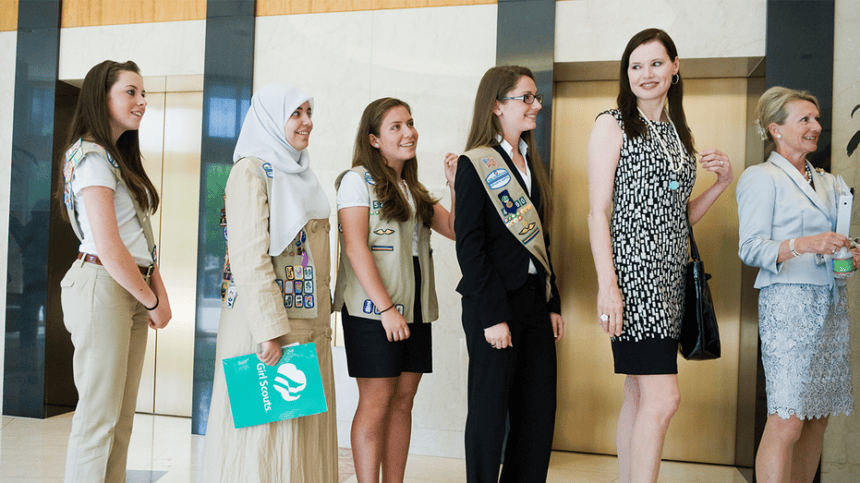

The Girl Scouts of the USA (GSUSA) recently faced scrutiny over reports suggesting that mosque-based scouting troops were incorporating Islamic elements such as prayer and faith-specific patches into their activities. The organization clarified that while optional faith-based programs do exist, they are independently operated and not reflective of its national curriculum.
Clarification from Girl Scouts of the USA
In a statement issued to address misinformation, a GSUSA spokesperson emphasized that the organization is not religious and welcomes girls from all faith backgrounds. “Girl Scouts is proudly for every girl. For more than a century, we’ve welcomed girls of every faith and background,” the spokesperson reaffirmed. The intent behind programs like the national My Promise, My Faith pin is to allow girls to connect the organization’s mission with their own spirituality, without it overshadowing the inclusive ethos of Girl Scouts.
Optional Faith-Based Programs
The GSUSA’s own materials indicate that it has authorized various religious-recognition programs created by independent faith organizations. Notably, these include a chart that lists multiple religions, including four Islamic recognitions. Each denomination is responsible for developing its own curriculum, ensuring that participation in faith-specific activities remains optional. For instance, a toolkit from the Girl Scouts of Orange County outlines activities and recognition available to Muslim Girl Scouts, indicating that the incorporation of faith-oriented content is not mandatory but offered where interest exists.
Criticism and Concerns
Despite this clarification, some critics, like Moms for Liberty New Jersey Ambassador Alexandra Bougher, voiced concerns that these programs could inadvertently exclude girls who do not share those specific faiths. “No Girl Scout chapter should push one faith over another by incentivizing it with badges,” Bougher warned, advocating for a focus on the organization’s foundational mission rather than becoming embroiled in ideological conflicts. This criticism reflects larger societal debates about inclusiveness in youth organizations and the balance between faith and secular education.
Why It Matters
The ongoing discussions around faith-based programming within organizations like the Girl Scouts have broader implications for social cohesion and inclusivity in youth-centered activities. As demographics shift and communities become increasingly diverse, the challenge remains for organizations to navigate the fine line between respecting religious beliefs and fostering a neutral, inclusive environment. Understanding how these dynamics play out can inform policies and practices not only in scouting organizations but also in schools and community programs, influencing how youth engagement is shaped in multicultural societies.
Frequently Asked Questions
What is the Girl Scouts’ stance on religion?
The Girl Scouts of the USA is not a religious organization and does not teach religion, welcoming girls from all faith backgrounds.
Are faith-based programs mandatory in Girl Scouts?
No, faith-based programs offered by independent organizations are optional and not required for participation in Girl Scouts.
What types of faith-based patches are available?
Various faith-based patches exist, including programs for Islamic, Christian, Jewish, Buddhist, and other faith communities, each developed independently.
How has the public reacted to faith-based patches in Girl Scouts?
There has been both support and criticism, with some arguing that these programs may exclude girls who do not share those faiths, while others support the inclusion of diverse religious content.