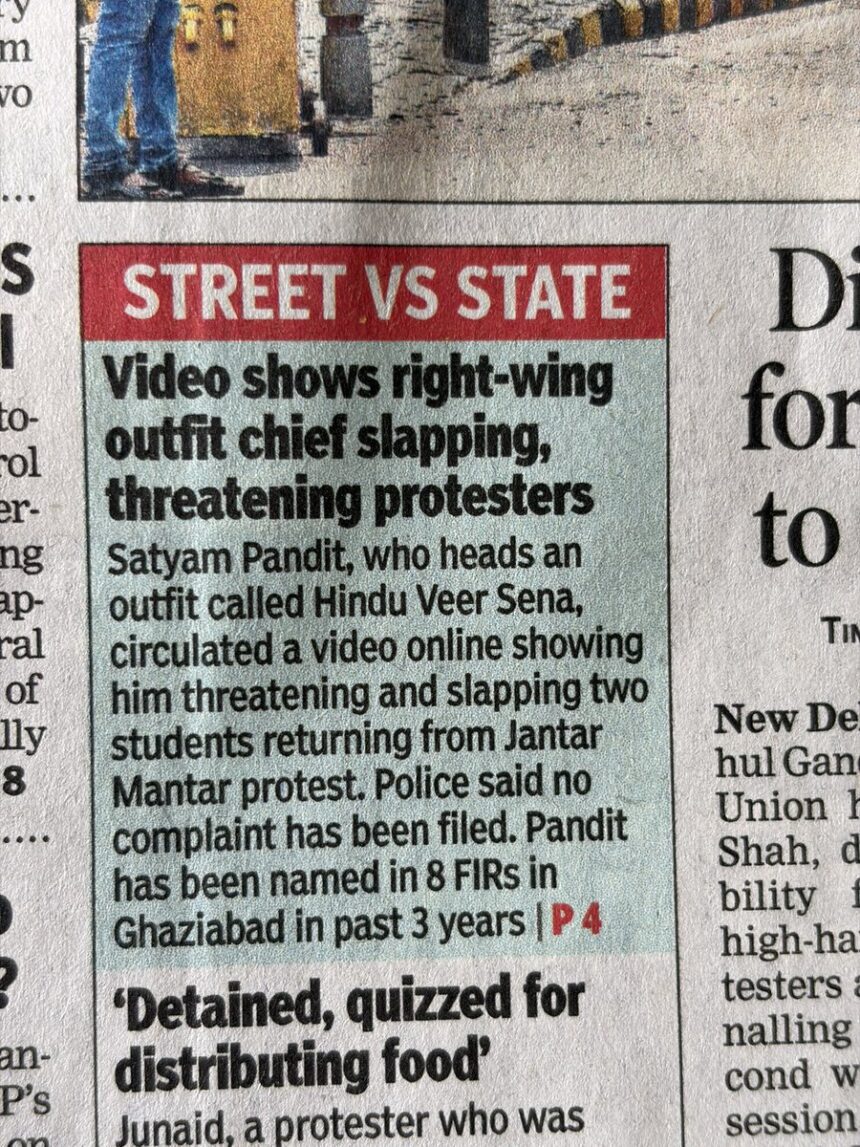

The recent arrest of a man identified as Satyam Pandit by the Ghaziabad Police has sparked significant political discourse in India. Notably, the incident involves Pandit forcibly shutting down a non-vegetarian shop owned by a Muslim shopkeeper and threatening to set it on fire. Following the virality of a video depicting this altercation, questions are being raised about the response of the Delhi Police in similar situations.
Incident Overview
In February 2026, Satyam Pandit was captured on video aggressively confronting a Muslim shopkeeper operating a non-vegetarian food outlet. The footage showed him using intimidation tactics, including threats of arson, to compel the shopkeeper to close his business. This incident quickly gained traction on social media platforms, leading to public outcry and prompting the Ghaziabad Police to take action. The arrest of Pandit signifies a response to rising communal tensions and reinforces the need for law enforcement to address such incendiary behavior robustly.
Political Reactions
One significant voice in the political landscape has been Mahua Moitra, a Member of Parliament and a vocal critic of communalism. Following the arrest of Pandit, she highlighted the lack of action from the Delhi Police regarding incidents such as this. In a tweet, Moitra mentioned that the Delhi Police claimed not to have received a First Information Report (FIR) about Pandit, but she asserted that one would be filed imminently. Her comments reflect broader concerns regarding policing practices, especially regarding how they handle cases related to communal violence or discrimination based on religion.
Comparative Analysis of Law Enforcement
The contrasting responses from the Ghaziabad Police and the Delhi Police raise important questions about the consistency of law enforcement across different jurisdictions. The arrest in Ghaziabad shows a proactive approach in addressing violent communal incidents, which could be seen as a way to restore public faith in the authorities. Conversely, the stance of the Delhi Police, which seemingly downplays the necessity for immediate action, may lead to skepticism about their willingness to confront similar acts of communal aggression. This disparity in response is pivotal in examining the effectiveness and commitment of law enforcement in safeguarding minority rights.
Why This Matters
This incident is emblematic of the broader socio-political dynamics in India, particularly concerning communal relations and minority rights. With religious tensions often at the forefront of political conversation, how authorities handle incidents involving communal aggression reflects the state’s commitment to upholding justice and equality. As public figures like Mahua Moitra push for accountability, the pressure on law enforcement agencies to act decisively in the face of discrimination becomes paramount. This not only impacts community relations but also shapes the political narrative leading up to future elections and governmental policies regarding minority rights.
Frequently Asked Questions
What charges did Satyam Pandit face?
Satyam Pandit was arrested after forcibly shutting down a non-vegetarian shop owned by a Muslim shopkeeper and threatening to set it on fire. The specific charges may include intimidation and promoting communal hatred.
What did Mahua Moitra say about the incident?
Mahua Moitra criticized the Delhi Police for not taking action against Satyam Pandit and announced her intent to file a FIR regarding the incident, emphasizing her commitment to holding law enforcement accountable.
Why did the incident gain significant media attention?
The incident attracted significant media attention due to its violent nature and the religious polarization it highlights in contemporary Indian society, amplifying discussions about communalism and minority rights.
What does this incident signify for religious communities in India?
This incident underscores ongoing tensions between different religious communities in India and highlights the urgent need for actionable measures from law enforcement to protect minority rights and ensure justice in cases of communal violence.