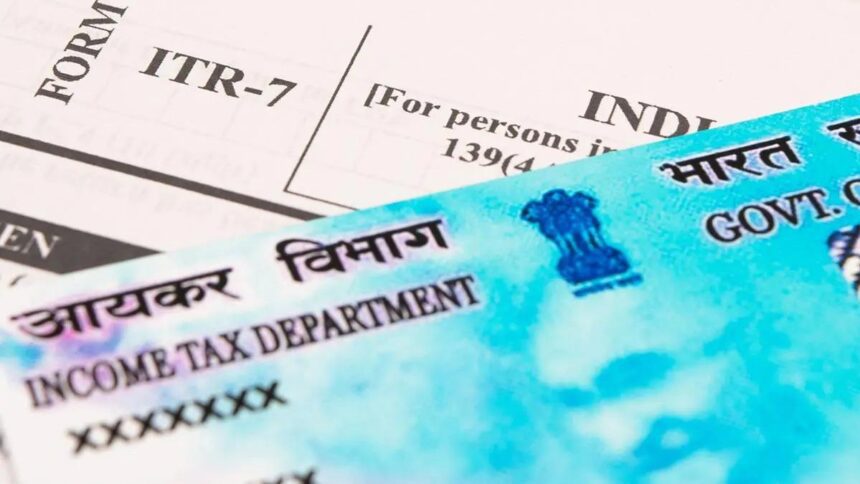

Foreign portfolio investors (FPIs) have not been able to obtain Permanent Account Numbers (PAN) for nearly a month due to recent changes in the PAN application process under the common application form (CAF). This delay is causing a significant hindrance in the onboarding of new foreign investors into Indian markets.
At least 20 newly registered FPIs are currently awaiting PAN assignment, despite having completed all necessary registration procedures, sources have indicated. Without a PAN, these investors are unable to open trading or demat accounts, thus preventing them from participating in the Indian securities market.
Typically, once a PAN application is initiated through a custodian or designated depository participant, the number is issued within two to three days. However, this process has stalled for the past month, according to an insider.
The current backlog emerged following modifications made to the PAN forms integrated within the CAF framework. The CAF serves as a single-window system that facilitates FPI registration, PAN allocation, KYC compliance, and account opening.
The disruption is attributed to alterations introduced by the Income Tax Department, which impacted new PAN application forms and related system validations. Similar obstacles are reportedly being faced by Foreign Direct Investments (FDIs) at the Reserve Bank of India (RBI).
Market participants have noted that some applications are delayed due to validation issues, including mismatches in character limits, formatting requirements, and other data-entry checks in the revised forms. Additionally, FPIs are encountering difficulties in designating authorized representatives (ARs), a requirement under the new framework. Many are struggling to find suitable domestic individuals willing to assume this role due to concerns regarding potential tax liabilities.
The Securities and Exchange Board of India (SEBI) has been informed of the situation and is reportedly in discussions with the government and stakeholders. The regulator has proposed allowing FPIs to appoint authorized signatories in lieu of authorized representatives to simplify the process. Ongoing discussions with the Central Board of Direct Taxes (CBDT) aim to address these concerns.
“FPIs are finding it challenging to identify suitable domestic persons to complete the new AR entry in the CAF form,” noted a market participant from the FPI sector, while emphasizing their anticipation for updates on SEBI’s conversations with the CBDT.
The PAN issuance process progresses from the Income Tax Department to Protean and then via APIs to the depositories. Once a PAN is allotted, new registrants can establish demat accounts with stock exchanges, which is essential for trading and investment activities.
The issue remains unresolved as FPIs navigate this complex regulatory landscape, impacting their ability to invest in Indian markets.
Published on May 10, 2026.