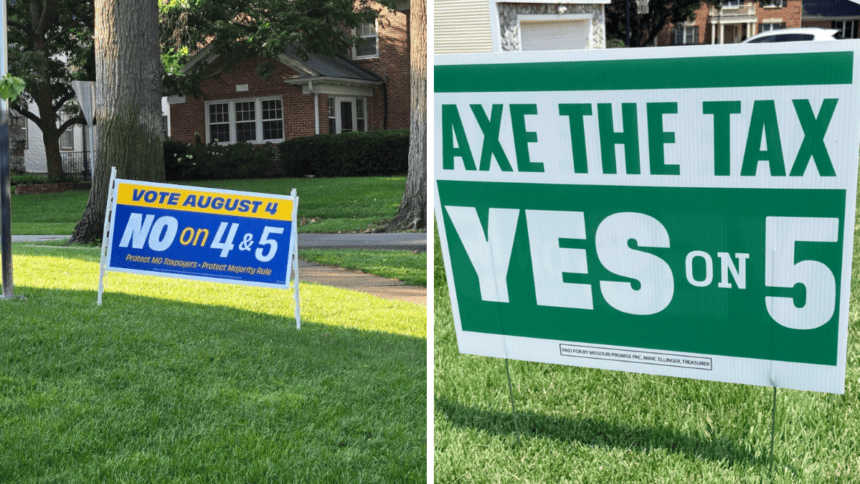

In a dramatic shift for Missouri’s political landscape, ballot measures are outpacing candidate campaigns in spending and advertisement visibility, with a staggering $26.7 million already invested. The spotlight is mainly on two amendments, notably Amendment 5, which aims to eliminate the state income tax but raises concerns over potential increased taxes on essential services.
Understanding the Ballot Measures
This year’s Missouri primaries have seen an extraordinary focus on ballot measures. Constitutional amendments—particularly Amendment 4 and Amendment 5—are the talk of the town, diverting funds and attention traditionally reserved for candidate campaigns. Amendment 4 proposes that any citizen-led initiative must now pass in all eight congressional districts, complicating the current simple majority rule.
Amendment 5, however, casts a far-reaching net, proposing to direct lawmakers to abolish the income tax altogether. This would empower legislators to increase state sales tax and broaden the taxable base without requiring voter approval for five years. Such a change is significant, as sales tax affects a wide array of services that were previously exempt, including healthcare and education.
The Controversy Around Amendment 5
The narrative surrounding Amendment 5 is heated and polarized. Pro-Amendment groups, such as Missouri Promise PAC, argue that it will allow taxpayers to keep more of their earnings. Their messaging, which includes advertising campaigns featuring a talking mule, suggests that the amendment would ensure corporations pay their fair share. However, this claim is met with skepticism and sharp opposition.
Opponents, including the coalition Missourians for Fair Taxation, highlight catastrophic consequences, particularly for vulnerable populations like seniors and working families. They warn that Amendment 5 could lead to increased taxes on services essential to daily life, thus leaving a significant portion of the population worse off.
The Role of Advertising and Misinformation
The fierce advertising battles for and against Amendment 5 illuminate a broader issue in political campaigning: the lack of robust regulations on truthfulness in political ads. In Missouri, while some advertising restrictions exist, they primarily focus on candidates rather than issue-based campaigns, leaving an open field for misleading information. Without comprehensive federal or state-level oversight, it falls to voters and independent organizations to fact-check claims made in these ads.
The varying narratives in political advertisements create a muddled environment where voters struggle to discern fact from fiction. The urgency and emotional appeal often featured in these ads can overshadow the nuanced debates around complex legislative proposals like Amendment 5.
Why This Is Trending
The rising interest in Missouri’s ballot measures, especially Amendment 5, resonates deeply with an Indian audience for several reasons. Firstly, the concept of taxation is universally significant and can draw parallels to India, where tax reforms are a hot topic of discussion. Secondly, as democracy and electoral politics gain more visibility in global conversations, understanding the implications of such amendments can offer critical insights into governance and fiscal policy. Lastly, the spectrum of opinions in this debate mirrors the complexities of political discourse experienced in India, where every policy proposed can lead to sharply divided public sentiment.
Frequently Asked Questions
What is Amendment 5 in Missouri?
Amendment 5 is a proposed constitutional change that aims to eliminate the state income tax in Missouri. It would allow lawmakers to expand the sales tax base and increase rates without additional voter approval for five years.
What concerns have been raised about Amendment 5?
Opponents of Amendment 5 worry that it could lead to significant tax increases on essential services such as healthcare and education. They argue it disproportionately impacts seniors and lower-income families who already benefit from exemptions.
What kind of spending has been observed in political advertising regarding this amendment?
Political groups have invested over $26.7 million in advertising for and against the various ballot measures in Missouri this election cycle, with particular focus on Amendment 5.
Are there regulations governing the truthfulness of political ads in Missouri?
Missouri imposes limited regulations on political advertising. Most restrictions apply to candidate campaigns, with minimal requirements for issue-based ads, which has led to widespread misinformation in the funding and messaging of political campaigns.